


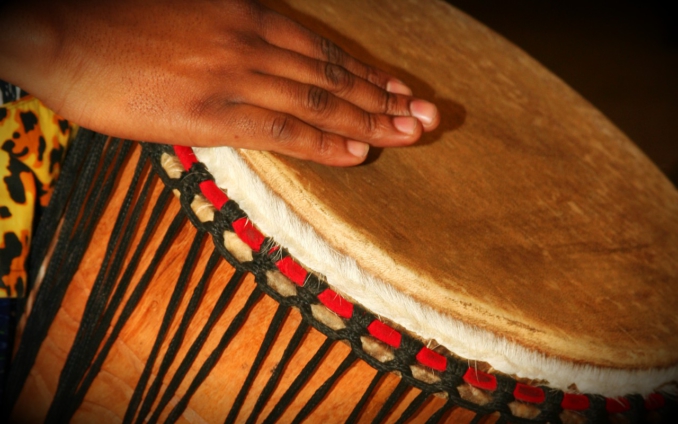
The Accra Metropolitan Assembly has announced a month-long ban on drumming and noise-making across the capital from May 4 to June 4, 2026, as part of traditional preparations for the annual Homowo Festival.
The directive, which takes effect within the jurisdiction of the Assembly, is rooted in long-standing Ga customs observed by chiefs and traditional authorities in Accra. The ban is a key cultural requirement that precedes the Homowo festival, a historic celebration by the Ga people that commemorates their resilience and victory over famine centuries ago.
In a public notice, the Assembly emphasized that the restriction applies to a wide range of activities, including the use of loudspeakers, roadside evangelism with amplified sound, outdoor events involving music, and drumming in churches and mosques. The statement reiterated that “the ban covers all forms of noise-making, including the use of tambourines, clapping during worship, and the playing of musical instruments in public places.”

Authorities have also made it clear that funerals, which are a major social activity in Ghana, will be affected. During the ban period, funeral rites are expected to be conducted in a quiet and dignified manner without loud music or public address systems. Funeral processions, which often involve brass bands and drumming, are also expected to comply fully with the directive.
The Assembly stressed that the directive is not arbitrary but follows consultations with the Ga Traditional Council, which oversees the observance of traditional customs in the Ga State. The council plays a central role in ensuring that cultural practices tied to the Homowo festival are preserved and respected by all residents, regardless of ethnic or religious background.
Enforcement will be carried out in collaboration with the Ghana Police Service and other local authorities. Offenders risk having their equipment confiscated and may face legal consequences if they fail to comply with the directive. In previous years, authorities have not hesitated to shut down events or sanction institutions that violated the ban, signaling that enforcement is taken seriously.

The ban has historically sparked mixed reactions, particularly from religious groups, especially some Christian denominations that rely heavily on music and instruments during worship. However, over the years, many churches have adapted by modifying their services to comply with the directive, often holding quieter indoor services or temporarily relocating activities outside restricted zones.
Traditional leaders argue that the observance is essential for maintaining cultural identity and social harmony in the Ga State. They maintain that the ban is not an attack on religious freedom but rather a cultural obligation that has coexisted with modern urban life for decades. The Homowo festival itself remains one of the most significant cultural events in Ghana, attracting both locals and tourists, and featuring rituals such as the sprinkling of kpokpoi, a traditional meal, to signify abundance and remembrance.
From a governance perspective, the Assembly’s decision reflects the ongoing balancing act between urban regulation, cultural preservation, and constitutional freedoms. Ghana’s legal framework allows for customary law to operate alongside statutory law, particularly in matters of tradition and chieftaincy, which gives such directives a strong basis.
Beyond its cultural importance, the ban also has practical implications. Accra, as a densely populated and commercially active city, often experiences high noise levels from traffic, events, and public gatherings. The temporary reduction in noise has, in some cases, been welcomed by residents seeking a quieter environment, even though it comes with restrictions.

As the enforcement date approaches, residents, businesses, and religious institutions are being urged to take note and adjust their activities accordingly. The Assembly has called for cooperation, emphasizing that adherence to the directive is a shared responsibility that contributes to preserving the city’s heritage.
The month-long silence, while restrictive to some, ultimately sets the stage for the climax of the Homowo festival, where the ban is lifted and communities come alive in celebration, marking the end of the traditional observance period and the beginning of festivities that define the cultural heartbeat of Accra.
Ga Traditional Council announces 2026 ban on noise-making ahead of Homowo festival