


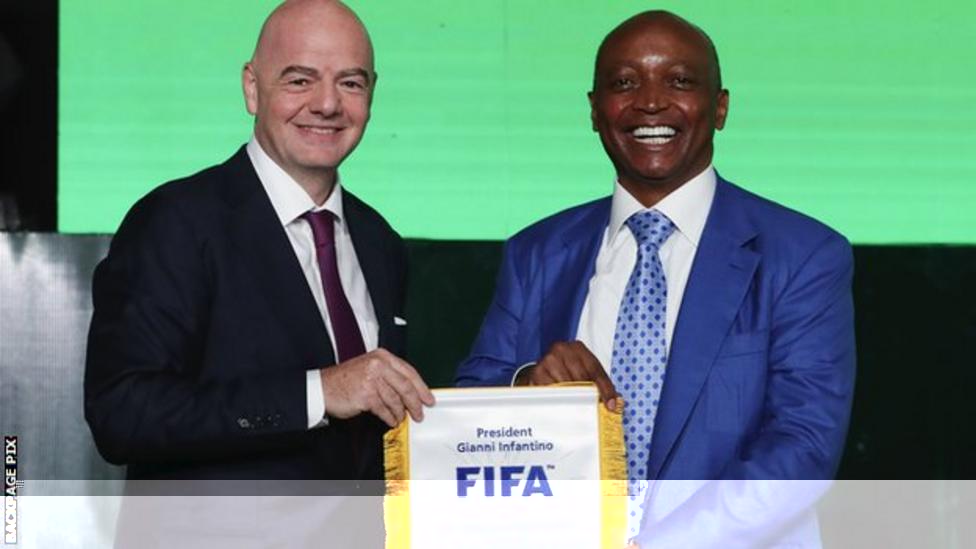
Gianni Infantino has received unanimous support from African football leaders for his re election as president of FIFA, strengthening his position ahead of the next electoral cycle and reinforcing Africa’s growing influence within global football governance.
The endorsement came through the continent’s governing body, Confederation of African Football, where member associations aligned behind Infantino’s leadership. The decision reflects continued confidence in his administration, particularly in areas such as funding expansion, development programmes, and increased global representation for African football.
Infantino’s tenure has been marked by significant financial redistribution efforts. FIFA has increased funding to member associations through its Forward Programme, with African nations among the key beneficiaries. These funds have supported infrastructure development, youth systems, and administrative capacity building across multiple countries.

African football stakeholders have also backed FIFA’s expansion policies under Infantino. The decision to increase the number of teams in the FIFA World Cup from 32 to 48 has been widely welcomed across the continent, as it guarantees more qualification slots for African teams and greater exposure on the global stage.
Support for Infantino is also tied to his push for broader inclusion in international competitions. Plans for expanded club tournaments and increased investment in women’s football have resonated with CAF leadership, which sees these initiatives as opportunities to accelerate growth across different levels of the game.
At the same time, the endorsement carries political weight. Africa represents one of the largest voting blocs within FIFA, with 54 member associations. Unified support from the continent significantly boosts any candidate’s chances in FIFA elections, where each member association holds equal voting power regardless of size or footballing strength.

However, Infantino’s leadership has not been without criticism globally. Some observers have raised concerns about governance transparency, decision making processes, and the balance of power within FIFA. Despite this, African federations appear to view his administration as beneficial to their development priorities.
The backing also signals continuity. With major tournaments such as the expanded 2026 World Cup approaching, stability in leadership is seen as important for maintaining momentum in global football reforms and commercial growth.
Infantino, who has led FIFA since 2016, is expected to leverage this strong regional support as he positions himself for another term. His relationship with African football leaders has been a key pillar of his leadership strategy, often emphasising partnership, investment, and increased representation in global football decision making.

This unanimous endorsement effectively consolidates his support base early, reducing potential opposition and setting the tone for what could be a relatively uncontested path to re election.
Brazil formally asks FIFA to host 2029 FIFA Club World Cup