


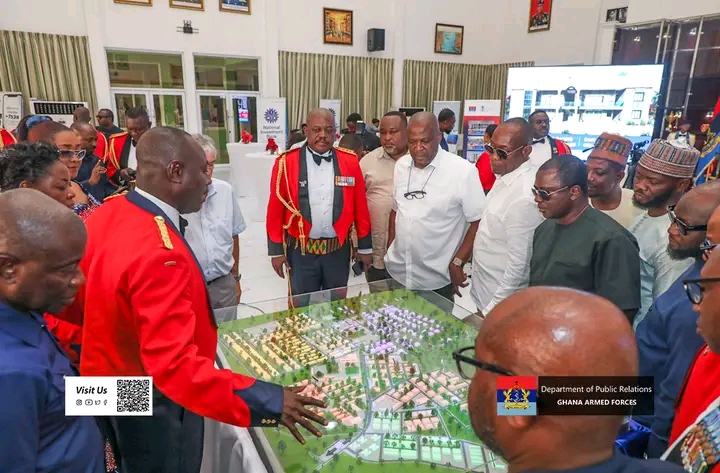
The Ghana Armed Forces,GAF, has launched a major fundraising drive to raise GH₵190 million for the redevelopment of Burma Camp, as part of efforts to tackle longstanding accommodation challenges within the military.
The initiative, unveiled at a fundraising luncheon, will support phase one of the redevelopment project at the Ghana Military Academy in Teshie. This initial phase will deliver 250 housing units, forming part of a broader multi phase plan aimed at transforming the camp into a modern residential community for military personnel.
According to Chief of the Defence Staff, Lieutenant General William Agyapong, many of the existing structures at Burma Camp date back to the colonial era and no longer meet acceptable living standards. “Many of the structures there have become weak, outdated and unable to meet modern standards of safety, comfort and dignity,” he said, highlighting the urgency of the project.

The redevelopment plan is designed not just as a renovation effort but as a complete overhaul of military housing infrastructure. Phase one will include a dormitory block as well as one bedroom, two bedroom, and three bedroom apartment units. The broader vision is to construct high rise residential buildings that maximise land use while significantly improving living conditions.
The project is expected to begin with a groundbreaking ceremony scheduled for July 3, 2026, with completion of the first phase targeted within a year. Once all five phases are completed, accommodation capacity at Burma Camp is projected to triple, addressing a major gap that has persisted across the Army, Navy, and Air Force.
The housing deficit has been exacerbated by increased recruitment and expansion of the armed forces in response to emerging security threats across West Africa. While personnel numbers have grown, infrastructure development has not kept pace, placing pressure on service members and their families.

Government has signalled its support for the initiative. A message delivered on behalf of Defence Minister Dr Cassiel Ato Forson reaffirmed commitment to improving military housing, noting that broader plans are already underway to deliver around 2,000 housing units, with a long term target of 10,000 units for the armed forces.
The redevelopment project is structured as a public private partnership, with strong backing from both government and private sector stakeholders. Prominent business leaders and institutions have already pledged support, reflecting a growing recognition of the link between national security and the welfare of military personnel.
Samuel Esson Jonah, who served as guest of honour at the event, described the current state of military housing as concerning and called for sustained private sector involvement. He emphasised that the success of the project will depend on clear vision, credible leadership, and strong accountability mechanisms.

Industry players have also stepped in. The Ghana Real Estate Developers Association has pledged support for the project, with its representatives assuring that developers are committed to delivering quality housing infrastructure.
Additional backing has come from major institutions and companies, including the Bank of Ghana and Jospong Group, among others. These contributions are expected to play a critical role in bridging funding gaps and ensuring timely execution.
The Burma Camp redevelopment is being positioned as a transformative project, not only for the military but also for national development. By improving living standards for personnel, authorities aim to boost morale, operational readiness, and overall effectiveness of the armed forces.
However, the scale of the project means execution will be closely watched. Delivering within budget and timeline, while maintaining transparency, will be critical to sustaining confidence among stakeholders.
At its core, the project reflects a broader shift in thinking. Modern security is no longer just about equipment and strategy, but also about the welfare and dignity of those tasked with protecting the nation.

GAF Vows Transparency After Soldier’s Assault on Civilians at Burma Camp — Pledges No Cover-Up