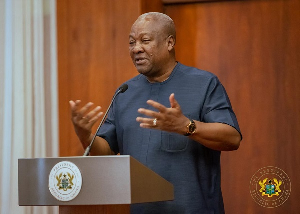
Mahama to grant Republic Day amnesty to 1,000 inmates

0
188

President John Dramani Mahama has approved a Republic Day amnesty that will see approximately 1,000 inmates released from prisons across Ghana, in one of the largest clemency exercises in recent years.

The decision, carried out in line with constitutional provisions, forms part of efforts to decongest correctional facilities while offering selected inmates a second chance to reintegrate into society. Republic Day, observed annually on July 1, has traditionally been used by Ghanaian leaders as an occasion to grant clemency to prisoners who meet specific criteria.

According to details from the Ghana Prisons Service, beneficiaries of the amnesty include inmates who have demonstrated good behaviour during their incarceration, those nearing the end of their sentences, as well as individuals convicted of minor, non violent offences. In some cases, prisoners with health challenges or special humanitarian considerations are also included.

mahama,amnesty

The move reflects ongoing concerns about overcrowding in Ghana’s prison system. Correctional facilities in the country have long faced capacity challenges, with inmate populations often exceeding available infrastructure. Amnesty exercises like this are seen as one of the immediate measures to ease pressure on the system while broader reforms are pursued.

Officials say the selection process is carefully vetted to ensure that public safety is not compromised. High risk offenders and individuals convicted of serious crimes are typically excluded from such releases. Instead, the focus is placed on those who are deemed capable of successful reintegration with minimal risk to society.

Beyond decongestion, the amnesty also highlights the government’s broader approach to criminal justice, which increasingly emphasizes rehabilitation over punishment. By granting clemency to inmates who have shown reform, authorities aim to encourage positive behaviour within prisons and promote a system that prioritizes reintegration.

However, the success of such initiatives often depends on what happens after release. Reintegration remains a major challenge, as former inmates frequently face stigma, limited employment opportunities, and social barriers. Without structured support systems, there is a risk of reoffending, which could undermine the long term impact of the amnesty.

Experts have consistently argued that clemency programmes should be accompanied by reintegration policies, including skills training, job placement initiatives, and community support mechanisms. These measures are critical in helping former inmates transition back into society and contribute productively.

The Republic Day amnesty also raises broader questions about the need for systemic reforms within Ghana’s justice system. While periodic releases can provide temporary relief, long term solutions require addressing underlying issues such as case backlogs, sentencing policies, and alternatives to custodial sentences for minor offences.

For now, the release of 1,000 inmates represents both a humanitarian gesture and a practical intervention aimed at easing pressure on the prison system. It also serves as a reminder of the balance governments must strike between justice, rehabilitation, and public safety.

As the process unfolds, attention will likely turn to how effectively the beneficiaries are reintegrated and whether additional reforms will follow to address the structural challenges facing Ghana’s correctional system.

Mahama grants Republic Day amnesty to 1,000 inmates in nationwide clemency exercise

Mahama Grants Amnesty to 998 Prisoners Across Ghana

Author

  • Daniel Ablordey

    Daniel Ablordey is a Business Analytics student at the University of Ghana Business School and an emerging strategist at the intersection of data, markets, and narrative. With a keen analytical mind and a passion for African business and economic trends, he is building a career focused on translating complex data-driven insights into accessible, decision-relevant stories that matter.As a writer and editor with Insight Ghana, African Business Insight, and The African Journal, Daniel delivers sharp, high-impact analysis on current affairs, business developments, and emerging trends across the continent. His work is defined by precision, clarity, and a deep commitment to responsible journalism — ensuring that every story he tells is not only accurate but meaningful to the audiences it serves.Beyond his editorial work, Daniel serves as an Ecobank Youth Ambassador, where he actively promotes financial inclusion, digital banking, and financial literacy among young Ghanaians. His leadership experience spans academic, professional, and faith-based institutions, where he has consistently driven initiatives centered on growth, structure, and long-term impact.Grounded in the principles of Pan-Africanism and service, Daniel brings a rare combination of analytical rigour and storytelling depth to his work. Whether unpacking market behavior, profiling emerging business leaders, or covering cultural shifts shaping the continent, he approaches every assignment with strategic intent and editorial integrity.His broader ambition is to contribute to Africa's transformation by shaping how data, business, and storytelling intersect — not just locally, but on a global stage.

Previous articleContent creation in the AI era: What you need to know to stand out
Next articleBranding in Business: Why it defines growth and trust
Daniel Amenyo Ablordey
Daniel Ablordey is a Business Analytics student at the University of Ghana Business School and an emerging strategist at the intersection of data, markets, and narrative. With a keen analytical mind and a passion for African business and economic trends, he is building a career focused on translating complex data-driven insights into accessible, decision-relevant stories that matter.As a writer and editor with Insight Ghana, African Business Insight, and The African Journal, Daniel delivers sharp, high-impact analysis on current affairs, business developments, and emerging trends across the continent. His work is defined by precision, clarity, and a deep commitment to responsible journalism — ensuring that every story he tells is not only accurate but meaningful to the audiences it serves.Beyond his editorial work, Daniel serves as an Ecobank Youth Ambassador, where he actively promotes financial inclusion, digital banking, and financial literacy among young Ghanaians. His leadership experience spans academic, professional, and faith-based institutions, where he has consistently driven initiatives centered on growth, structure, and long-term impact.Grounded in the principles of Pan-Africanism and service, Daniel brings a rare combination of analytical rigour and storytelling depth to his work. Whether unpacking market behavior, profiling emerging business leaders, or covering cultural shifts shaping the continent, he approaches every assignment with strategic intent and editorial integrity.His broader ambition is to contribute to Africa's transformation by shaping how data, business, and storytelling intersect — not just locally, but on a global stage.