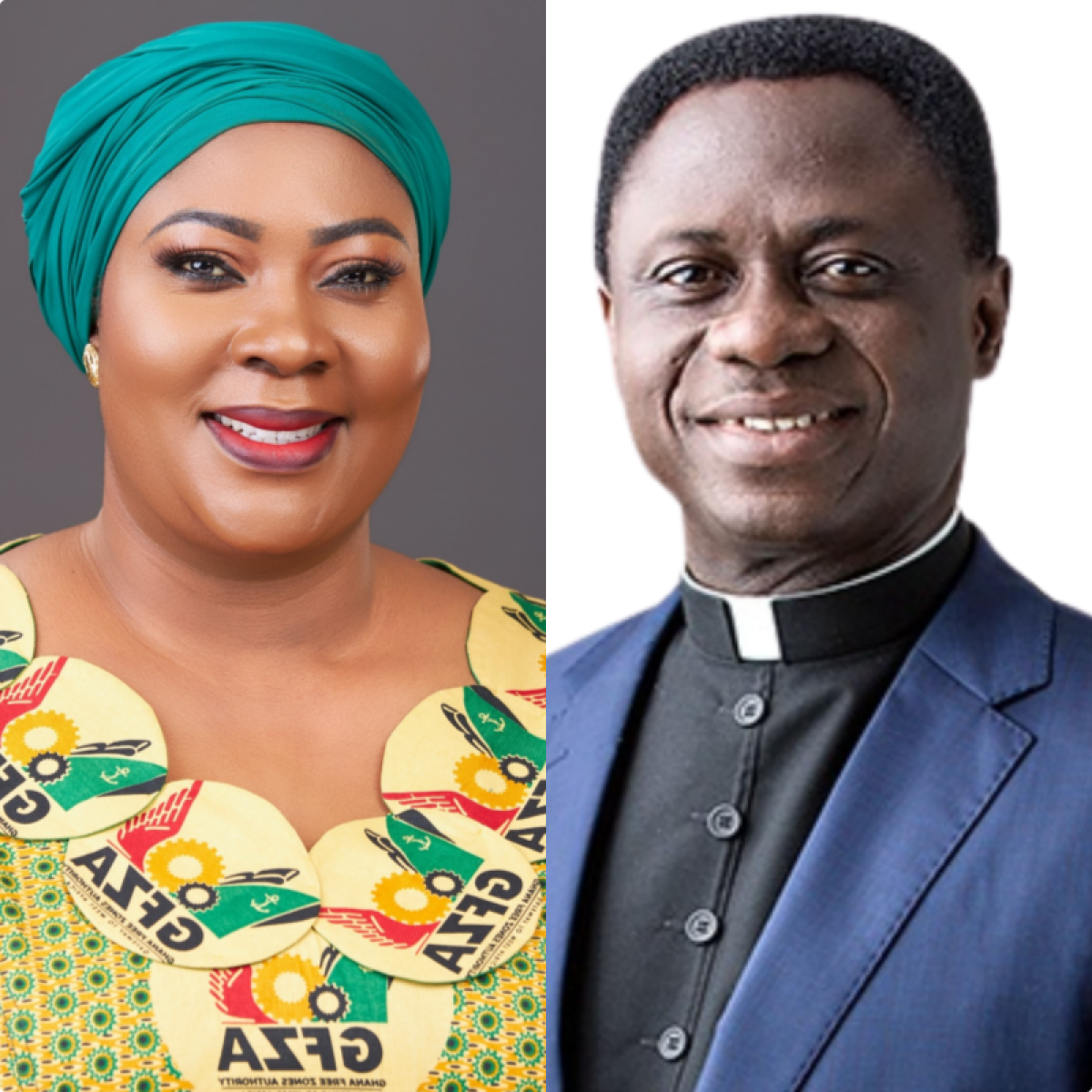
Pentecost chairman forgives Free Zones boss after emotional apology over galamsey dispute

0
139

Apostle Eric Nyamekye has publicly forgiven Mary Awusi following a heated controversy sparked by comments related to illegal mining, widely known as galamsey.

The reconciliation comes after an emotional public apology by Julius Debrah, who pleaded for forgiveness on behalf of the Free Zones CEO during a church service at the Pentecost International Worship Centre in Trassaco. Reports indicate that the Chief of Staff became visibly emotional as he addressed the issue, describing the remarks as a “slip” and urging the church to forgive.

The controversy began when Apostle Nyamekye raised concerns about the impact of galamsey on water bodies, noting that pollution had made it difficult for some congregations to perform water baptisms. His comments triggered a strong response from Mary Awusi, who criticised the cleric publicly, sparking widespread backlash and debate.

Following the backlash, Awusi issued an apology, acknowledging that her remarks may have been inappropriate and expressing respect for the church leader.

forgive,mining
Apostle Eric Nyamekye

Responding to the Chief of Staff’s plea, Apostle Nyamekye made it clear he harboured no resentment and chose to move on from the incident. “I have forgiven her,” he said, adding that the situation had, unexpectedly, drawn more attention to his ministry.

The incident has drawn national attention, not only because of the individuals involved but also due to the broader context of Ghana’s fight against illegal mining. Galamsey continues to be a major environmental and political issue, with growing concerns about water pollution, land degradation, and long term sustainability.

Analysts say the swift apology and forgiveness help de-escalate tensions between government officials and influential religious institutions, which play a significant role in shaping public opinion in Ghana. The Church of Pentecost, in particular, is one of the largest and most influential Christian denominations in the country.

At the same time, the episode has sparked conversations about public conduct among government appointees, especially on sensitive national issues like galamsey. Some critics argue that such exchanges risk distracting from the core issue of tackling illegal mining, while others see the resolution as a positive example of accountability and reconciliation.

Pentecost chairman forgives Free Zones boss after emotional apology over galamsey dispute

The emotional nature of the apology and the quick resolution suggest a deliberate effort to restore goodwill and maintain strong relations between the state and religious bodies. For now, the matter appears to have been settled, but it leaves behind a broader reminder of the importance of measured public discourse in addressing national challenges.

Galamsey in Ghana 2026: Latest developments and public reactions

Author

  • Daniel Ablordey

    Daniel Ablordey is a Business Analytics student at the University of Ghana Business School and an emerging strategist at the intersection of data, markets, and narrative. With a keen analytical mind and a passion for African business and economic trends, he is building a career focused on translating complex data-driven insights into accessible, decision-relevant stories that matter.

    As a writer and editor with Insight Ghana, African Business Insight, and The African Journal, Daniel delivers sharp, high-impact analysis on current affairs, business developments, and emerging trends across the continent. His work is defined by precision, clarity, and a deep commitment to responsible journalism — ensuring that every story he tells is not only accurate but meaningful to the audiences it serves.

    Beyond his editorial work, Daniel serves as an Ecobank Youth Ambassador, where he actively promotes financial inclusion, digital banking, and financial literacy among young Ghanaians. His leadership experience spans academic, professional, and faith-based institutions, where he has consistently driven initiatives centered on growth, structure, and long-term impact.

    Grounded in the principles of Pan-Africanism and service, Daniel brings a rare combination of analytical rigour and storytelling depth to his work. Whether unpacking market behavior, profiling emerging business leaders, or covering cultural shifts shaping the continent, he approaches every assignment with strategic intent and editorial integrity.

    His broader ambition is to contribute to Africa's transformation by shaping how data, business, and storytelling intersect — not just locally, but on a global stage.

Previous articleGoogle moves to pour up to US$40bn into Anthropic as AI race intensifies
Next articleHealing in silence is killing you: Why women must break free and speak
Daniel Amenyo Ablordey
Daniel Ablordey is a Business Analytics student at the University of Ghana Business School and an emerging strategist at the intersection of data, markets, and narrative. With a keen analytical mind and a passion for African business and economic trends, he is building a career focused on translating complex data-driven insights into accessible, decision-relevant stories that matter.

As a writer and editor with Insight Ghana, African Business Insight, and The African Journal, Daniel delivers sharp, high-impact analysis on current affairs, business developments, and emerging trends across the continent. His work is defined by precision, clarity, and a deep commitment to responsible journalism — ensuring that every story he tells is not only accurate but meaningful to the audiences it serves.

Beyond his editorial work, Daniel serves as an Ecobank Youth Ambassador, where he actively promotes financial inclusion, digital banking, and financial literacy among young Ghanaians. His leadership experience spans academic, professional, and faith-based institutions, where he has consistently driven initiatives centered on growth, structure, and long-term impact.

Grounded in the principles of Pan-Africanism and service, Daniel brings a rare combination of analytical rigour and storytelling depth to his work. Whether unpacking market behavior, profiling emerging business leaders, or covering cultural shifts shaping the continent, he approaches every assignment with strategic intent and editorial integrity.

His broader ambition is to contribute to Africa's transformation by shaping how data, business, and storytelling intersect — not just locally, but on a global stage.