

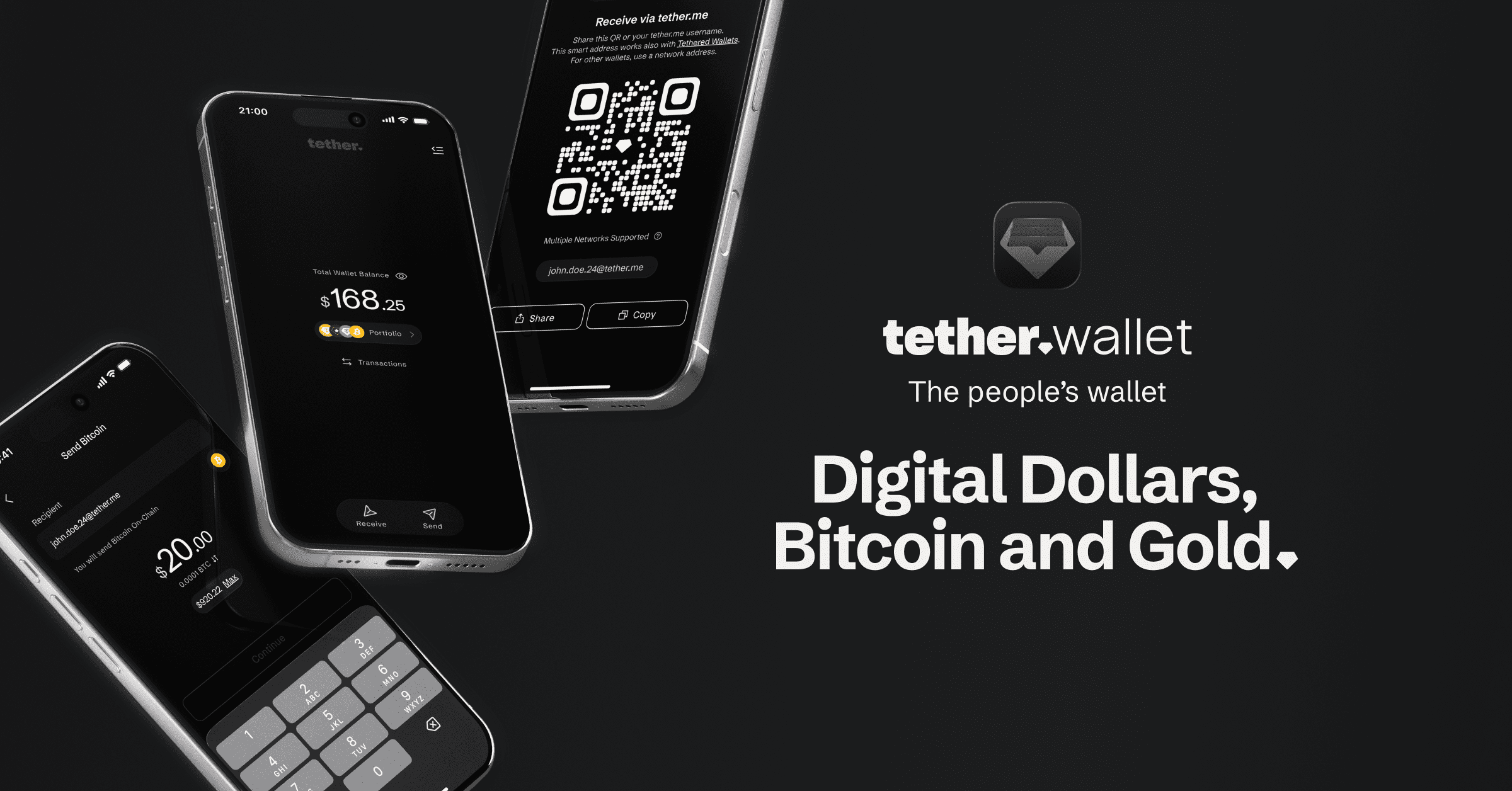
Tether has taken a major step beyond its traditional role in the crypto ecosystem with the launch of its first direct consumer product, a self-custodial digital wallet designed to give users full control over their digital assets while simplifying how they send and receive money globally.
The new product, called tether.wallet, represents a significant shift for the company, which for more than a decade has operated largely behind the scenes as the issuer of USD₮, the world’s most widely used stablecoin. With this launch, Tether is moving closer to everyday users by providing a platform where individuals can directly access and manage digital currencies without relying on third-party applications or exchanges.
According to the company, the wallet is built around a core principle of financial independence. It is fully self-custodial, meaning users retain control of their private keys and funds at all times, rather than entrusting them to a centralised institution. This approach is seen as a cornerstone of decentralised finance, allowing users to manage their assets independently but also placing responsibility for security entirely on them.

The wallet supports a range of major digital assets, including USD₮, Bitcoin, and tokenised gold, alongside Tether’s newer digital dollar offerings. These assets can be accessed across multiple blockchain networks, making the platform flexible for users operating in different parts of the crypto ecosystem.
One of the standout features of tether.wallet is its focus on usability. Historically, crypto transactions have required long and complex wallet addresses, often creating risks of error and limiting adoption among non-technical users. Tether’s new wallet replaces these with simple, human-readable identifiers, allowing users to send funds in a way that feels more like messaging than traditional crypto transfers.
The company has also addressed another longstanding barrier in blockchain transactions: network fees. Instead of requiring users to hold separate tokens to pay transaction costs, tether.wallet allows fees to be paid directly using the asset being transferred. This removes friction and makes the process more accessible, particularly for users in emerging markets where managing multiple tokens can be a challenge.
Tether says the launch is rooted in its broader mission of expanding financial inclusion. The company estimates that its technology is already used by over 570 million people worldwide, with adoption growing rapidly across both developed and developing economies. The new wallet is intended to extend that reach by making its infrastructure directly usable by individuals, especially those excluded from traditional banking systems.
Chief Executive Paolo Ardoino described the product as a natural evolution of Tether’s role in the digital economy. “Users should be able to send value as easily as sending a message, without relying on intermediaries and without giving up control of their assets,” he said, emphasising the company’s focus on accessibility and decentralisation.
The timing of the launch is also significant. As competition intensifies in the stablecoin and digital payments space, companies are increasingly seeking to control more of the user experience. By moving into wallets, Tether is not just providing infrastructure but positioning itself at the front end of digital finance, where users interact directly with their money.

Industry observers say this could reshape the competitive landscape. Until now, users typically relied on third-party wallets to store and transfer USD₮. With its own wallet, Tether gains a direct relationship with users, potentially strengthening its dominance in the stablecoin market.
However, the move is not without risks. Self-custodial wallets offer greater control but also expose users to potential loss if private keys are misplaced or compromised. In regions with low digital literacy, this could present challenges unless accompanied by strong user education.
Still, the broader impact could be transformative. By simplifying transactions, reducing costs, and expanding access, tether.wallet could accelerate the adoption of digital currencies for everyday use, from remittances to savings and payments.
The launch underscores a clear trend in global finance: the shift toward decentralised, user-controlled systems that challenge traditional banking models. With tether.wallet, Tether is betting that the future of money will not just be digital, but directly controlled by the people who use it.

Tether and Quidax Collaborate to Drive Blockchain Education in Africa