

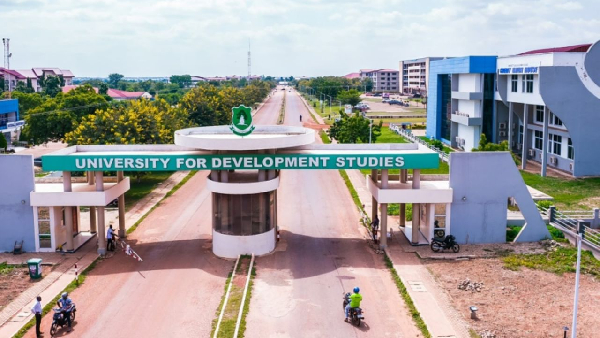
Tension has escalated at the University for Development Studies as security forces, including military personnel, have reportedly been deployed following a dramatic disruption of the institution’s Vice Chancellor selection process, raising serious concerns about governance, safety, and political interference in one of Ghana’s key public universities.
The development comes after a crucial meeting of the university’s governing council, convened to deliberate on the appointment of a new Vice Chancellor, was abruptly interrupted by unidentified armed men. According to credible reports, the individuals stormed the venue where the meeting was being held and openly declared that they would not allow any decision to be taken regarding the appointment.
Sources present at the scene indicated that at least two of the intruders were carrying pistols, heightening fear among council members and forcing an immediate halt to proceedings. One eyewitness recounted that the men approached the Chairman of the Council directly, after which the meeting was called off under unclear circumstances.

The disruption has since triggered heightened security responses on campus, with the deployment of military personnel aimed at preventing further escalation and ensuring the safety of university officials, staff, and students. While authorities have not officially confirmed all details of the deployment, the presence of security forces underscores the seriousness of the situation and the potential risks associated with the ongoing leadership transition.
At the heart of the crisis is the process to appoint a successor to the current Vice Chancellor, Seidu Al-hassan, whose tenure is expected to end in mid 2026. The university had earlier initiated a formal search process, including the inauguration of a committee tasked with identifying qualified candidates and recommending a suitable leader to steer the institution forward.
The Vice Chancellor position at UDS is one of the most powerful roles within the institution, combining both academic leadership and administrative authority. The office holder is responsible for shaping the university’s strategic direction, overseeing disciplinary matters, and representing the institution at both national and international levels.
Given the significance of the role, the selection process has attracted intense interest and, increasingly, controversy. Reports indicate that three candidates had already been shortlisted, with the council meeting intended to make a final decision when the disruption occurred.
This is not the first time such tensions have surfaced. A similar disruption reportedly occurred during a previous Vice Chancellor selection process in 2021, suggesting a pattern of interference that continues to undermine confidence in the university’s governance systems.
The deployment of the military, while aimed at restoring order, has also sparked debate about the growing use of security forces in resolving institutional disputes. Critics argue that such measures, though sometimes necessary, reflect deeper systemic issues that cannot be solved through force alone. Instead, they point to the need for transparency, accountability, and stronger institutional safeguards in leadership appointments.
For students and staff, the situation has created an atmosphere of uncertainty. UDS, established in 1992 and known for its multi campus structure and focus on community based development, plays a critical role in Ghana’s higher education landscape. Any instability within its leadership structure has the potential to disrupt academic activities, delay policy decisions, and affect the overall reputation of the institution.

Beyond the campus, the incident has drawn national attention, raising broader questions about the integrity of leadership selection processes in public institutions across Ghana. If left unresolved, such incidents risk eroding public trust and discouraging qualified candidates from participating in future appointments.
As it stands, the Vice Chancellor selection process remains stalled, with no clear timeline for when deliberations will resume. Authorities are expected to investigate the incident, identify those responsible for the disruption, and implement measures to prevent a recurrence.
The coming days will be crucial. Whether the situation stabilises or escalates further will depend on how effectively stakeholders, including government, university authorities, and security agencies, manage both the immediate crisis and the underlying tensions driving it.
For now, the presence of the military at UDS stands as a stark reminder that what should have been a routine administrative process has evolved into a full blown institutional crisis, with implications that extend far beyond the university itself.