

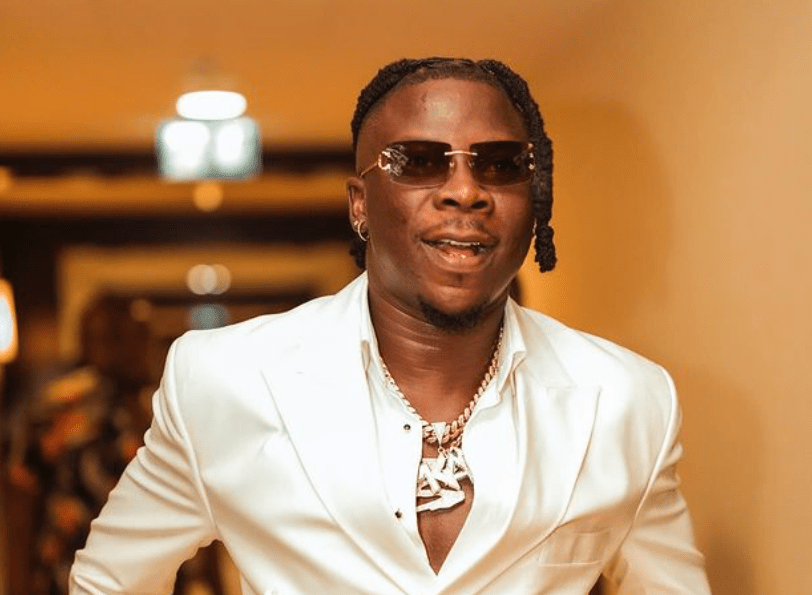
Ghanaian dancehall heavyweight Stonebwoy has pulled back the curtain on the financial reality behind big stage productions, admitting he sold two of his luxury vehicles to bankroll his headline show in Ho.
“I sold my Range Rover and V8 to invest in my concert in Ho,” he revealed during an interview, a statement that has quickly sparked reactions across Ghana’s entertainment space.
The concert in question, The Torcher Experience, was not just another performance. It was a deliberate expansion of his brand into the Volta Region, a move aimed at decentralising major entertainment events from Accra and bringing high-level production to underserved audiences.
That context matters. Because what sounds like a bold personal sacrifice is actually a strategic business decision.
Live concerts at that scale are expensive. Production alone including stage design, lighting, sound engineering, logistics, security, and artist coordination can run into hundreds of thousands of cedis. Add marketing, media rollout, and community engagement activities, and the financial burden becomes even heavier. In many cases, especially in Ghana, these events are not fully backed by corporate sponsorship.
That is the gap Stonebwoy stepped into.

By liquidating high-value assets like a V8 vehicle and a Range Rover, he essentially converted personal wealth into business capital. It is a move that reflects confidence, but also exposes a structural weakness in the industry. Artists are still acting as their own financiers.
The Ho edition of The Torcher Experience was designed as more than entertainment. It blended music with community impact, including youth-focused initiatives and local engagement programs that extended beyond the concert itself. That kind of model does not just sell tickets. It builds long-term brand equity.
But here is the hard truth. This approach is high risk.
If attendance falls short or sponsorships do not materialise as expected, the artist absorbs the loss directly. There is no safety net. No guaranteed return. That is the part fans rarely see when they celebrate a successful show.
Stonebwoy’s decision also signals something deeper about his positioning in the industry. He is not operating purely as a performer. He is functioning as a full-scale creative entrepreneur, controlling production, experience, and distribution of his brand.
That shift is critical.
For years, Ghana’s music industry has struggled with monetisation beyond streaming and occasional shows. Large-scale concerts have often been limited to Accra due to infrastructure, audience concentration, and sponsor visibility. By taking a stadium-level experience to Ho, Stonebwoy is actively challenging that model.
And it is working.
The Torcher Experience drew strong turnout and engagement, with fans traveling across the Volta Region and beyond to be part of the event. That proves demand exists outside traditional entertainment hubs. The issue has always been supply and investment.
Still, this raises a serious question for the industry.
Why must artists sell personal assets to execute national-scale events?
If the ecosystem were functioning properly, institutional support from brands, investors, and event partners would reduce that burden. Instead, the current reality forces artists to take on disproportionate financial risk to deliver experiences that ultimately benefit the entire industry.

Stonebwoy’s move will likely inspire admiration. It should also trigger reflection.
Because while the narrative of sacrifice sounds heroic, it is not sustainable as a model. Not every artist can sell a Range Rover to fund a concert. And not every gamble will pay off.
What he has done, however, is set a benchmark.
He has shown that belief in your craft must be backed by action, not just talk. He has also exposed the gap between ambition and infrastructure in Ghana’s creative economy.
The takeaway is simple. Talent is not the problem. Vision is not the problem. The real issue is the system around it.
And until that system evolves, the biggest players will continue to carry the industry on their own backs.
Stonebwoy releases Torcher II album exclusively on EVEN platform