

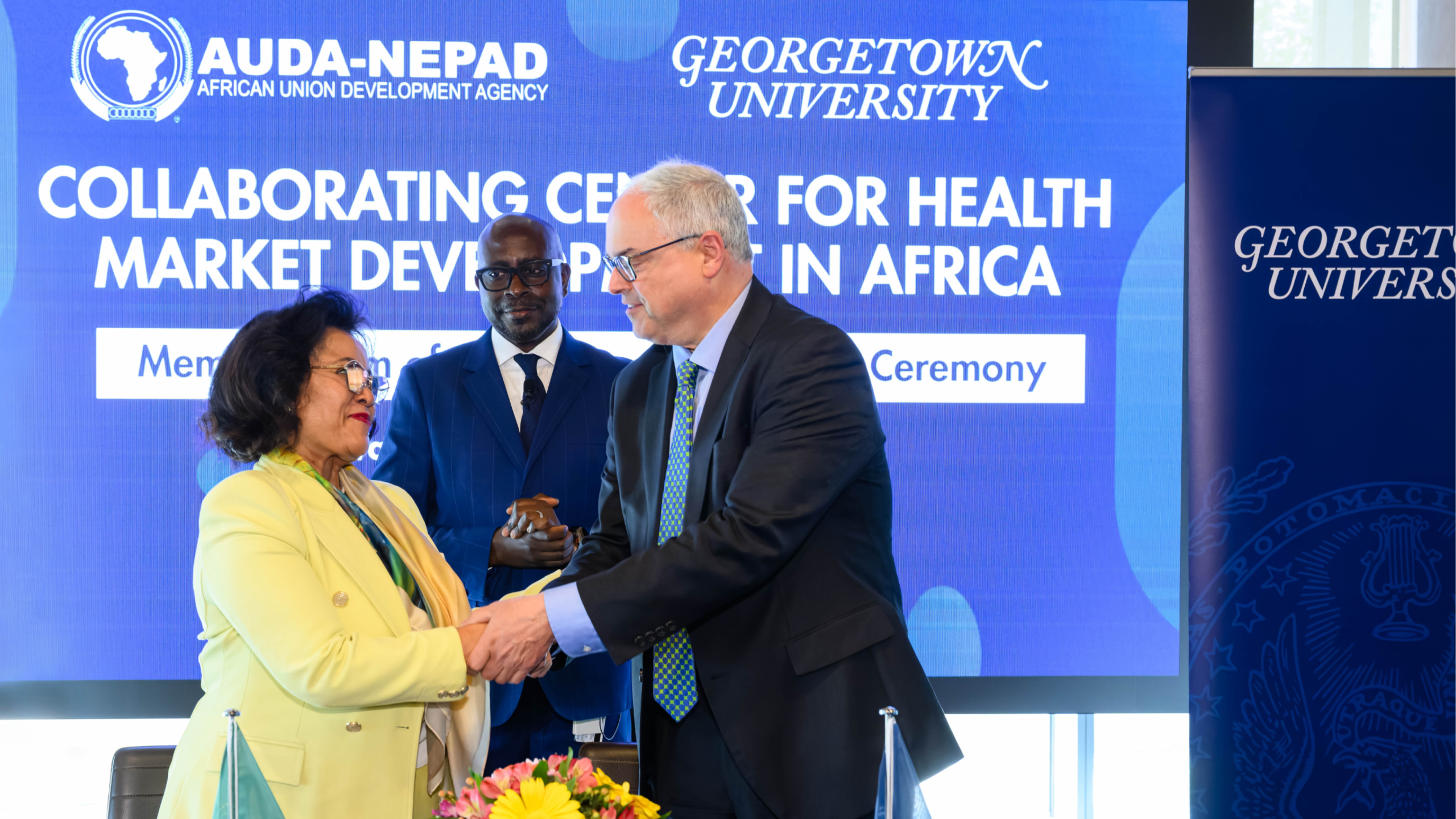
Africa’s long-running infrastructure deficit has received a modest but symbolically important boost after the African Union Development Agency–NEPAD secured US$1.2 billion in financing for 13 priority projects across the continent, marking another attempt to translate continental ambition into tangible development outcomes.
The funding, mobilised under Angola’s leadership within the agency’s Heads of State and Government Orientation Committee, is targeted at fast-tracking key infrastructure initiatives aligned with the African Union’s broader development blueprint. These projects form part of a wider pipeline designed to unlock economic integration, improve connectivity, and support industrial growth across multiple regions.
While the figure signals progress, it also underscores the scale of the challenge confronting African policymakers. The continent faces an estimated annual infrastructure financing gap of between $130 billion and $170 billion, a shortfall that continues to constrain economic expansion, limit trade efficiency, and weaken competitiveness in global markets.
Within this context, the $1.2 billion secured represents less a breakthrough and more a necessary step in a much larger and more complex financing journey. The selected projects are expected to span critical sectors including energy, transport, water systems, and digital infrastructure, all of which remain foundational to Africa’s long-term economic transformation.

The role of AUDA-NEPAD in this process is central. Established to coordinate and implement continental development programmes, the agency operates as a bridge between governments, development finance institutions, and private investors. Its mandate extends beyond project identification to include resource mobilisation, policy alignment, and technical support, positioning it as a key driver of Africa’s Agenda 2063 aspirations.
However, the persistent gap between project pipelines and actual delivery continues to expose structural weaknesses. Infrastructure development in Africa has historically been slowed by a combination of limited domestic funding, high project preparation costs, governance challenges, and difficulties in attracting long-term private capital. Even when financing is secured, execution delays and inefficiencies often dilute the intended economic impact.
Recent efforts by AUDA-NEPAD and its partners have increasingly focused on addressing these bottlenecks by improving project bankability and standardising investment frameworks. Initiatives such as blended finance structures and partnerships with multilateral institutions aim to reduce risk and attract institutional investors, including pension funds and sovereign wealth funds, into infrastructure financing.
There is also a growing recognition that Africa cannot rely solely on external capital to close its infrastructure gap. Calls for stronger domestic resource mobilisation have intensified, with policymakers encouraged to deepen capital markets, improve tax collection, and channel local savings into long-term development projects. This shift reflects a broader push for financial sovereignty and reduced dependency on external funding sources.
The economic implications of closing the infrastructure gap are significant. Improved transport networks can lower the cost of moving goods across borders, directly supporting the objectives of the African Continental Free Trade Area. Reliable energy systems can unlock industrial productivity, while digital infrastructure can accelerate innovation and integration into the global digital economy. Without these foundational systems, efforts to diversify economies and move up value chains will remain constrained.

At the same time, the credibility of such initiatives increasingly hinges on accountability. Past infrastructure programmes have often fallen short due to weak oversight, cost overruns, and limited transparency. Ensuring that the newly secured funds are deployed efficiently and deliver measurable outcomes will be critical in maintaining investor confidence and sustaining momentum.
The broader significance of this development extends beyond the immediate projects. It signals a continued effort by African institutions to take ownership of the continent’s development agenda, moving from fragmented national approaches toward more coordinated, continental solutions. This shift is essential in addressing cross-border infrastructure needs that no single country can tackle alone.
Yet, the underlying reality remains unchanged. Africa’s infrastructure challenge is not primarily a question of ambition or planning, but of execution at scale. The $1.2 billion secured is a step forward, but it is dwarfed by the magnitude of the task ahead. Closing the infrastructure gap will require sustained political will, disciplined implementation, and a far more aggressive mobilisation of both domestic and international capital.
For now, the announcement offers a reminder of both progress and limitation. Africa is building momentum, but it is still operating far below the level required to fundamentally reshape its economic landscape.