

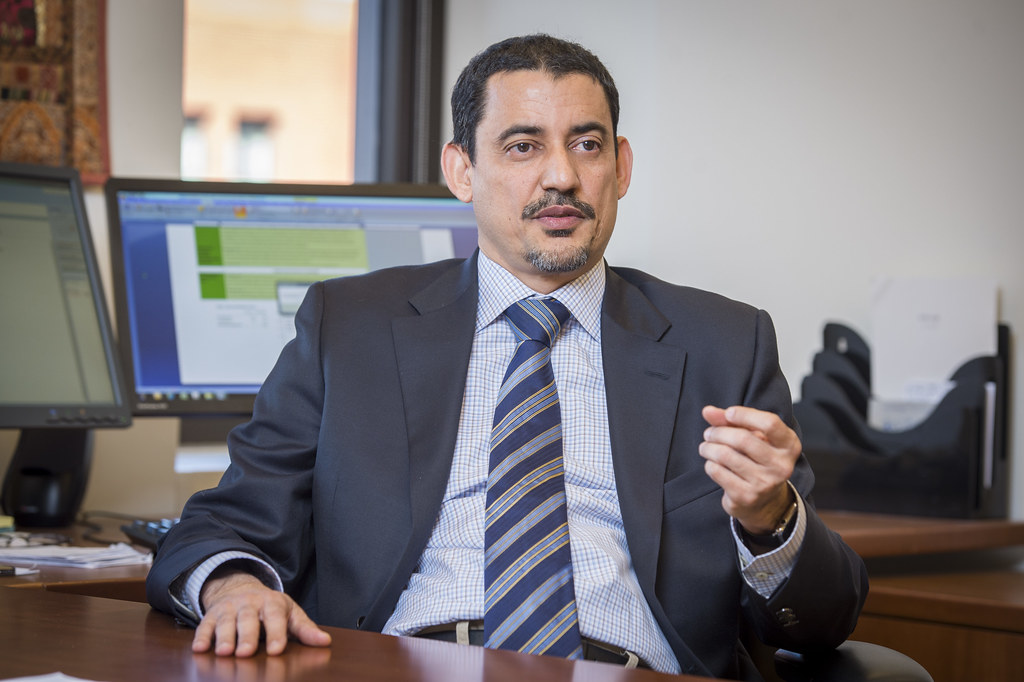
The International Monetary Fund,IMF, has appointed Zeine Zeidane as Director of its Africa Department, placing a seasoned policymaker at the centre of the institution’s engagement with a region facing mounting economic pressures and rising demand for financial support.
The appointment, announced on April 3, 2026, will see Zeidane succeed Abebe Aemro Selassie, who is set to step down on May 1 after nearly a decade in the role. During Selassie’s tenure, the IMF mobilised approximately 60 billion dollars in financing for sub Saharan Africa, underscoring the scale of the institution’s involvement in the region’s economic management and crisis response.
Zeidane assumes leadership at a critical time when African economies are grappling with a combination of debt pressures, inflation shocks, and constrained fiscal space. Many countries across the continent are seeking greater access to concessional financing, policy flexibility, and technical support to stabilise their economies while sustaining growth.
His appointment gives him oversight of the IMF’s Africa portfolio, a role that involves managing relationships with dozens of member countries, guiding economic reform programmes, and coordinating financial assistance. The position is widely regarded as one of the most influential within the IMF’s structure, particularly given Africa’s growing importance in global economic discussions.

Zeidane brings a blend of political and technocratic experience to the role. Before joining the IMF in 2012, he served as Prime Minister of Mauritania and Governor of the country’s central bank, giving him firsthand experience in managing economic policy at the national level. His background also includes work with the World Bank and the private banking sector, providing a broad perspective on development finance and international economic cooperation.
Within the IMF, Zeidane has held several senior positions, including Deputy Director of both the Africa Department and the Middle East and Central Asia Department. In these roles, he was involved in shaping key policy frameworks, including reforms to concessional lending and the institution’s response to the COVID 19 pandemic through mechanisms such as the Catastrophe Containment and Relief Trust.
His recent work in the Middle East also strengthened ties between the IMF and Gulf economies, which have become increasingly important financial partners for African countries. This experience is expected to be particularly valuable as the IMF navigates a more complex global financing environment where traditional and non traditional creditors play growing roles.
IMF Managing Director Kristalina Georgieva highlighted Zeidane’s deep institutional knowledge and policy experience, noting that his leadership will be crucial as the Africa Department responds to increasing demand for tailored economic support.
The challenges ahead are significant. Many African countries are dealing with high debt levels following successive global shocks, including the pandemic, rising interest rates, and commodity price volatility. Governments are also pushing for reforms in the IMF’s quota system, arguing that Africa remains underrepresented despite its population size and economic potential.
At the same time, the continent is seeking to balance fiscal consolidation with the need for social spending and economic growth. The IMF has advocated for a mix of gradual fiscal adjustment and targeted investment, but implementing these policies remains politically and economically complex in many countries.

Zeidane’s leadership will therefore be tested by the need to navigate competing priorities. On one hand, the IMF must ensure debt sustainability and macroeconomic stability. On the other, it must support growth and development in economies facing structural challenges such as infrastructure gaps, limited industrialisation, and vulnerability to external shocks.
His appointment also comes at a time when Africa’s global partnerships are diversifying. Increased engagement with countries such as China, India, and Gulf states is reshaping the continent’s financing landscape, giving governments more options but also complicating coordination among creditors.
For the IMF, maintaining relevance in this evolving environment will require adaptability and stronger collaboration with a broader range of stakeholders. Zeidane’s experience across different regions and institutions is expected to play a key role in this process.
Ultimately, the appointment signals continuity in the IMF’s approach to Africa while also reflecting the need for fresh leadership capable of addressing emerging challenges. As African economies continue to navigate a complex global landscape, the effectiveness of the IMF’s engagement under Zeidane will have significant implications for growth, stability, and development across the continent.
Ghana IMF programme performance highlights path to sustainable recovery