

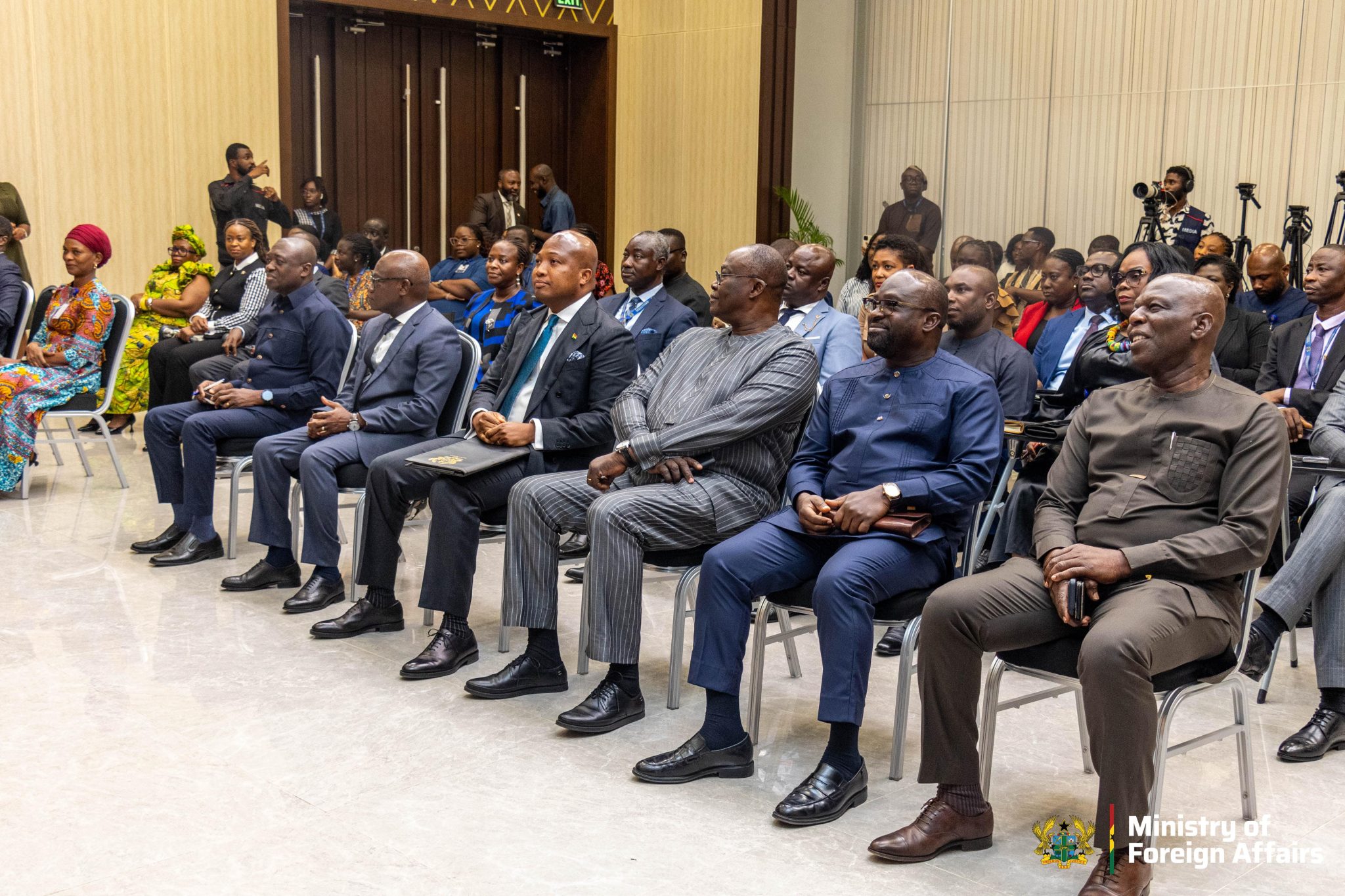
The Ministry of Foreign Affairs has held a press briefing to highlight Ghana’s pivotal role in the adoption of a landmark United Nations resolution declaring the trafficking of enslaved Africans and racialised chattel enslavement of Africans as one of the gravest crimes against humanity. The press conference, led by Honourable Samuel Okudzeto Ablakwa, emphasised the resolution’s historic significance for Africa and the African diaspora, and outlined Ghana’s continued leadership in advocating for reparatory justice on the global stage.
Hon. Ablakwa explained that the resolution, which was championed by Ghana in its capacity as the African Union Champion on Reparations, was adopted following extensive consultations and support from the international community. He noted that the adoption marks a decisive step beyond mere remembrance of the transatlantic slave trade, providing formal recognition of its structural, historical, and enduring consequences. According to the Minister, Africans were forcibly captured, transported in inhumane conditions, and subjected to systematic exploitation over several centuries. The resolution acknowledges these realities while calling for collective measures to address the lingering effects of slavery on affected communities.
The Minister further clarified that while the resolution does not impose legal obligations for financial compensation, it strongly encourages initiatives aimed at addressing systemic legacies through education, cultural restoration, and community development. By promoting restorative programs, the resolution establishes a framework for reparative justice that focuses on long-term social, cultural, and economic empowerment. Hon. Ablakwa explained that these measures aim to mitigate historical inequalities, enhance social cohesion, and promote healing for the descendants of enslaved Africans, while fostering dialogue and collaborative action among member states.
Highlighting the significance of Ghana’s leadership, Hon. Ablakwa detailed the extensive diplomatic and advocacy efforts undertaken to secure consensus. He acknowledged the contribution of international partners, continental institutions, civil society organisations, and diaspora groups, all of whom played critical roles in building the coalition necessary for adoption. Their efforts, he noted, underscore the importance of sustained advocacy, research, and coordinated action in bringing global attention to issues that have long been neglected.
The resolution, officially titled the Declaration of the Trafficking of Enslaved Africans and Racialised Chattel Enslavement of Africans as the Gravest Crime Against Humanity, marks a milestone in the recognition of historical injustices. While the declaration is non-binding, it sets a precedent for moral accountability and encourages member states to explore reparative initiatives in education, infrastructure, and cultural preservation. According to the Minister, the adoption signals a broader commitment by the international community to acknowledge the brutality of the transatlantic slave trade and its lasting impact on African societies.
Hon. Ablakwa also emphasised the symbolic importance of the resolution in affirming the dignity of African people and their descendants worldwide. He noted that official recognition at the UN level strengthens advocacy for reparatory justice across various sectors, from legal and educational frameworks to cultural restitution and social development initiatives. By formalising the narrative of accountability, the resolution ensures that the legacy of enslavement is neither ignored nor forgotten and that future generations understand the historical context and consequences of slavery.
The adoption of the resolution has been widely welcomed across the continent and in diaspora communities, marking both a symbolic and practical victory in the pursuit of justice. Ghana’s leadership is seen as a testament to its longstanding commitment to addressing historical injustices, advocating for the rights of Africans globally, and promoting reconciliation through dialogue, education, and cultural initiatives. The Minister concluded by reaffirming Ghana’s resolve to continue leading efforts that ensure recognition, accountability, and restorative action for the transatlantic slave trade’s enduring legacy.
This historic development reinforces Ghana’s position as a key advocate for reparatory justice and highlights the importance of collective African action on international platforms. The UN resolution represents a critical step in ensuring that the atrocities of the past are acknowledged, the voices of descendants are heard, and pathways for social, cultural, and economic empowerment are created for generations to come.