

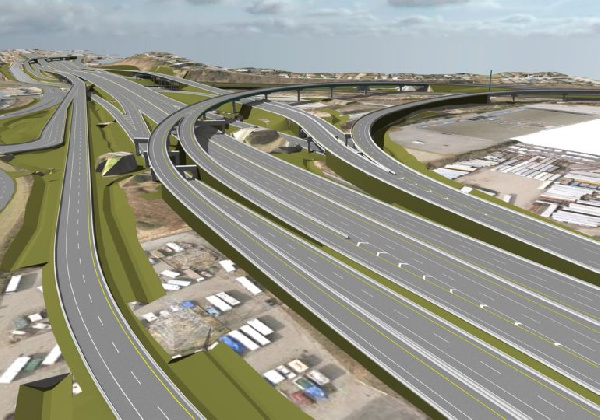
Ghana’s Tema Motorway expansion project has been scheduled for completion in August 2027, marking a major step in efforts to modernise one of the country’s most critical transport corridors that connects the capital Accra to the industrial and port city of Tema.
The project, which forms part of broader national infrastructure upgrades, is designed to ease chronic traffic congestion, improve freight movement efficiency and strengthen economic activity along the eastern transport corridor. The Tema Motorway has long been a vital artery for commerce, linking the Port of Tema, one of West Africa’s busiest maritime hubs, to inland markets and neighbouring countries.
Over the years, increasing vehicle volumes, industrial growth in Tema and rising container traffic have placed significant pressure on the existing motorway. This has resulted in frequent delays, higher transport costs and logistical bottlenecks that affect both businesses and commuters. The expansion project is therefore seen as a strategic intervention to address these long standing challenges.

Although full technical specifications of the upgrade vary by phase, the project is expected to include lane expansion, improved interchanges, enhanced road safety features and upgraded drainage systems to reduce flooding risks during heavy rains. Such improvements are essential in ensuring the motorway can support both current and future traffic demands, especially as Ghana continues to position itself as a regional trade hub under the African Continental Free Trade Area framework.
Transport infrastructure development remains a central pillar of Ghana’s economic strategy, with road networks playing a crucial role in domestic trade and regional connectivity. The Tema Motorway is particularly significant because it serves not only passenger traffic but also heavy cargo transport linked to imports, exports and industrial supply chains.
Experts note that efficient transport corridors like the Accra Tema route directly influence production costs, delivery timelines and overall competitiveness of Ghanaian goods. As a result, infrastructure improvements in this corridor are expected to have a multiplier effect on economic productivity, especially in manufacturing, logistics and port related services.
The planned completion timeline of August 2027 reflects the scale and complexity of the project, which requires phased construction to minimise disruption to ongoing traffic flow. Large scale road projects of this nature typically involve coordination between multiple government agencies, contractors and engineering consultants to ensure compliance with safety and quality standards.
The expansion also aligns with Ghana’s broader urban development challenges, particularly rapid population growth in the Greater Accra Region. As urbanisation continues, transport demand has increased significantly, placing pressure on existing road infrastructure that was not originally designed for current traffic volumes.
Beyond congestion relief, the upgraded motorway is expected to improve road safety outcomes. Ghana continues to face road safety challenges, with traffic accidents remaining a concern on major highways. Improved road design, clearer signage and better traffic management systems are expected to reduce accident risks and improve travel reliability.

The project also carries implications for regional trade competitiveness. The Port of Tema serves as a key gateway for landlocked countries in West Africa, including Burkina Faso, Mali and Niger. Efficient road connectivity from the port is therefore critical in maintaining Ghana’s position as a preferred transit route in the sub region.
Once completed, the expanded motorway is expected to reduce travel time between Accra and Tema, lower vehicle operating costs and improve overall logistics performance. These benefits are likely to be felt across multiple sectors, including agriculture, retail distribution, manufacturing and export oriented industries.
However, during the construction phase, commuters and transport operators are likely to experience periodic disruptions and diversions. Effective traffic management and clear communication from authorities will be essential to minimise inconvenience and maintain economic activity along the corridor.

The Tema Motorway expansion is part of a wider national push to upgrade Ghana’s transport infrastructure, including road rehabilitation projects, new highway developments and urban traffic management systems aimed at supporting long term economic growth.
As the 2027 completion date approaches, attention will remain on project execution, funding stability and construction quality, all of which will determine whether the motorway can deliver its intended economic and mobility benefits.