

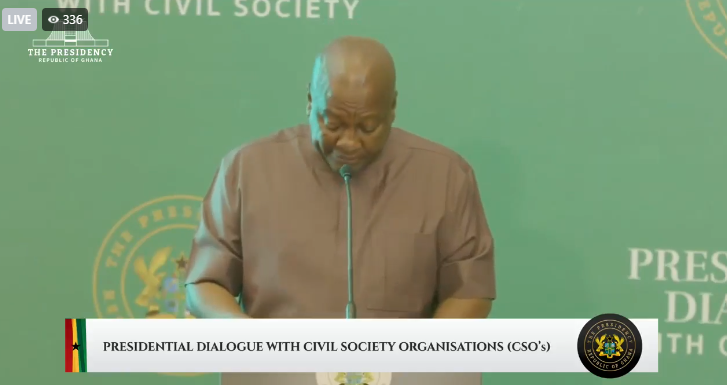
President John Dramani Mahama has ordered a full scale investigation into allegations of widespread sole sourcing under the government’s flagship “Big Push” infrastructure programme, following mounting public scrutiny over procurement practices in the road sector.
The directive comes in the wake of an explosive investigative report that raised concerns about how contracts under the initiative were awarded. The report alleged that dozens of road contracts, valued at tens of billions of cedis, were issued through sole sourcing within a relatively short period, sparking a national debate on transparency, accountability and adherence to procurement laws.
According to available data, at least 81 contracts worth over GH¢73 billion were reportedly awarded through sole sourcing within seven months, representing a significant portion of the total projects under the Big Push programme. These findings have raised questions about whether the government’s procurement approach aligns with existing legal frameworks and its own policy commitments.

In response, President Mahama has directed that a thorough and independent probe be conducted to establish the facts and determine whether due process was followed. The move signals a shift from political debate to formal accountability, as the presidency seeks to address growing public concern and protect the integrity of the programme.
The President has also reportedly tasked the Roads and Highways Ministry to provide a detailed response to the allegations, further indicating that the investigation will involve both administrative review and possible institutional scrutiny.
The controversy is particularly sensitive given that the Big Push programme was launched as a cornerstone of the administration’s infrastructure agenda, aimed at tackling Ghana’s longstanding road deficit. At the same time, Mahama had publicly committed to minimising sole sourcing and promoting competitive bidding in government contracts, making the allegations politically significant.
Under Ghana’s Public Procurement Act, sole sourcing is permitted only under exceptional circumstances, such as emergencies or when a specific contractor has exclusive rights to a service. However, critics argue that the scale of sole sourced contracts reported under the Big Push initiative raises concerns about whether these conditions were consistently met.
Government officials, including the Roads and Highways Minister, have rejected claims of wrongdoing, insisting that procurement processes followed legal procedures and that not all contracts were awarded through sole sourcing. Some officials maintain that a mix of procurement methods, including restrictive and competitive tendering, was used to fast track critical infrastructure projects.
Despite these assurances, the allegations have triggered calls from civil society groups, policy analysts and governance experts for an independent inquiry to establish the truth. Many argue that beyond legality, the issue also touches on value for money, efficiency and public trust in government spending.

The President’s decision to order a probe is therefore being seen as an attempt to balance political accountability with institutional credibility. It also reflects the broader challenge facing governments in managing large scale infrastructure programmes while maintaining strict compliance with procurement rules.
If the investigation confirms irregularities, it could lead to significant consequences, including sanctions, contract reviews or reforms in procurement processes. On the other hand, if the allegations are disproven, the probe could help restore confidence in the Big Push initiative and reinforce the government’s commitment to transparency.
Beyond the immediate controversy, the situation highlights a deeper structural issue within Ghana’s public procurement system. The recurring debate over sole sourcing points to longstanding concerns about how public contracts are awarded and monitored, especially in sectors involving large capital expenditure.
As the probe gets underway, attention will now shift to how quickly and transparently the investigation is conducted, and whether its findings will lead to meaningful reforms. For many observers, the outcome will serve as a test of the government’s resolve to uphold accountability while delivering on its ambitious infrastructure agenda.