

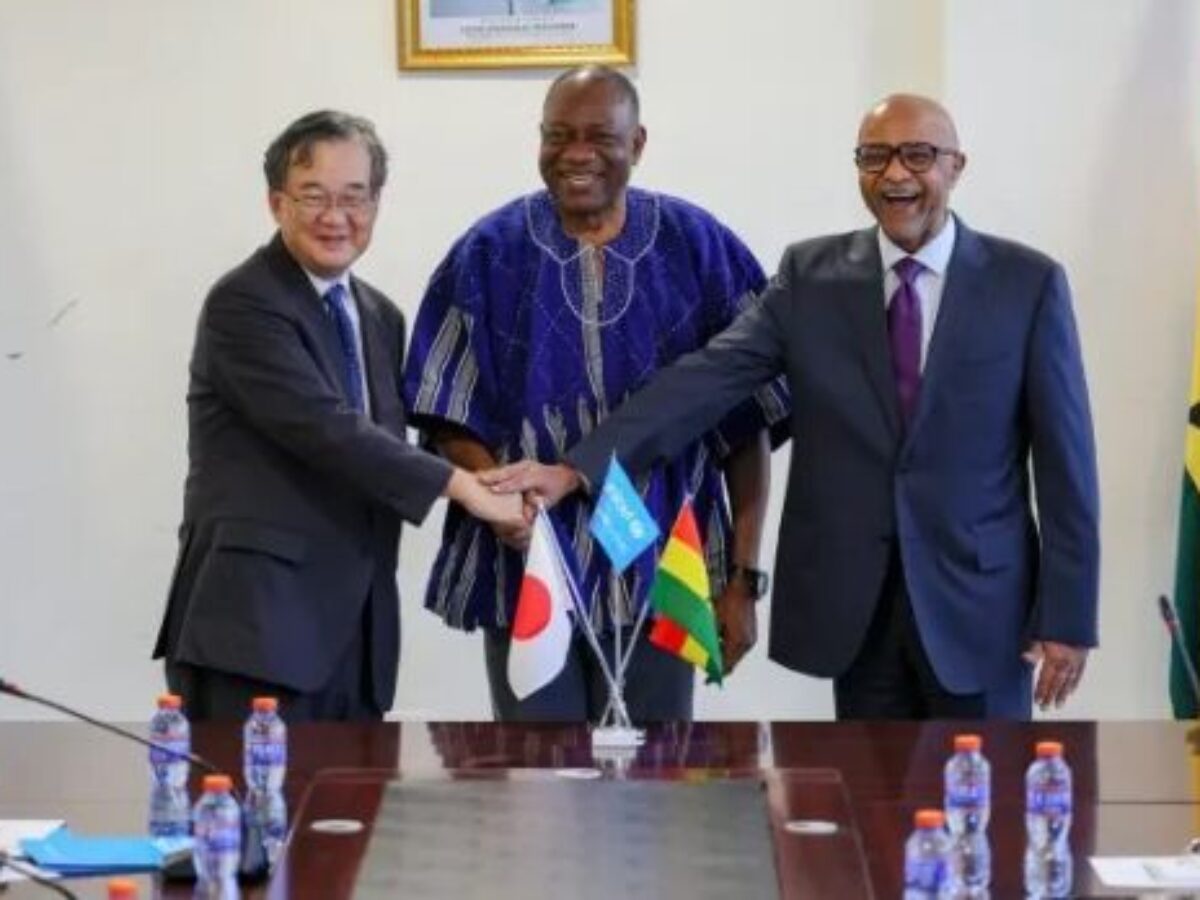
Ghana has entered a new phase in its fight against child labour through a 2.3 million dollar partnership with UNICEF and the Government of Japan, a move that signals renewed urgency to address one of the country’s most persistent social and economic challenges.
The initiative, launched in Accra, is structured as a twelve month public private partnership designed to strengthen Ghana’s child protection systems while targeting the root causes that continue to push children into labour. The programme comes against the backdrop of an estimated 1.1 million children currently engaged in child labour across the country, highlighting the scale of the issue and the structural gaps that still exist in enforcement and prevention systems.
At its core, the project seeks to move beyond surface level interventions by building a more coordinated and technology driven response. A key component of the partnership is the upgrade of Ghana’s Child Labour Monitoring System, which will integrate data across multiple institutions including the Ministry of Labour, Jobs and Employment and the Ministry of Gender, Children and Social Protection. This is expected to improve real time tracking, reporting and response to child labour cases, making vulnerable children more visible to social services and intervention programmes.

The initiative will focus on five regions identified as high risk zones Ashanti, Eastern, Western North, Ahafo and Central, with particular attention to sectors such as agriculture, fisheries and illegal mining where child labour remains prevalent. These sectors have historically been difficult to regulate due to informal structures, economic pressures on households and limited oversight mechanisms.
Beyond enforcement, the partnership introduces a broader socio economic approach. It aims to support over 13,000 individuals including children and caregivers through a mix of social protection services, education support and livelihood interventions. About 6,000 vulnerable children are expected to receive direct case management and psychosocial support, a move intended to address both immediate risks and long term reintegration into education and safe environments.
The programme also carries a strong gender dimension. It aligns with global Women, Peace and Security frameworks by prioritising the empowerment of adolescent girls and increasing women’s participation in community level decision making. This reflects growing recognition that gender inequality and poverty are deeply linked to child labour, especially in rural communities where girls are disproportionately affected.
Another notable element is the integration of what stakeholders describe as “Green Transformation.” This involves promoting sustainable agricultural and mining practices within targeted communities, ensuring that economic activities do not rely on exploitative labour while also meeting international environmental and human rights standards.
From a policy standpoint, the initiative is not operating in isolation. It is aligned with Ghana’s Accelerated Action Plan Against Child Labour for 2023 to 2027 as well as the National Action Plan on Business and Human Rights for 2025 to 2029. Technical support from the Japan International Cooperation Agency further strengthens the institutional backbone of the project, linking global expertise with local implementation.
Diplomatically, the partnership reflects deepening cooperation between Ghana and Japan, particularly in areas where trade, development and human rights intersect. Japanese officials have framed the initiative as part of a broader effort to ensure that global supply chains are not only efficient but also ethically grounded. This is particularly relevant for Ghana’s export sectors, where international buyers are increasingly demanding compliance with human rights and sustainability standards.

For UNICEF, the collaboration reinforces its long standing role in supporting child protection systems globally, while also adapting its approach to include digital innovation and cross sector partnerships. Officials have emphasised that addressing child labour requires more than enforcement, pointing instead to the need for integrated solutions that combine education, economic resilience and social protection.
The real test, however, will be execution. Ghana has launched similar initiatives in the past, but challenges such as funding gaps, weak enforcement and socio economic pressures have often limited long term impact. This new partnership attempts to address those weaknesses by combining financing, technology and multi stakeholder coordination.
If effectively implemented, the programme could serve as a model for tackling child labour not only in Ghana but across West Africa, where similar structural issues persist. More importantly, it represents a shift in thinking from reactive interventions to systemic reform, positioning child protection as a central pillar of national development rather than a peripheral social issue.