

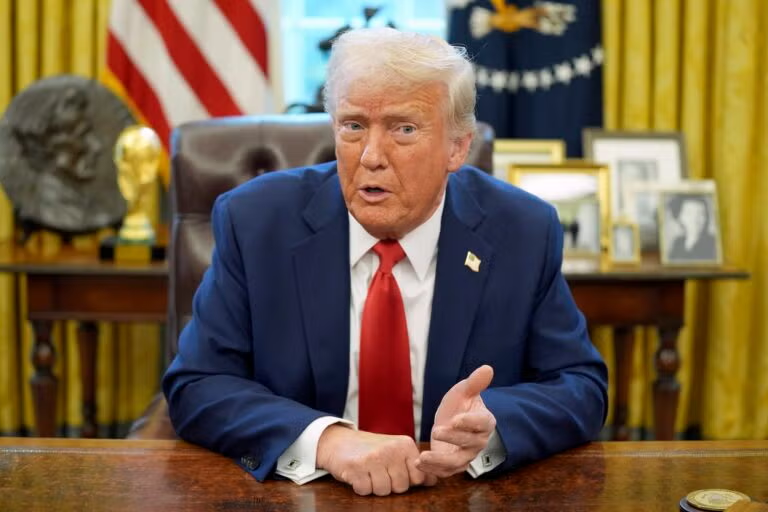
The administration of Donald Trump has filed a sweeping federal lawsuit against Harvard University, accusing the institution of violating U.S. civil rights law by failing to adequately protect Jewish and Israeli students from discrimination and harassment. The legal action, announced by the U.S. Department of Justice, marks a major escalation in an already protracted conflict between the federal government and one of the country’s most prestigious universities.
At the core of the lawsuit is an allegation that Harvard breached Title VI of the Civil Rights Act of 1964, which prohibits discrimination based on race, color, or national origin in programs receiving federal funding. According to federal officials, the university demonstrated “deliberate indifference” toward antisemitic harassment on campus, particularly in the aftermath of pro-Palestinian protests linked to the Israel-Hamas conflict that intensified following the October 2023 attacks.
The Justice Department argues that Harvard failed to enforce its own policies and did not take sufficient disciplinary action against students or staff involved in incidents that allegedly created a hostile environment for Jewish students. Officials claim that this inaction effectively denied affected students equal access to educational opportunities, thereby violating federal law.
As part of the lawsuit, the federal government is seeking significant financial remedies. Authorities have asked the court to freeze existing federal grants to Harvard and to recover billions of dollars in taxpayer-funded support already allocated to the university. Some reports indicate that the total amount at stake could reach into the billions, reflecting years of federal research funding and institutional support.

In addition to financial penalties, the lawsuit proposes structural changes to how Harvard manages campus conduct and compliance with civil rights law. These include the potential appointment of an independent, government-approved monitor to oversee the university’s policies and ensure adherence to federal anti-discrimination standards. The administration has also pushed for increased involvement of law enforcement in managing campus protests and disciplinary processes.
Harvard has strongly rejected the allegations, describing the lawsuit as politically motivated and an infringement on academic freedom and institutional autonomy. University officials insist that they have taken meaningful steps to address antisemitism, including strengthening disciplinary procedures, implementing new training programs, and adopting internationally recognized definitions of antisemitism.
The university further argues that the federal government’s actions may violate its First Amendment rights, particularly if they are perceived as attempts to impose ideological control over campus discourse. This legal defense echoes earlier disputes between Harvard and the Trump administration, including a 2025 case in which a federal judge ruled that the government had unlawfully frozen billions of dollars in research funding tied to similar allegations.
The current lawsuit is part of a broader campaign by the Trump administration targeting elite universities over issues related to antisemitism, diversity policies, and campus protests. Other institutions, including Columbia University, have faced similar scrutiny, with some opting to settle disputes and restore funding through negotiated agreements.

Legal experts note that the case could have far-reaching implications for higher education in the United States. If the government succeeds, it may establish a precedent for more aggressive federal oversight of universities, particularly in areas related to campus speech, protest management, and civil rights compliance. Conversely, a ruling in Harvard’s favor could reinforce protections for academic independence and limit the federal government’s ability to condition funding on policy changes.
The case is expected to proceed in federal court in Massachusetts and could take months or even years to resolve. In the meantime, it adds another layer of tension to the ongoing national debate over free speech, campus activism, and the role of government in regulating higher education.
As both sides prepare for a potentially landmark legal battle, the outcome will likely shape not only the relationship between the federal government and universities but also the broader interpretation of civil rights obligations in academic institutions.