

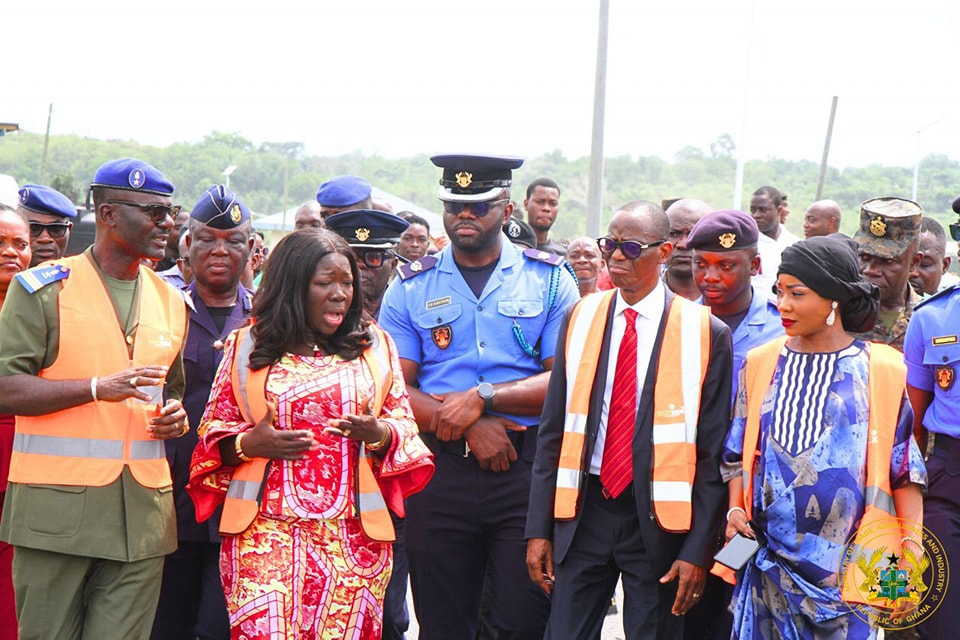
The joint border post at Noépé‑Akanu on the Ghana‑Togo frontier has undergone a major upgrade aimed at transforming trade, easing bottlenecks, and strengthening regional economic ties under the African Continental Free Trade Area (AfCFTA) initiative. The facility, situated along the busy Abidjan‑Lagos transport corridor, is a critical transit point for goods and people moving between Ghana, Togo, and the wider Economic Community of West African States (ECOWAS) region. The enhanced border post, handed over on March 16, 2026, reflects both countries’ commitment to improving infrastructure and boosting intra‑regional commerce as outlined by officials from both capitals.
Previously, the Noépé‑Akanu crossing suffered from inadequate infrastructure, limited energy supply, poor connectivity, and outdated facilities that slowed processing times for cross‑border traders and transporters. These issues have long undermined efforts to improve trade efficiency along one of West Africa’s most important economic corridors. The latest upgrades include robust improvements such as solar power installations to ensure uninterrupted electricity, enhanced water supply systems, upgraded drainage to prevent flooding, improved sanitation facilities, and better lighting and walkways for safety and convenience.
The border lies on the Abidjan‑Lagos transport corridor, a multi‑national route connecting the economic hubs of Côte d’Ivoire, Ghana, Togo, Benin, and Nigeria. It is designed to facilitate the efficient movement of goods and services across national boundaries. According to recent data on corridor performance, formalities at border posts can vary significantly, but Noépé‑Akanu historically recorded some of the shortest crossing times in the corridor — approximately one hour for trucks to complete formalities — a testament to its strategic importance.

Trade Ministers from both countries presided over the official handover ceremony. Ghana’s Trade Minister, Elizabeth Ofosu‑Adjare, and Togo’s Minister of Economy and Strategic Intelligence, Badanam Patoki, underscored the upgrades’ expected impact on trade facilitation. They highlighted that improved infrastructure and operational conditions would not only speed up transaction times but also enhance security and reliability at a crossing point that sees a mix of commercial cargo, small traders, and transport fleets.
One of the key motivations behind this investment is the implementation of AfCFTA protocols, which aim to boost intra‑African trade by reducing barriers, harmonising procedures, and improving logistics infrastructure across borders. With the new facilities, officials believe that the Noépé‑Akanu post will be better positioned to support AfCFTA’s goals by reducing delays and transaction costs for traders. Ghana’s embrace of broader regional integration has included other initiatives such as the adoption of the Pan African Payment and Settlement System (PAPSS) to facilitate cross‑border payments, while Togo has taken steps to simplify customs procedures and collaborate with neighbours on infrastructure improvements.
The enhancements have also focused on boosting working conditions for border officials, which in turn is expected to improve efficiency and reduce human delays that commonly plague older facilities. Improved sanitation, lighting, and dedicated spaces for processing formalities will help create a more predictable and user‑friendly environment for both officials and travellers. This is particularly important for supporting women and youth active in small‑scale cross‑border trade — groups that often face the harshest conditions at poorly maintained crossings.

By addressing these operational issues, the upgraded Noépé‑Akanu post aims to encourage greater movement of goods and resources, thereby enhancing competitiveness not only for Ghana and Togo but also for the broader ECOWAS economic space. Efficient border infrastructure is essential to reducing transit times and costs, key obstacles that have historically hindered trade across West Africa. Building momentum around improved crossings can also enable local producers and micro‑enterprises to expand into neighbouring markets with fewer logistical constraints.
In addition to physical upgrades, capacity building among border agencies has been emphasised as part of the broader strategy to streamline operations. Harmonised procedures — such as joint inspections and shared documentation systems — are anticipated to further reduce delays and increase transparency for importers and exporters. This collaborative approach mirrors trends across other ECOWAS border posts, where harmonised customs regimes and digital tools are slowly being introduced to expedite trade flows.
The project’s completion marks a significant step forward in Ghana and Togo’s trade cooperation and reflects a broader regional push to turn critical transport corridors into catalysts for economic growth. By boosting the Noépé‑Akanu crossing’s capacity, both countries are expected to benefit from stronger commercial linkages, streamlined logistics, and increased economic inclusion for traders of all sizes. As AfCFTA continues to shape trade policy across the continent, functional and efficient border posts like Noépé‑Akanu will be key components in realising the full potential of African economic integration.
Ghana moves to international arbitration with Togo over maritime boundary dispute