

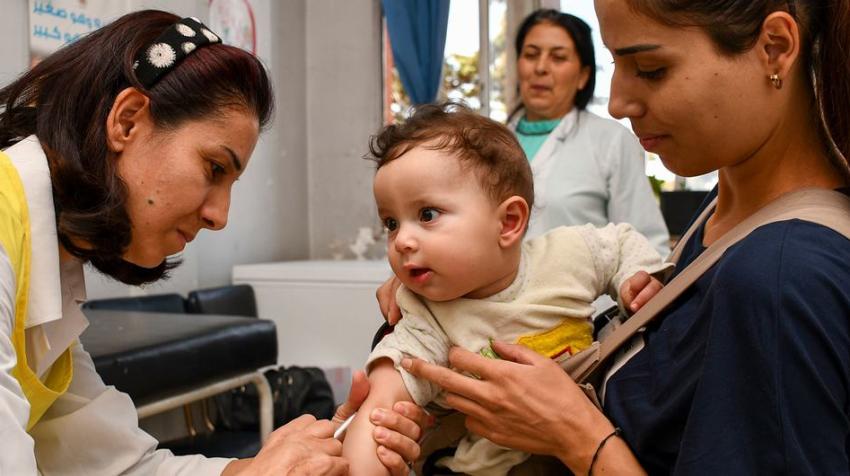
A new report backed by the United Nations has revealed that millions of children around the world continue to die each year from causes that are largely preventable, raising serious concerns about global health progress and inequality.
According to the findings, an estimated 4.9 million children under the age of five died in 2024 alone. While this represents a significant decline compared to previous decades, experts warn that the current pace of progress is slowing, threatening global efforts to end preventable child deaths by 2030.
The data highlights a harsh reality. Thousands of children die every day from conditions that can be avoided or treated with relatively simple and affordable healthcare interventions. Health agencies stress that these deaths are not inevitable but are instead the result of gaps in access to basic services such as vaccinations, maternal care, nutrition, and clean water.

The leading causes of death among young children remain largely unchanged and are overwhelmingly preventable. These include complications from premature birth, pneumonia, diarrhoea, malaria, and birth-related complications. Many of these conditions can be addressed through early medical care, proper nutrition, and access to essential medicines.
Malnutrition continues to play a major role in child mortality. While it may not always be listed as the direct cause of death, it weakens children’s immune systems and makes them more vulnerable to disease. Experts estimate that poor nutrition contributes to nearly half of all deaths among children under five.
The burden of these deaths is not evenly distributed across the globe. Sub-Saharan Africa and South Asia account for the majority of child mortality cases. In these regions, children face significantly higher risks of dying before their fifth birthday compared to those born in wealthier countries. Poverty, limited healthcare infrastructure, and lack of access to essential services all contribute to these disparities.
In many of the hardest-hit areas, fragile health systems struggle to provide even the most basic care. Hospitals and clinics are often under-resourced, understaffed, or located far from the communities that need them most. This makes it difficult for families to seek timely medical attention, especially in rural or conflict-affected regions.
Conflict is another major factor worsening the crisis. Millions of children live in areas affected by war or instability, where healthcare systems have been disrupted or destroyed. In such environments, access to vaccines, clean water, and proper nutrition becomes severely limited, increasing the risk of disease and death.

The report also points to a concerning slowdown in global progress. While child mortality rates declined rapidly between 1990 and 2015, improvements have slowed significantly in recent years. Experts attribute this to a combination of factors, including reduced international funding for health programs, the long-term impact of the COVID-19 pandemic, and growing economic pressures on developing countries.
Funding cuts have had a direct impact on essential services. In some regions, vaccination campaigns have been scaled back, and maternal and child health programs have been reduced. This has left many vulnerable children without access to life-saving interventions.
Climate change is also emerging as a growing threat to child health. Rising temperatures, extreme weather events, and food insecurity are increasing the spread of diseases and worsening malnutrition in many parts of the world. These environmental challenges are expected to further strain already fragile health systems.

Despite these challenges, health experts emphasize that solutions are within reach. Proven and cost-effective interventions already exist that could significantly reduce child mortality. These include expanding access to vaccinations, improving maternal and newborn care, ensuring proper nutrition, and providing clean water and sanitation.
The report warns that without urgent and sustained action, millions more children could die in the coming years. Current projections suggest that tens of millions of children may not survive to their fifth birthday by 2030 if progress continues at its current pace.
Officials from the United Nations have called for renewed global commitment to child survival, urging governments, donors, and international organizations to increase investment in healthcare systems and prioritize the most vulnerable populations.
The findings serve as a stark reminder that, although significant progress has been made over the past few decades, the fight against preventable child deaths is far from over. For millions of children, access to basic healthcare remains the difference between life and death.
Ensuring that every child has the chance to survive and thrive will require stronger health systems, increased funding, and coordinated global action. Without this, the goal of ending preventable child deaths may remain out of reach.