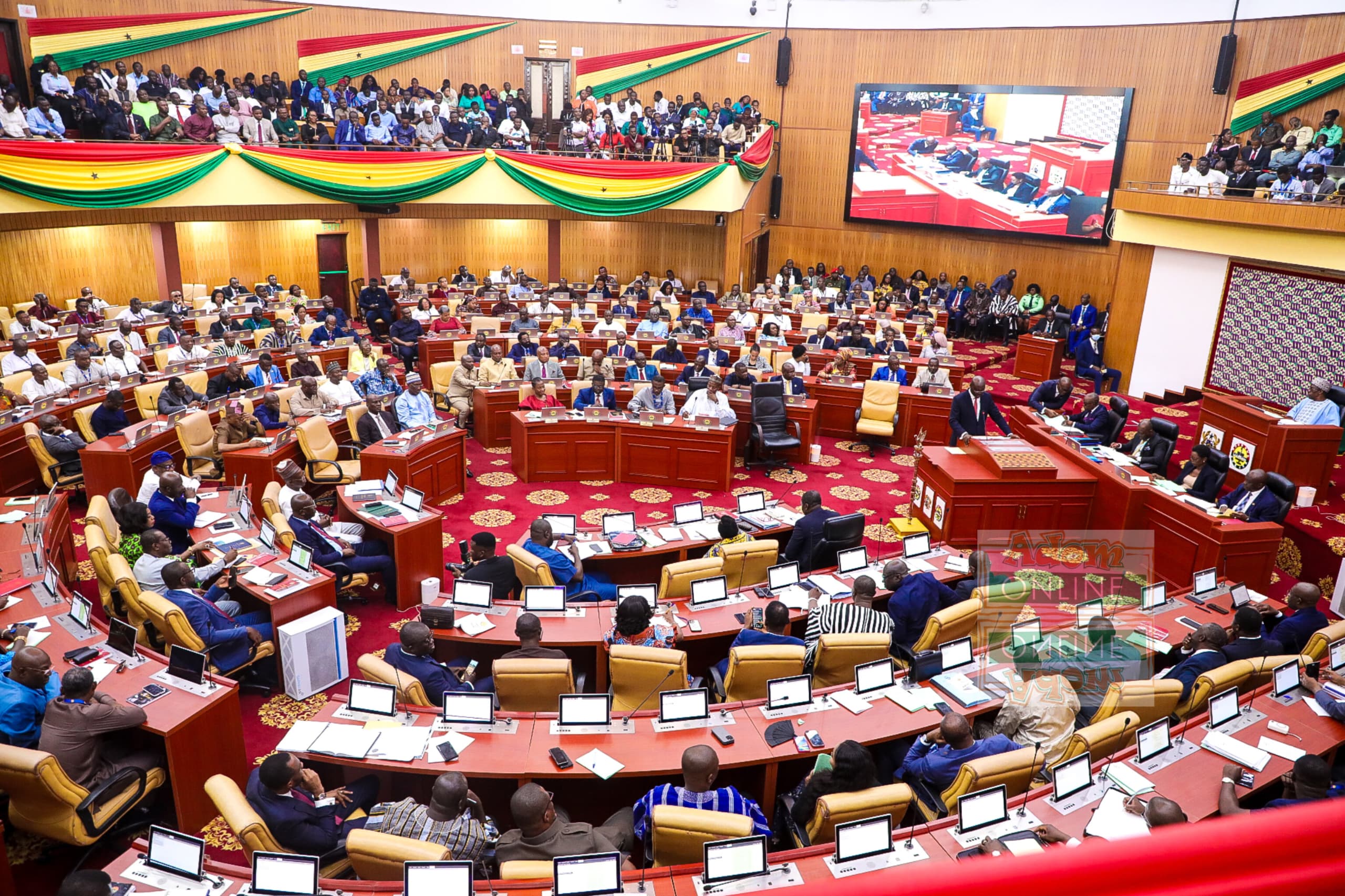
Parliament approves GH¢8.7 billion allocation to District Assemblies Common Fund for 2026

0
474

Parliament of Ghana has approved an allocation of GH¢8.7 billion to the District Assemblies Common Fund (DACF) for the 2026 fiscal year, reinforcing the government’s commitment to decentralisation and local development.

The approval represents a significant financial commitment aimed at empowering Metropolitan, Municipal and District Assemblies across Ghana to execute development projects and improve service delivery at the grassroots level. The DACF remains one of the most critical funding mechanisms for local governance, providing resources for infrastructure, sanitation, education, and healthcare initiatives.

The GH¢8.7 billion allocation is expected to support a wide range of community level projects, including the construction and rehabilitation of roads, schools, health facilities and water systems. District assemblies rely heavily on the fund to address pressing developmental challenges, particularly in underserved and rural areas where internally generated funds are limited.

parliament,dacf

The decision comes at a time when local authorities are under increasing pressure to deliver visible development outcomes while managing constrained resources. Analysts say the size of the allocation signals recognition by central government of the need to strengthen local institutions and accelerate development at the district level.

However, concerns remain about the efficiency and transparency of fund utilisation. Over the years, issues such as delays in disbursement, mismanagement and political interference have affected the impact of the DACF. Stakeholders are therefore calling for stricter accountability measures and improved monitoring systems to ensure that the funds achieve their intended purpose.

The allocation is also expected to play a role in supporting Ghana’s broader economic recovery and development agenda. By channeling resources directly to local governments, the policy aims to stimulate economic activity, create jobs and improve living conditions across communities.

Parliament approves GH¢8.7 billion allocation to District Assemblies Common Fund for 2026

Experts argue that for the fund to deliver maximum impact, it must be complemented by strong governance frameworks, capacity building for local officials and active citizen participation in project selection and monitoring. Without these, the effectiveness of even large allocations may be limited.

As implementation begins, attention will shift to how quickly the funds are released and how efficiently they are utilised by district assemblies. The success of the initiative will ultimately be measured by tangible improvements in infrastructure and quality of life at the community level.

The approval of the GH¢8.7 billion DACF allocation underscores the continued importance of decentralisation in Ghana’s development strategy, while highlighting the need for accountability and performance at the local government level.

Pension capital can transform Ghana’s economy

Author

  • Daniel Ablordey

    Daniel Ablordey is a Business Analytics student at the University of Ghana Business School and an emerging strategist at the intersection of data, markets, and narrative. With a keen analytical mind and a passion for African business and economic trends, he is building a career focused on translating complex data-driven insights into accessible, decision-relevant stories that matter.As a writer and editor with Insight Ghana, African Business Insight, and The African Journal, Daniel delivers sharp, high-impact analysis on current affairs, business developments, and emerging trends across the continent. His work is defined by precision, clarity, and a deep commitment to responsible journalism — ensuring that every story he tells is not only accurate but meaningful to the audiences it serves.Beyond his editorial work, Daniel serves as an Ecobank Youth Ambassador, where he actively promotes financial inclusion, digital banking, and financial literacy among young Ghanaians. His leadership experience spans academic, professional, and faith-based institutions, where he has consistently driven initiatives centered on growth, structure, and long-term impact.Grounded in the principles of Pan-Africanism and service, Daniel brings a rare combination of analytical rigour and storytelling depth to his work. Whether unpacking market behavior, profiling emerging business leaders, or covering cultural shifts shaping the continent, he approaches every assignment with strategic intent and editorial integrity.His broader ambition is to contribute to Africa's transformation by shaping how data, business, and storytelling intersect — not just locally, but on a global stage.

Previous articleBitcoin resilience shines amid Iran war chaos
Next articleSmall-cap value stocks set to outperform S&P 500
Daniel Amenyo Ablordey
Daniel Ablordey is a Business Analytics student at the University of Ghana Business School and an emerging strategist at the intersection of data, markets, and narrative. With a keen analytical mind and a passion for African business and economic trends, he is building a career focused on translating complex data-driven insights into accessible, decision-relevant stories that matter.As a writer and editor with Insight Ghana, African Business Insight, and The African Journal, Daniel delivers sharp, high-impact analysis on current affairs, business developments, and emerging trends across the continent. His work is defined by precision, clarity, and a deep commitment to responsible journalism — ensuring that every story he tells is not only accurate but meaningful to the audiences it serves.Beyond his editorial work, Daniel serves as an Ecobank Youth Ambassador, where he actively promotes financial inclusion, digital banking, and financial literacy among young Ghanaians. His leadership experience spans academic, professional, and faith-based institutions, where he has consistently driven initiatives centered on growth, structure, and long-term impact.Grounded in the principles of Pan-Africanism and service, Daniel brings a rare combination of analytical rigour and storytelling depth to his work. Whether unpacking market behavior, profiling emerging business leaders, or covering cultural shifts shaping the continent, he approaches every assignment with strategic intent and editorial integrity.His broader ambition is to contribute to Africa's transformation by shaping how data, business, and storytelling intersect — not just locally, but on a global stage.