

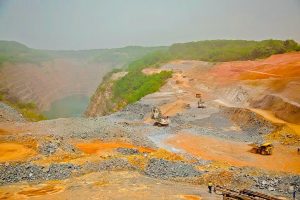
A bid by Ghanaian mining services company Engineers and Planners (E&P) to acquire the Damang Gold Mine is drawing significant attention within the country’s extractive industry, with analysts describing the move as a potential turning point for indigenous participation in large-scale mining.
If the acquisition process succeeds, it could mark one of the most significant moments in Ghana’s mining history, with a locally owned firm taking operational control of a major gold mine traditionally dominated by multinational corporations. The development is being closely watched by policymakers, industry players and economic analysts who believe it could reshape Ghana’s resource ownership landscape.
The Damang Mine, located in Ghana’s mineral-rich Western Region, is one of the country’s prominent gold assets and has played a notable role in Ghana’s gold production for decades. The mine was previously operated by Abosso Goldfields Limited, a subsidiary of the South African mining giant Gold Fields. Over its operational lifespan, the mine has produced more than four million ounces of gold and remains one of the country’s important gold assets.
Ghana is currently the largest gold producer in Africa, and its mining sector remains a central pillar of the national economy, contributing significantly to export revenues, government income and employment. However, despite this importance, ownership of large-scale mining operations has historically been dominated by foreign companies.
The emerging bid by E&P therefore represents a rare attempt by a Ghanaian owned company to transition from providing mining services to becoming the owner and operator of a major large scale gold mine.
Damang mine transition
The Damang Mine has been at the centre of recent developments following the expiration of Gold Fields’ 30 year mining lease in 2025. To allow time for transition arrangements and ensure continued operations, the Government of Ghana granted the company a one year extension of the lease.
Gold Fields later confirmed that it would formally hand over the Damang asset to the Government of Ghana in April 2026 as part of the transition process.

The mine itself is considered a major gold deposit within Ghana’s mining sector, with estimated reserves of millions of ounces of gold and infrastructure developed over years of production.
Industry experts note that the transition of the Damang Mine from multinational ownership to potential Ghanaian control could represent a broader policy shift aimed at increasing local participation in the mining sector.
E&P’s strategic move
Engineers and Planners has long been one of Ghana’s leading indigenous mining services companies, with more than three decades of experience in contract mining and related services across the country.
The company has previously operated at the Damang Mine as a mining contractor, providing operational support and services within the mining complex. This role gave the firm detailed knowledge of the mine’s geology, operational systems and workforce structure.

Documents and industry sources indicate that the company began exploring the possibility of acquiring the Damang asset several years ago. Early engagement regarding a potential purchase dates back to 2022, when the company started positioning itself for a transition from contractor to mine owner.
A major turning point occurred in September 2023 when Gold Fields informed E&P of its plans to wind down pit mining operations at the Damang site as part of the mine’s end of life strategy.
Rather than withdrawing from the site, E&P submitted a proposal to purchase the mine, signaling a bold strategic shift for the Ghanaian firm.
Industry analysts say the proposal demonstrated both ambition and confidence from a local company seeking to move into full scale mine ownership.
Regulatory engagement and negotiations
In order to proceed with any acquisition of a mining asset in Ghana, regulatory approval is required under the Minerals and Mining Act, 2006 (Act 703). This means that any transfer of mining interests must receive approval from the Ministry of Lands and Natural Resources.
As part of its strategy, E&P formally engaged the government and requested a “no objection” letter to facilitate negotiations with Gold Fields.
The ministry subsequently issued the document in March 2024, confirming that it had no objection to the two companies engaging in negotiations regarding a potential transaction involving the Damang asset. However, authorities emphasized that any final deal would still require full government approval.
This step effectively opened the door for negotiations between E&P and Gold Fields to continue.
Further discussions intensified in late 2025 as government officials, the Minerals Commission and industry stakeholders examined the future operational structure of the Damang Mine.
Government correspondence also acknowledged that E&P had engaged Gold Fields regarding the potential acquisition of shares in the mine and agreed that the company should be included in the transition planning process.
Broader implications for Ghana’s mining sector
Analysts say the potential acquisition carries broader implications beyond the future of a single mine. For more than a century, Ghana’s large scale mining industry has been dominated by multinational companies, with local firms largely limited to support services such as contract mining, logistics and engineering.
If E&P ultimately secures control of the Damang Mine, it could represent a historic milestone in Ghana’s efforts to expand indigenous participation in the extractive sector.
The development could also encourage other Ghanaian companies to pursue similar opportunities in the future, gradually increasing local ownership within one of the country’s most lucrative industries.
However, experts caution that operating a large scale gold mine requires substantial capital investment, technical expertise and strong regulatory oversight. Maintaining production levels and ensuring long term sustainability will be critical if local ownership models are to succeed.
As the April 2026 transition deadline approaches, negotiations over the Damang Mine continue to attract national attention. The outcome could determine whether Ghana moves closer to a new era in which local companies play a leading role in managing the country’s vast mineral wealth.