

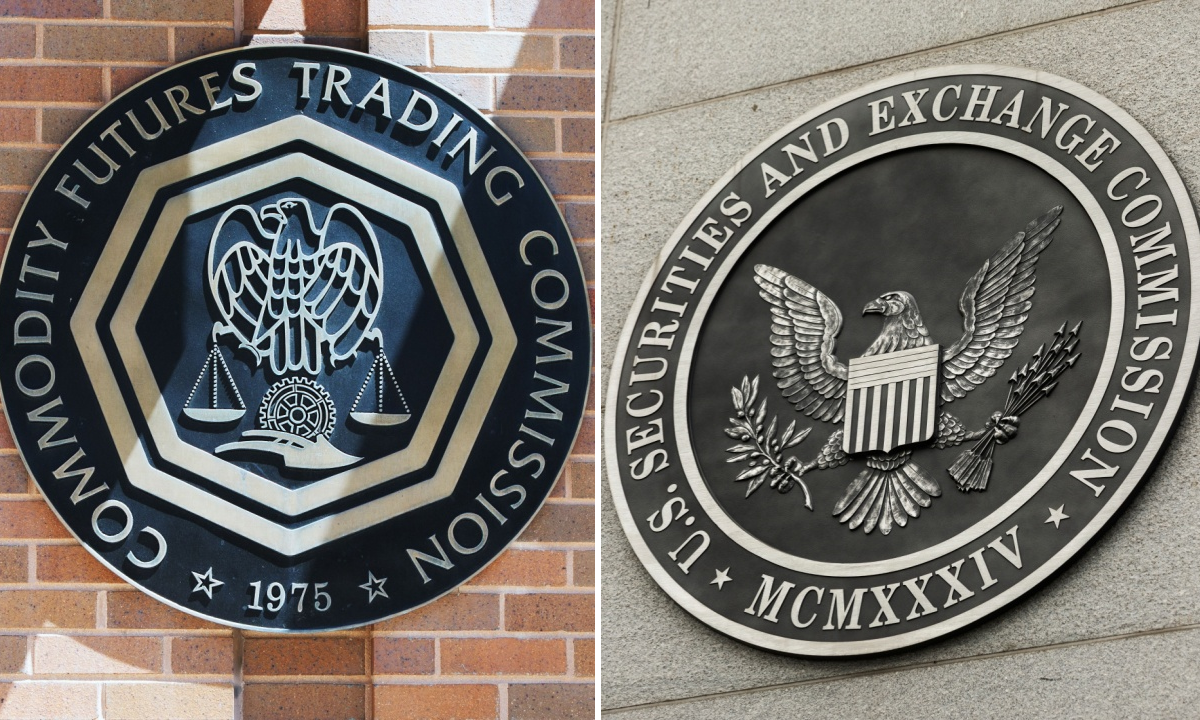
The United States’ two main financial regulators, the U.S. Securities and Exchange Commission, SEC, and the Commodity Futures Trading Commission, CFTC, have agreed to work more closely together to regulate the rapidly evolving cryptocurrency industry, marking a significant shift in the country’s approach to digital asset oversight.
The move comes after years of regulatory tension between the two agencies over which one should take the lead in overseeing various aspects of the crypto market. Traditionally, the SEC has regulated securities markets, while the CFTC oversees commodities and derivatives trading. However, the emergence of cryptocurrencies blurred those boundaries, as many digital assets possess characteristics of both securities and commodities.
To address this longstanding conflict, the agencies recently signed a memorandum of understanding that formalizes coordination between them. The agreement is designed to align regulatory efforts, improve information sharing and eliminate overlapping oversight that has often created uncertainty for companies operating in the digital asset sector.
Under the new framework, the two regulators will coordinate policy development, enforcement actions and supervisory activities. Officials say the initiative will also allow both agencies to jointly review financial products and applications that involve elements of both securities and commodities regulation.

SEC Chairman Paul Atkins said the cooperation is intended to create what he described as a “new era of regulatory coherence” for financial markets, especially in emerging sectors such as cryptocurrency. The goal, he explained, is to prevent firms from being passed back and forth between regulators when their products fall into overlapping jurisdictions.
For years, crypto companies operating in the United States have complained about regulatory ambiguity. Many digital asset projects have faced enforcement actions from the SEC over allegations that they issued unregistered securities, while the CFTC has also asserted authority over crypto derivatives markets. The lack of a unified regulatory framework often left companies uncertain about which rules applied to their products.
The memorandum of understanding is expected to reduce these conflicts by encouraging both regulators to coordinate their interpretations of crypto laws and regulatory classifications. One of the major objectives is to develop a more consistent approach to determining whether specific digital assets should be treated as securities or commodities.
Another key element of the partnership involves enhanced data sharing and joint monitoring of cryptocurrency markets. Regulators believe that by combining their analytical capabilities, they can better identify market manipulation, fraud and systemic risks in the rapidly expanding digital asset ecosystem.
The cooperation also forms part of a broader initiative known as “Project Crypto,” which aims to modernize U.S. financial regulation in response to blockchain based technologies and decentralized finance. Through this initiative, regulators hope to develop what they describe as a “fit for purpose” regulatory framework tailored specifically for digital assets rather than relying solely on traditional financial rules.

Industry observers say the partnership could represent a turning point for the cryptocurrency sector in the United States. In the past, regulatory fragmentation was frequently cited as one of the biggest barriers to innovation, with some blockchain startups relocating to jurisdictions with clearer legal frameworks. A coordinated approach from the SEC and CFTC may help restore confidence among investors and technology companies seeking to build digital asset services within the U.S. market.
At the same time, the initiative does not eliminate the fundamental legal distinction between the two agencies. The SEC will continue to oversee securities markets and investment products, while the CFTC will remain responsible for derivatives trading and commodities markets. Instead of merging the agencies’ powers, the agreement focuses on harmonizing their approaches where jurisdictions overlap.
The development also comes as lawmakers in Washington continue debating comprehensive legislation that could establish a permanent regulatory framework for cryptocurrencies. While Congress has yet to finalize such legislation, regulators say the new partnership will allow them to coordinate oversight more effectively in the meantime.
For the crypto industry, the collaboration between the SEC and CFTC signals that U.S. regulators are moving toward a more unified strategy for supervising digital asset markets. As cryptocurrencies continue to expand into mainstream finance, the success of this regulatory alignment may play a crucial role in shaping the future of digital finance in the United States and beyond.