

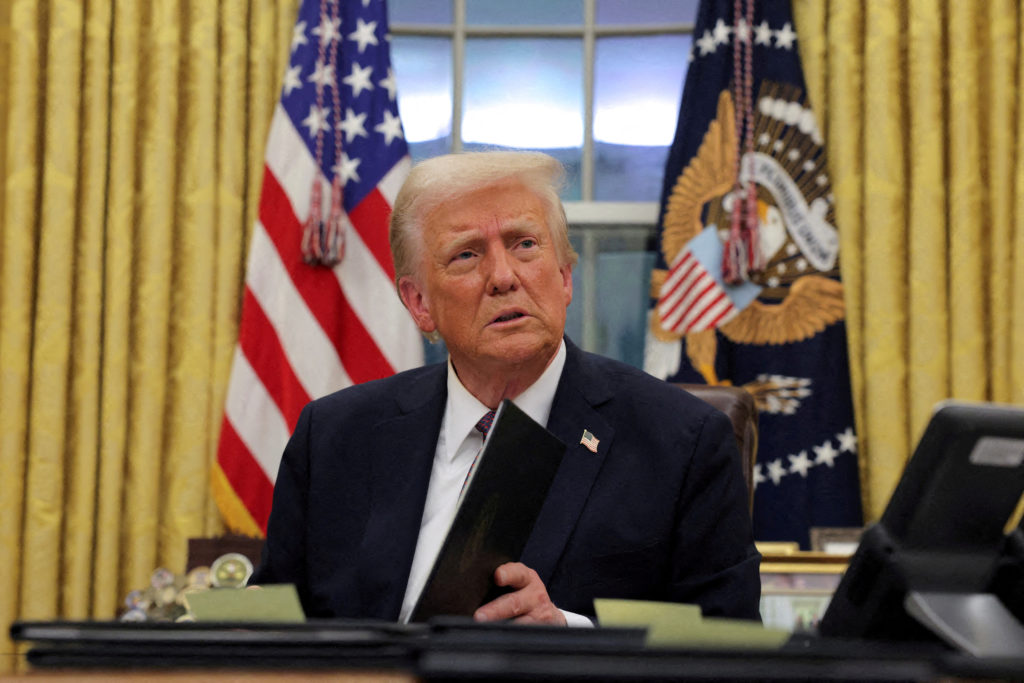
U.S. President Donald Trump has warned that the North Atlantic Treaty Organization could face a “very bad future” if member states fail to support the United States in addressing the escalating crisis involving Iran and the disruption of global shipping routes in the Persian Gulf.
Trump’s remarks come amid heightened tensions in the Middle East following confrontations involving the United States, Iran and its regional allies. The U.S. president stressed that the burden of maintaining global security, particularly the safety of vital maritime routes, should not fall solely on Washington.
Speaking in a recent interview, Trump urged NATO partners and other countries that depend heavily on energy shipments from the Middle East to contribute more actively to safeguarding the Strait of Hormuz, one of the world’s most important oil transit chokepoints. The strait connects the Persian Gulf with the Gulf of Oman and the Arabian Sea and serves as a critical passage for global energy supplies.
Roughly one-fifth of the world’s oil shipments pass through the narrow waterway each day, making any disruption a major threat to international energy markets and global trade. Recent tensions have raised concerns about the safety of vessels navigating the route, pushing oil prices higher and increasing fears of supply disruptions.
Trump said many countries benefit economically from the energy shipments that move through the strait but have not contributed enough to securing it. He argued that allies in Europe and Asia should deploy naval assets and other military capabilities to help ensure the waterway remains open and safe.
According to Trump, the United States has historically shouldered the majority of the responsibility for protecting global shipping routes, particularly in the Gulf region. However, he suggested that continuing to carry that burden without stronger support from allies could strain the long-standing transatlantic alliance.
“If they don’t help us, NATO is going to have a very bad future,” Trump warned, emphasizing that countries benefiting from the region’s oil trade must take a more active role in protecting it.

The comments also reflected long-standing disagreements within NATO over burden-sharing and defense spending. For years, Trump has criticized European allies for relying too heavily on American military resources while failing to meet agreed defense spending targets.
Beyond NATO, Trump also called on major global economies that rely heavily on Middle Eastern oil to play a role in protecting maritime traffic. Countries such as China, Japan and South Korea were mentioned as nations with significant energy interests in the region and therefore a stake in ensuring the free flow of oil through the strait.
The U.S. president suggested that international cooperation would be necessary to maintain stability in the region and prevent further disruption to global markets. He also hinted that diplomatic and economic relationships could be influenced by how countries respond to the crisis.
The warning comes as tensions between Washington and Tehran have escalated in recent weeks, raising fears of a wider regional conflict. Military exchanges and strategic maneuvers in the Gulf have heightened concerns about shipping security and the potential for further escalation.
Iran has long threatened to close or disrupt traffic through the Strait of Hormuz in response to military pressure or sanctions. Any attempt to block the passage could have dramatic consequences for global energy supplies and the international economy.
Despite Trump’s strong warning, NATO has not issued a formal unified response directly addressing the U.S. president’s remarks. However, officials within the alliance have reiterated their commitment to collective security and cooperation among member states.

Several NATO countries have reportedly expressed caution about becoming directly involved in military operations related to the Iran crisis. Some governments are concerned that deeper military participation could escalate the conflict or draw the alliance into a broader regional war.
Instead, discussions among allies have focused on potential contributions such as maritime surveillance, intelligence sharing and limited naval support aimed at ensuring safe passage for commercial vessels.
Security analysts say the situation highlights ongoing debates within NATO about its global role. While the alliance was originally established to protect Europe during the Cold War, it has increasingly been involved in operations beyond the continent, including counter-terrorism missions and maritime security efforts.
Experts warn that disagreements over how far NATO should go in supporting U.S. strategic objectives could test the unity of the alliance. At the same time, they say the crisis underscores the growing importance of protecting international trade routes in an era of geopolitical competition and rising regional tensions.
As the conflict involving Iran continues to unfold, the pressure on NATO allies to clarify their position and determine the extent of their support for U.S. efforts in the region is likely to increase.
The coming weeks may prove critical in determining whether the alliance can present a unified response to the crisis or whether divisions among member states will deepen as the situation evolves.