


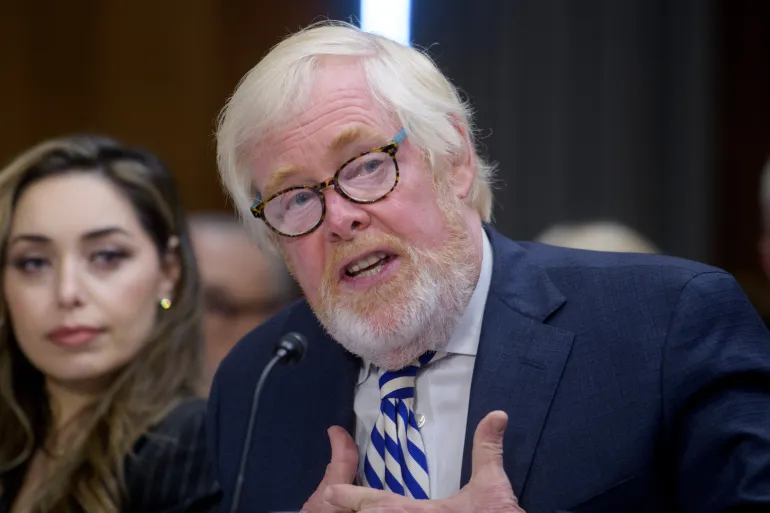
South Africa has formally summoned the newly appointed United States ambassador to the country, Leo Brent Bozell III, to explain a series of public comments that Pretoria has described as “undiplomatic” and inconsistent with established diplomatic protocol. The unprecedented demarche reflects growing tensions in the relationship between South Africa and the United States amid disagreements over domestic policies, judicial decisions and wider geopolitical stances.
Ambassador Bozell, who presented his credentials in Pretoria less than a month ago, has quickly become a controversial figure. His remarks came during a BizNews business conference in Hermanus, Western Cape, where he touched on sensitive issues, including South Africa’s racial policies and interpretations of contentious historical symbols.
The spark for the diplomatic reprimand was Bozell’s criticism of how South African courts have interpreted the apartheid era chant “Kill the Boer, kill the farmer.” Although South Africa’s Constitutional Court and other judicial bodies have ruled that the chant does not constitute hate speech when understood in its historical context, Bozell rejected that legal interpretation. “I’m sorry; I don’t care what your courts say. It’s hate speech,” he told the conference audience, a statement that was widely seen in Pretoria as disrespectful toward South African judicial independence.
Following the backlash, Bozell issued a clarification on his official social media account, emphasising that his personal views are distinct from the formal position of the United States government and that Washington respects the independence of South Africa’s judiciary. He reiterated that many South Africans share his concern about the chant’s perceived implications, while attempting to smooth diplomatic tensions.
Pretoria’s response and political fallout
International Relations and Cooperation Minister Ronald Lamola held a media briefing in which he explained that the government had summoned the ambassador to underscore the importance of diplomatic etiquette. Lamola stressed that while active public diplomacy and robust dialogue are welcome, these must align with protocol and respect the host country’s legal frameworks and social context.
Lamola also defended South Africa’s policies intended to redress the structural inequalities of apartheid, particularly the broad based black economic empowerment (B BEE) programme. He pushed back against Bozell’s comment that aspects of these policies were hindering investment and risked discouraging business interest. According to Lamola, B BEE is a constitutional imperative, designed to address historical injustices and structural imbalances in South African society.

The minister emphasised that rural crime affects all South Africans, regardless of race, rebutting suggestions that violence disproportionately targets white farmers. Lamola also highlighted the robust economic link between South Africa and the United States, noting that hundreds of American companies operate in compliance with South African laws and contribute to addressing historical inequality through local empowerment initiatives.
Broader context of strained relations
The dispute over Bozell’s comments sits within a wider context of frayed diplomatic ties. Since the return of Donald Trump to the U.S. presidency in 2025, relations between Washington and Pretoria have been under strain. The Trump administration has openly criticised South Africa’s international positions, such as its application against Israel at the International Court of Justice and perceived alignment with geopolitical actors like Iran, Russia and China, positions the South African government defends as part of its non aligned foreign policy.

Tensions have also surfaced over economic and social matters. For example, Washington has argued that South Africa should reconsider certain domestic policies, including those relating to land expropriation and empowerment, to foster greater investment and economic cooperation. Some analysts say these interactions reflect deeper ideological differences in how each country views historical redress, economic reforms, and democratic processes.
Despite the public rebuke, South African officials have sought to temper criticism by pointing to the historically strong bilateral trade relationship, which is valued at billions of dollars annually. Pretoria has reiterated its commitment to constructive engagement with the United States while maintaining sovereign control over its domestic agenda.
Diplomatic protocol and future engagement
Analysts note that summoning an ambassador for a demarche, a formal diplomatic protest, is a significant step that underscores how seriously South Africa viewed Bozell’s remarks. The move signals a desire to reaffirm respect for national sovereignty and judicial independence. Experts suggest that future public statements by foreign diplomats in South Africa will likely be scrutinised more closely to prevent further diplomatic friction.

The incident may also influence how both governments engage on broader issues, including trade, security cooperation and geopolitical strategy. While Pretoria continues to defend its policies and legal interpretations, Washington appears determined to push for dialogue that aligns with its own values and strategic interests. How these tensions play out could shape South Africa–United States relations for years to come.
In the meantime, officials on both sides have expressed interest in maintaining open channels of communication to resolve misunderstandings and build mutual respect, even as debates over policy and diplomatic conduct continue.