


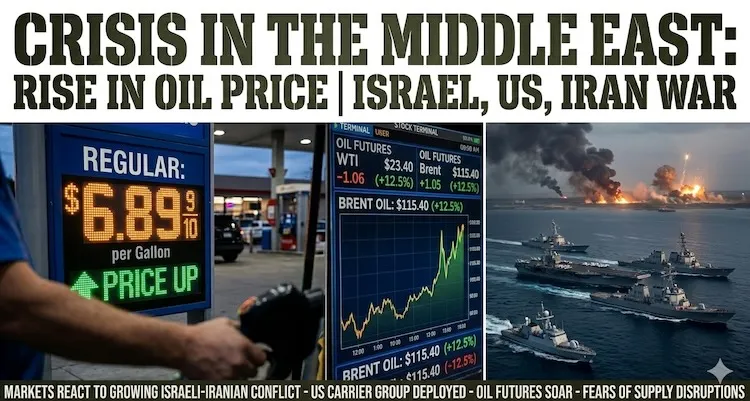
Global oil markets have been thrown into turmoil after crude prices surged past the $100 per barrel mark once again, driven by escalating attacks linked to Iran across key energy and economic infrastructure in the Middle East. The surge marks one of the most significant spikes in oil prices in recent years and reflects mounting fears that the ongoing conflict in the region could disrupt global energy supplies for an extended period.
Brent crude, the international benchmark for oil prices, rose above $100 per barrel during trading this week after renewed Iranian strikes targeted shipping lanes, oil facilities and commercial infrastructure across several Middle Eastern countries. At one point, Brent jumped by nearly 10 percent to over $101 per barrel before easing slightly as markets reacted to rapidly changing developments in the region.
The latest surge in prices comes amid intensifying hostilities between Iran, the United States and Israel, a conflict that has spread across multiple parts of the Middle East since late February. Iranian forces and allied groups have reportedly targeted key economic sites including oil depots, refineries, shipping routes and airports in what analysts say appears to be a deliberate attempt to pressure Western governments by disrupting global energy markets.

Energy infrastructure across several Gulf countries has come under pressure. Reports indicate that Iranian attacks have targeted oil storage facilities in Oman and Bahrain, while commercial ships and tankers have been struck in Iraqi waters. These incidents have raised fears of a prolonged disruption to oil shipments from one of the most critical energy producing regions in the world.
The situation is particularly alarming because many of these incidents are occurring near the Strait of Hormuz, one of the most strategically important waterways for global energy trade. The narrow channel connects the Persian Gulf to international shipping lanes and handles roughly 20 percent of the world’s oil supply each day. Any disruption to traffic through the strait has immediate consequences for global energy markets.
Since the conflict escalated, shipping traffic through the strait has dropped dramatically as vessels avoid the area due to security risks. Hundreds of ships have reportedly delayed or rerouted their journeys, leading to severe concerns about the stability of global oil supply chains. Analysts warn that if the disruption continues, the energy shock could rival some of the worst crises in modern economic history.
In response to the growing crisis, the International Energy Agency (IEA) announced the largest coordinated release of emergency oil reserves in its history. Member countries agreed to release about 400 million barrels of crude oil from strategic stockpiles in an effort to stabilize prices and reassure markets that supply shortages could be managed in the short term. However, the impact of this intervention has been limited as fresh attacks continue to threaten production and transportation networks.
Financial markets have reacted sharply to the surge in oil prices. Stock markets across Asia and Europe have recorded losses amid fears that prolonged instability in the Middle East could trigger a broader economic slowdown. Energy analysts say sustained oil prices above $100 could fuel inflation, increase transportation costs and place significant pressure on both developed and emerging economies.
Some Iranian officials have openly suggested that rising oil prices are a consequence of regional instability caused by Western military actions. One Iranian military spokesperson warned that global oil prices could climb as high as $200 per barrel if tensions continue to escalate and energy supplies remain under threat.
The global economic stakes are enormous. Gulf countries such as Saudi Arabia, Kuwait, Iraq and the United Arab Emirates play a central role in supplying crude oil to international markets. Any large scale disruption in these nations could significantly reduce available supply and drive prices even higher. Energy experts warn that if exports from the region are curtailed for an extended period, the world could face rising inflation and even a potential global recession.

The conflict has already had humanitarian and geopolitical consequences beyond energy markets. Missile exchanges and airstrikes have been reported across Iran, Israel and neighboring countries, while shipping disruptions have affected trade routes across the Gulf region. Governments around the world are now closely monitoring the situation, with several calling for diplomatic efforts to prevent further escalation.
For now, the trajectory of oil prices will depend largely on how the conflict unfolds in the coming weeks. If attacks on shipping and energy infrastructure continue, analysts believe the global oil market could face a prolonged period of volatility, with prices remaining elevated and energy security becoming a major concern for governments worldwide.