

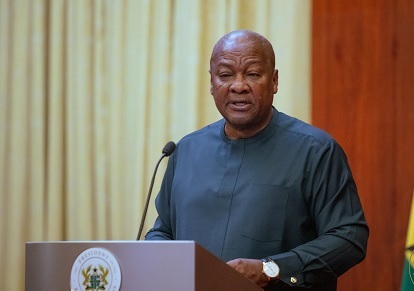
President John Dramani Mahama has directed all boards of state owned enterprises and public institutions in Ghana to immediately suspend state funded international travel for training programmes, retreats and conferences, a move aimed at strengthening fiscal discipline and reducing unnecessary government expenditure. The directive forms part of a broader strategy by the administration to enforce prudent management of public resources at a time when the country continues to navigate economic recovery and public debt pressures.
According to government officials, the decision requires boards of public institutions, state agencies and government owned companies to discontinue the use of state funds for overseas travel related to workshops, conferences and board retreats. Instead, these activities are expected to be conducted locally whenever possible, using domestic facilities and resources. Authorities say the policy is intended to reduce excessive travel spending that has long drawn criticism from policy analysts and civil society groups.
State owned enterprises play a significant role in Ghana’s economy, operating across key sectors including energy, transport, infrastructure, finance and natural resources. Many of these entities receive public funding or government guarantees, making their financial management an important issue for national fiscal policy. Over the years, concerns have been raised about operational inefficiencies, financial losses and high administrative costs among some public institutions.

The directive by President Mahama is designed to encourage greater accountability and cost control within these organisations. Government officials argue that international travel for board meetings and training programmes often consumes large portions of institutional budgets without producing measurable benefits. Expenses associated with airfare, accommodation, allowances and conference fees can quickly accumulate, placing additional strain on public finances.
Fiscal discipline has become a major policy priority for Ghana in recent years. The country has faced economic challenges linked to high public debt levels, inflationary pressures and currency volatility. In response, the government has introduced a series of expenditure controls and financial reforms aimed at stabilising the economy and rebuilding investor confidence.
Institutions such as the International Monetary Fund and the World Bank have also emphasised the importance of responsible fiscal management as part of broader economic recovery strategies for developing economies. Ghana has previously worked with international financial institutions on economic reform programmes that encourage transparency, improved public financial management and stronger oversight of state spending.
Analysts say limiting non essential foreign travel by public institutions is one of several measures governments often adopt when attempting to curb public expenditure. Similar policies have been implemented in various countries during periods of fiscal consolidation to ensure that scarce financial resources are directed toward priority sectors such as infrastructure, healthcare and education.
The directive is also expected to encourage the development of local training and conference facilities within Ghana. By holding workshops, seminars and board retreats domestically, public institutions may support local businesses in the hospitality, conference and tourism industries. This could create economic benefits while still allowing organisations to conduct professional development activities and strategic planning sessions.
Ghana already hosts a growing number of conference venues and professional training centres capable of accommodating large events. Cities such as Accra and Kumasi have developed modern conference infrastructure that can host corporate and institutional gatherings. Encouraging public sector events to take place locally could help maximise the use of these facilities while reducing travel costs.
Policy experts say the effectiveness of the new directive will depend largely on how strictly it is implemented and monitored. Past efforts to control government spending have sometimes faced challenges related to enforcement and compliance. Ensuring that all state owned enterprises and public agencies adhere to the directive will require strong oversight from relevant ministries and regulatory bodies.
Public financial management reforms have been an ongoing focus for Ghana’s government as it seeks to strengthen accountability and transparency in the use of public funds. Institutions such as the Ministry of Finance and the Public Accounts Committee of Parliament play critical roles in monitoring government expenditure and reviewing the financial performance of public institutions.

Economists note that controlling administrative costs in state enterprises can help free up resources for investments that contribute directly to economic growth and social development. For example, savings generated from reduced travel spending could be redirected toward improving operational efficiency, maintaining infrastructure or expanding essential public services.
The directive also sends a broader message about responsible leadership within the public sector. By limiting spending on overseas trips, the government aims to demonstrate a commitment to prudent financial management and to reassure citizens that public funds are being used carefully.
Ghana’s fiscal policy environment remains closely watched by investors, development partners and credit rating agencies. Measures that strengthen financial discipline are often viewed as positive signals that governments are taking steps to manage public finances responsibly.
As the directive takes effect, boards of state owned enterprises and public institutions are expected to adjust their operational plans accordingly. Training programmes, strategic retreats and professional meetings that were previously scheduled abroad may now be relocated within Ghana or conducted through digital platforms such as virtual conferences and online workshops.
While some stakeholders may argue that international exposure can provide valuable learning opportunities, government officials maintain that the current economic environment requires prioritising cost effective solutions. In the coming months, observers will likely monitor how public institutions adapt to the policy and whether it contributes to measurable reductions in government spending.