


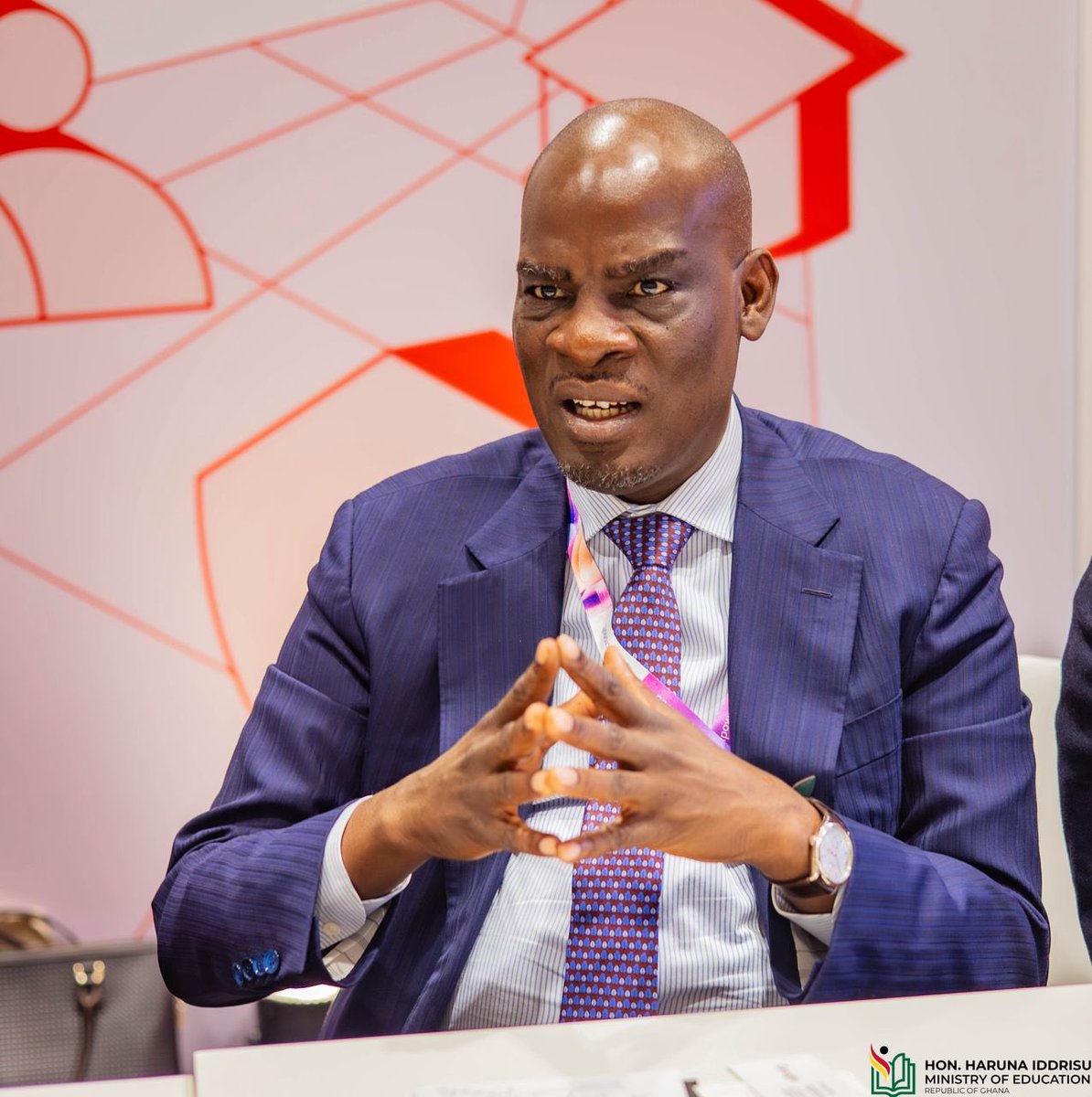
The Government of Ghana is considering a policy intervention that could allow approximately 30,000 Senior High School (SHS) graduates to re-sit the Mathematics paper of the West African Senior School Certificate Examination (WASSCE) in order to qualify for tertiary education. The proposal was disclosed by Ghana’s Minister for Education, Haruna Iddrisu, as part of efforts to address the large number of students who fail to meet university entry requirements due to poor performance in mathematics.
Large Number of Students Affected
According to the Education Minister, preliminary data from the Ministry of Education suggests that roughly 30,000 SHS graduates have been unable to gain admission into tertiary institutions because they failed to obtain the required pass in mathematics or, in some cases, English in the WASSCE. However, mathematics has been identified as the most common subject preventing otherwise qualified students from progressing to university.
In Ghana’s education system, a pass in Core Mathematics is a mandatory requirement for admission into most tertiary institutions and degree programmes. Even when a student performs well in other subjects, failing mathematics automatically disqualifies them from gaining admission to many universities and colleges. This requirement has made mathematics one of the most critical subjects in determining academic progression after secondary school.
Government exploring Re-sit Option

Speaking during a television interview on TV3’s New Day programme on March 6, 2026, the Minister explained that the government is exploring the possibility of allowing affected students to join candidates writing the next WASSCE examination to retake the mathematics paper. The idea is to prevent thousands of young graduates from remaining idle or having their academic ambitions permanently disrupted.
The Minister indicated that the government is currently studying the available data to determine the exact number of affected candidates and the practical steps required to implement the plan. Authorities are also assessing the cost implications and logistical arrangements that would be necessary to facilitate the re-sit examination.
He emphasized that many students performed strongly in their elective subjects and other core courses but failed to meet tertiary admission standards because of mathematics. Allowing them another opportunity to write the exam could therefore help salvage their academic and professional futures.
Role of WAEC in examination administration
Despite the government’s interest in supporting affected students, the Education Minister clarified that the conduct of the WASSCE examination is not handled directly by the Ministry of Education. Instead, it is administered by the West African Examinations Council (WAEC), which oversees the examination across several West African countries.
For this reason, any proposal allowing students to re-sit the mathematics paper would require collaboration between the Ministry of Education, the Ghana Education Service, and WAEC to ensure that the process complies with examination regulations and standards.
Addressing barriers to tertiary education

Education analysts note that mathematics has historically been a challenging subject for many students in Ghana, often leading to high failure rates during the WASSCE examinations. In some exam cycles, a significant proportion of candidates score grades that fall below the minimum pass required for university admission.
The potential re-sit opportunity is therefore seen as a remedial strategy aimed at reducing educational bottlenecks and giving students a second chance to improve their results. Experts believe the initiative could help thousands of qualified graduates who only missed admission due to one subject requirement.
The proposal also aligns with broader educational policies that encourage remedial programmes for students who fail to meet academic thresholds but demonstrate potential to continue their education. Such programmes may include special classes, exam preparation support, and opportunities to retake examinations.
Potential impact on students
If implemented, the policy could significantly reduce the number of SHS graduates who remain outside the formal education system after completing secondary school. Many students who narrowly miss the mathematics requirement often have to wait an additional year or pursue alternative pathways, including technical or vocational training.
Providing them with an organized opportunity to re-sit the exam could accelerate their transition into universities, colleges of education, and other tertiary institutions. It may also help reduce the frustration and uncertainty faced by students whose academic dreams are halted by a single subject.
The Ministry of Education is expected to continue consultations with stakeholders in the education sector before a final decision is made. Discussions are likely to focus on exam logistics, funding, and ensuring fairness in the re-sit process.

If approved, the initiative could allow thousands of affected graduates to register for the next WASSCE mathematics paper and potentially secure the grades required to pursue higher education.
Overall, the proposed intervention reflects the government’s attempt to address structural challenges within the education system and ensure that capable students are not permanently excluded from tertiary education due to a single examination result.