

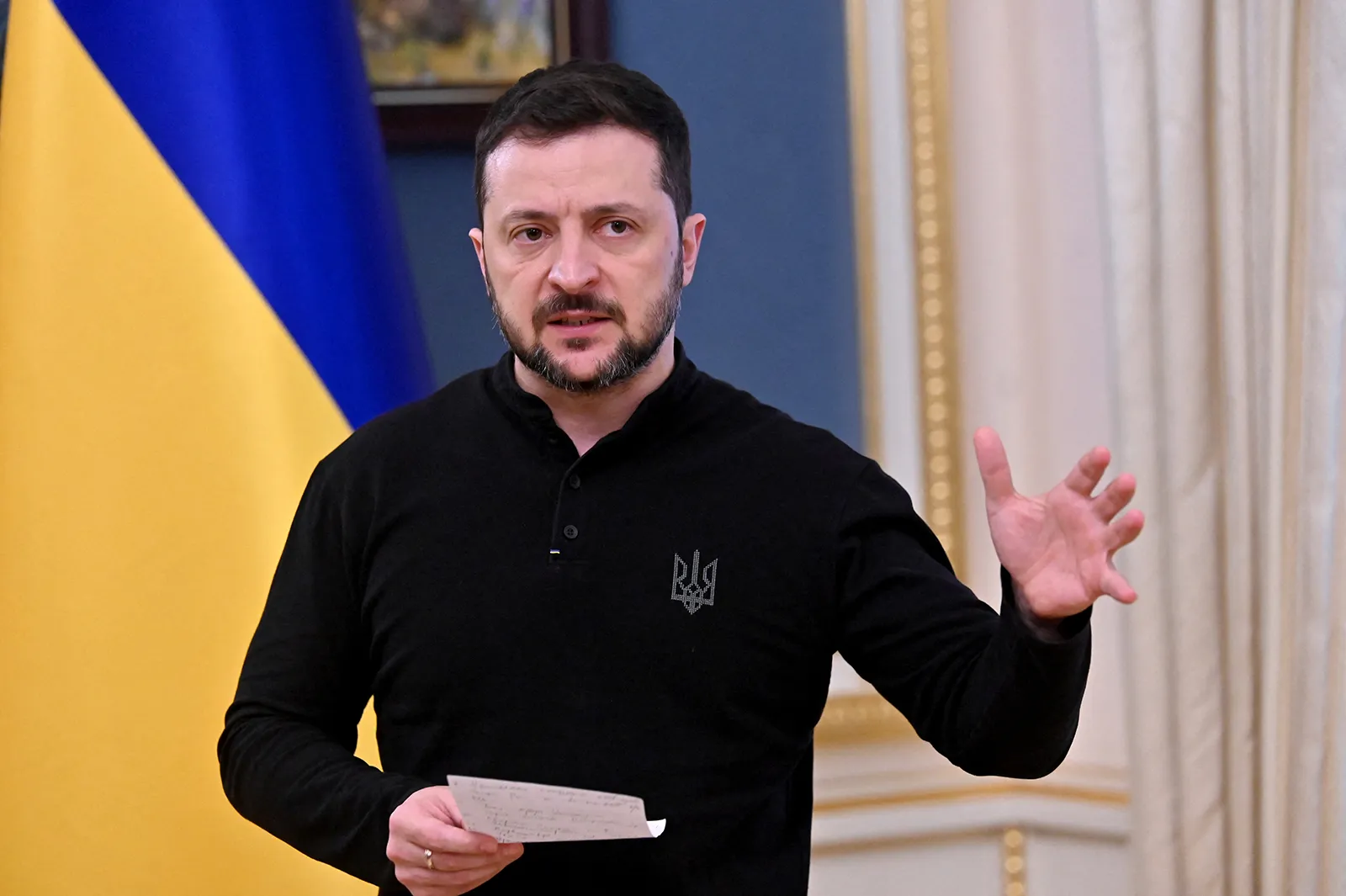
Ukrainian President Volodymyr Zelenskyy has indicated that Ukraine is ready to share its expertise in countering Iranian-made drones with international partners, including the United States and its allies in the Middle East. The offer comes amid heightened regional tensions involving Iran and Israel, where drone warfare has become an increasingly significant element of modern military strategy.
According to Zelenskyy, the United States recently approached Kyiv seeking assistance and technical insight on how to effectively defend against Iranian-designed unmanned aerial vehicles. Ukraine has developed substantial experience in dealing with such threats during its ongoing conflict with Russia, where Iranian-supplied drones have been widely used by Russian forces to strike Ukrainian cities, energy infrastructure, and military facilities.
Since the beginning of the war, Ukrainian air defense units have been forced to adapt quickly to counter repeated drone attacks, particularly those carried out using the Iranian-built Shahed series of loitering munitions. Over time, Ukraine has refined a range of tactics and technologies to detect, track, and destroy these drones before they reach their intended targets. This hard-earned expertise has positioned the country as one of the most experienced nations in the world when it comes to defending against this type of aerial threat.
Zelenskyy explained that Ukraine’s willingness to assist other nations reflects a broader principle of cooperation among partners that face similar security challenges. Countries that have supported Ukraine in its defense against Russian aggression, he noted, can expect Kyiv to reciprocate by sharing the knowledge and technologies it has developed under wartime conditions.
However, the Ukrainian president also stressed that any support provided abroad must not compromise Ukraine’s own defensive capabilities. The country continues to face frequent missile and drone strikes, making it essential that its air defense resources remain sufficient to protect its own population and critical infrastructure. As a result, Ukraine intends to balance its international assistance with the urgent demands of its domestic security situation.
One of the key developments emerging from Ukraine’s experience is the creation of cost-effective counter-drone technologies. Traditional air defense missiles can be extremely expensive, often costing hundreds of thousands or even millions of dollars per launch. Using such systems to intercept relatively inexpensive drones can create an unsustainable financial imbalance during prolonged conflicts.

To address this challenge, Ukrainian engineers and military specialists have worked on alternative interception methods. These include specialized interceptor drones, electronic warfare systems designed to disrupt enemy navigation signals, and improved radar and tracking techniques. Many of these solutions aim to neutralize drones at a fraction of the cost of conventional missile-based defenses.
Ukraine’s approach has attracted increasing international attention. Several countries in the Middle East—where the use of drones by state and non-state actors has grown rapidly—are closely monitoring Kyiv’s defensive innovations. Zelenskyy has recently held discussions with leaders from nations such as the United Arab Emirates, Qatar, Bahrain, Jordan, and Kuwait about potential cooperation on security issues, including counter-drone strategies.
The expanding use of drones has transformed the nature of modern warfare. Compared with traditional aircraft, drones are relatively inexpensive, difficult to detect, and capable of causing significant damage. Their widespread availability has enabled both governments and militant groups to conduct long-range attacks with limited resources. As a result, developing effective defenses against these systems has become a priority for many nations.
At the same time, the escalating tensions in the Middle East have begun to influence broader geopolitical dynamics, including efforts to address the war in Ukraine. Diplomatic initiatives aimed at reducing hostilities between Ukraine and Russia have reportedly slowed as global attention shifts toward the growing confrontation involving Iran and Israel.

Ukrainian officials argue that the conflicts are interconnected. They point out that Iran has played a significant role in supplying drones to Russia, which have been used extensively in attacks across Ukraine. From Kyiv’s perspective, strengthening international cooperation against these weapons could help address security challenges across multiple regions simultaneously.
By offering its expertise, Ukraine hopes to contribute to a broader international effort aimed at countering emerging drone threats. At the same time, the country continues to focus on defending its own territory while seeking stronger partnerships with nations that share concerns about the evolving nature of modern warfare.
As drone technology continues to advance and spread globally, Ukraine’s experience on the battlefield may provide valuable lessons for countries seeking more effective and affordable ways to protect their airspace and critical infrastructure.