

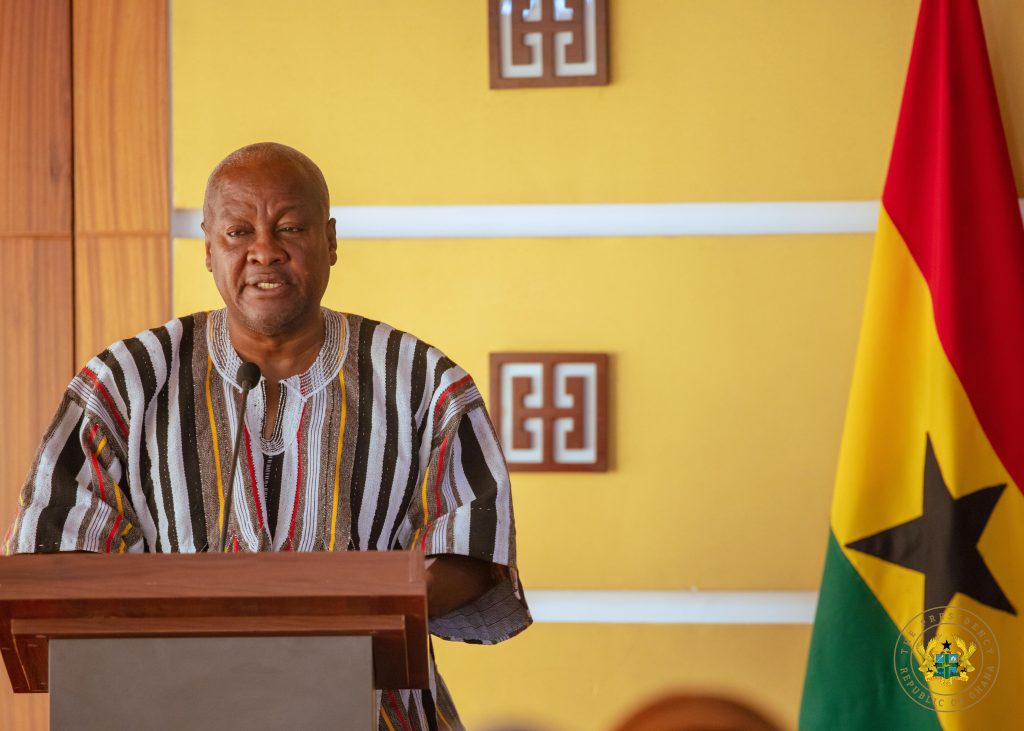
President John Dramani Mahama has outlined a sweeping plan to modernise Ghana’s military, enhance national security infrastructure, and strengthen the operational capabilities of the Army, Navy and Air Force. Speaking during his 2026 State of the Nation Address in Parliament on 27 February 2026, the President unveiled what he described as a comprehensive security upgrade designed to better equip the Ghana Armed Forces to address contemporary threats, safeguard borders, and protect national assets while boosting troop morale and readiness.
At the heart of the programme is the construction of new forward operating bases and military infrastructure aimed at reinforcing security across key strategic areas. Work is already underway on a forward base in Ezinlibo along the Western Maritime Corridor, a critical zone for maritime surveillance and the protection of offshore oil and gas facilities. This installation is expected to significantly improve Ghana’s capacity to monitor and secure its territorial waters and offshore economic interests, while also helping deter illicit activities at sea.
In the northern regions, efforts to strengthen border surveillance are progressing to counter terrorism, cross border crime and other threats emanating from the Sahel region, which has been a source of regional instability. Government officials have emphasised that enhanced northern border security will improve early detection of infiltration and complement broader national security efforts.

Additional barracks are under construction in Ajumako and Dambai to expand the military’s presence in those areas and provide rapid response capacity where it is most needed. These developments form part of a wider strategy to decentralise military assets and create a more flexible and responsive defence posture.
A major component of Mahama’s plan involves upgrading Air Force capabilities. Agreements have been signed to procure four new helicopters and one jet aircraft to enhance air mobility, surveillance and rapid deployment. Existing grounded aircraft in the Ghana Air Force fleet are also undergoing comprehensive overhauls to restore operational readiness and maximise air power availability.
The acquisition of new aerial assets comes against a backdrop of broader efforts to restore and expand Ghana’s air capabilities. Recent orders for new helicopters such as the H175M models are expected to serve in multiple defence and security roles, including transport, search and rescue, medical evacuation and disaster response, reflecting the multifaceted nature of modern military operations.
To further bolster mobility and mechanised capacity, the government has commissioned 50 new vehicles for use by the Ghana Armed Forces, increasing troop movement efficiency and overall operational reach during exercises and deployments. Plans are also underway to acquire offshore patrol vessels, armoured personnel carriers, protective gear, ammunition, drone systems and advanced communication technology that will collectively enhance the military’s effectiveness across land, sea and air domains.

In a significant effort to expand the size of the armed forces, President Mahama announced a phased recruitment drive aimed at bringing an additional 12,000 personnel into the Ghana Armed Forces over four years. For the first time, the recruitment process has been decentralised, allowing potential recruits to report directly from regional capitals to training centres rather than travelling to Accra. This shift is expected to improve accessibility, encourage wider participation, and ensure that recruitment reflects regional diversity.
The comprehensive modernisation initiative responds to longstanding calls for a stronger, more agile and technologically equipped military. As outlined in the government’s 2026 budget framework, investments were already planned to upgrade logistics, equipment and defence infrastructure across the Army, Navy and Air Force to confront evolving security challenges. These plans included negotiations to secure armoured personnel carriers, offshore patrol vessels and new aircraft to protect national borders and critical infrastructure.
The President’s address emphasised that these efforts are not only about enhancing firepower but also about ensuring that the Ghana Armed Forces are prepared to support internal development and emergency response operations. A modernised military, the administration argues, will not only protect sovereignty but also contribute to national resilience in the face of natural disasters and other non military emergencies.

Officials have also framed the initiative in the context of broader national development goals. Strengthening the armed forces is intended to foster stability that underpins economic growth, protects investors, and reassures citizens. By modernising military infrastructure and capabilities, the government seeks to deter external threats while promoting internal cohesion and confidence.
Critics and analysts have noted that while the modernisation programme reflects a bold vision, its success will depend on disciplined implementation, sustainable financing and transparent procurement practices. They argue that effective oversight and accountability mechanisms are essential to ensure that defence expenditure delivers value and aligns with national priorities without unduly burdening public finances.
As these projects advance, Ghana’s military modernisation initiative represents a significant policy shift toward investing in comprehensive defence capabilities. It underscores the government’s commitment to building a more capable and resilient armed forces that can navigate both traditional security challenges and emerging threats in an increasingly complex global environment.