

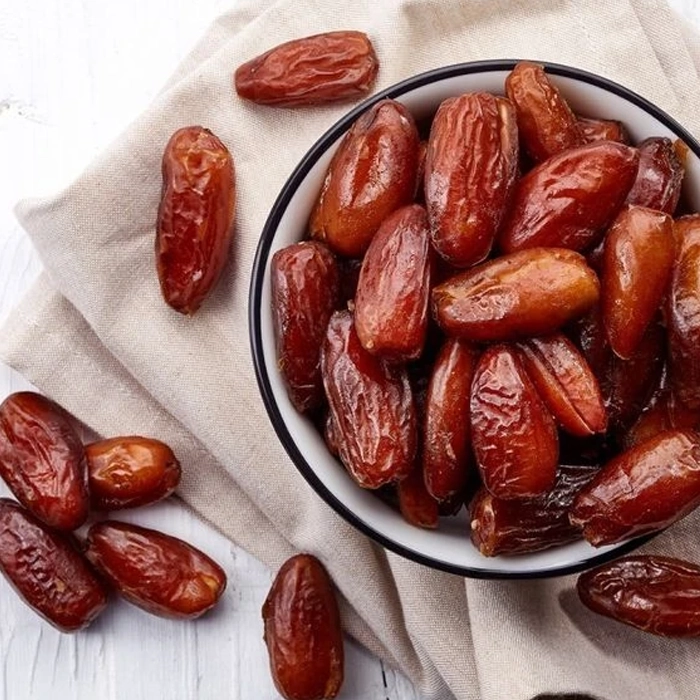
Tunisia has reinforced its status as one of the world’s leading date producers, ranking ninth globally in overall production and continuing to command strong recognition for quality, consistency, and export performance. With annual output approaching 400,000 tonnes in recent seasons, the country remains a key contributor to global date supply, particularly within the Arab and North African regions where date cultivation is both an economic pillar and a cultural tradition.
According to international agricultural statistics compiled by bodies such as the Food and Agriculture Organization, global date production is dominated by countries with arid and semi-arid climates, where date palms thrive under intense heat and controlled irrigation. Within this context, Tunisia’s ranking reflects not only volume but also the strategic importance of its date sector, which balances large-scale production with a strong focus on export-grade quality.
Global standing and production performance
Date production worldwide is highly concentrated, with Egypt, Saudi Arabia, and Algeria occupying the top ranks in terms of sheer output. Despite competing with these high-volume producers, Tunisia has consistently remained among the top ten globally, producing approximately 386,000 tonnes of dates in 2023. More recent agricultural estimates indicate that production surpassed 400,000 tonnes in 2024, marking one of the strongest harvests in the country’s history.

This growth has been driven by improved farming techniques, better pest control, and the expansion of productive oasis land, particularly in southern regions where date palms form the backbone of local agricultural systems. Favorable climatic conditions during recent seasons, combined with targeted government support to farmers, have also contributed to yield stability and improved fruit quality.
What distinguishes Tunisia in the global rankings is not only how much it produces, but how its dates are positioned in international markets. A significant share of Tunisian output is cultivated specifically for export, meeting stringent quality and phytosanitary standards required by European and North American markets. This export-oriented approach allows Tunisia to remain competitive despite producing lower volumes than some of the world’s largest growers.
Economic importance and export strength
Dates represent one of Tunisia’s most valuable agricultural exports and a critical source of foreign exchange earnings. The sector supports tens of thousands of farmers, seasonal workers, processors, and exporters, making it a major contributor to rural employment and regional development. In many oasis communities, date farming is the primary economic activity, sustaining households and local economies across generations.
Tunisia’s dates are shipped to more than 80 countries worldwide, with strong demand in North Africa, Europe, and parts of Asia. Regional markets such as Morocco absorb a large share of exports, while European countries including France and Italy are key destinations for both conventional and processed dates. In recent years, organic and value-added date products have also gained momentum, particularly in health-conscious markets where demand for natural and minimally processed foods is growing.
Export revenues from dates have reached several hundred million dinars annually, underscoring the sector’s macroeconomic importance. While revenues can fluctuate depending on harvest size, global prices, and currency movements, the long-term trend remains positive. Tunisia’s reputation for reliability and quality has helped shield exporters from some of the volatility seen in global agricultural markets.
Quality reputation and challenges
Beyond production volumes, Tunisia enjoys a strong international reputation for the quality and taste of its dates, particularly the Deglet Nour variety, which is widely regarded as one of the finest dates in the world. This reputation has been built over decades through careful cultivation, traditional know-how, and continuous improvements in post-harvest handling and packaging.

However, the sector also faces persistent challenges. Climate change poses increasing risks, including rising temperatures, irregular rainfall, and water scarcity, all of which threaten oasis ecosystems. Date palms are highly dependent on reliable water supplies, and pressure on groundwater resources has become a growing concern. In addition, pests and plant diseases require ongoing monitoring and investment to prevent yield losses.
To address these challenges, Tunisia has been gradually adopting more efficient irrigation systems, promoting sustainable water management, and encouraging research into climate-resilient agricultural practices. Efforts are also underway to enhance value addition through processing, branding, and improved logistics, enabling producers to capture greater value from international markets rather than relying solely on raw exports.
Tunisia’s outlook in the global date industry remains strong. With production expected to remain near record levels and demand for high-quality dates continuing to rise, the country is well positioned to consolidate its role as a premium supplier. By combining volume growth with quality assurance and sustainability measures, Tunisia is likely to maintain its top-ten global ranking while further strengthening the economic and social impact of its date sector.