

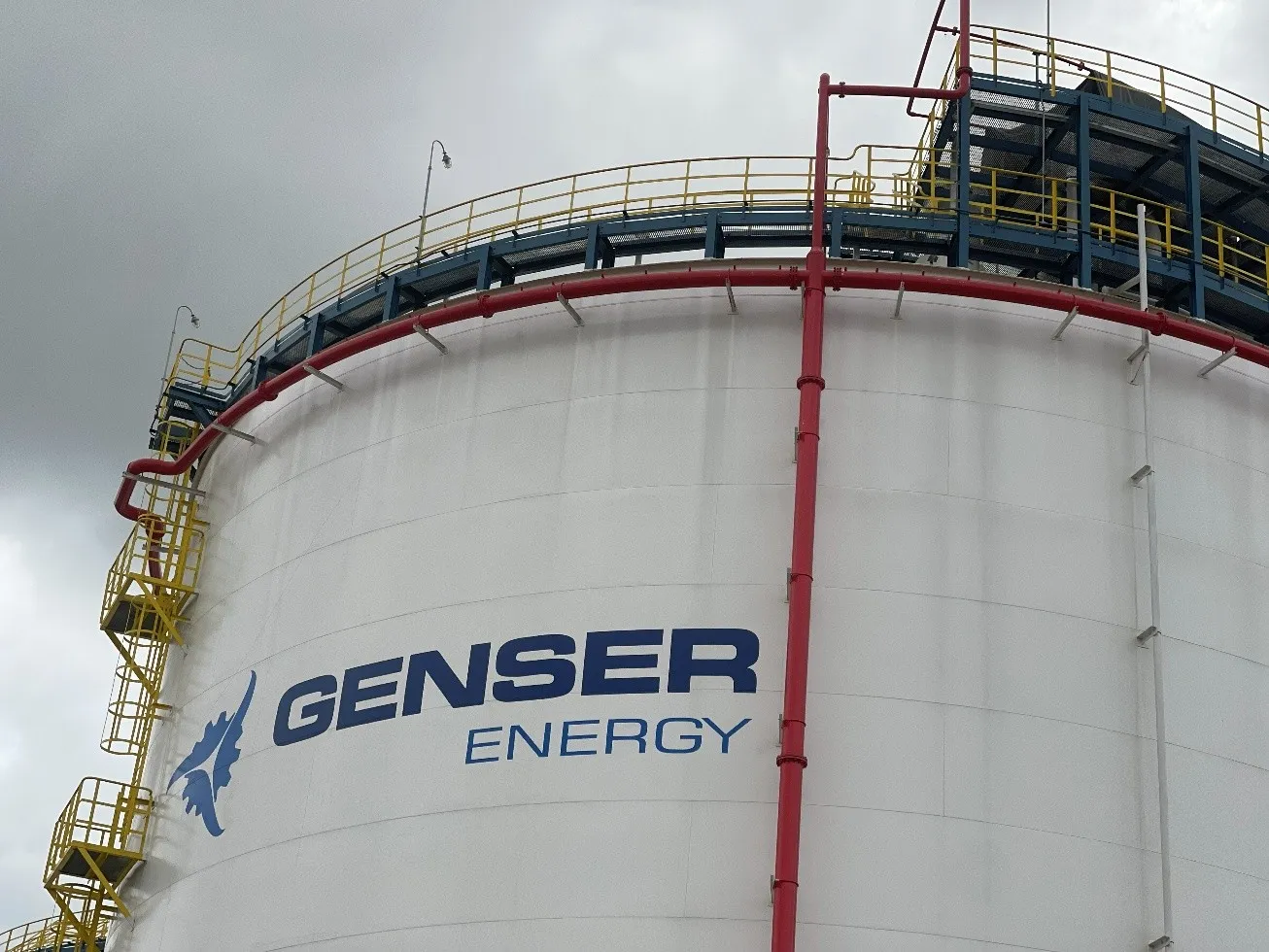
Ghana’s natural gas midstream sector is poised for a major transformation as Genser Energy Ghana Limited prepares to commission its 135 million standard cubic feet per day (MMSCFD) Gas Conditioning Plant (GCP), a project set to significantly bolster the country’s processing infrastructure, enhance energy reliability, and open new avenues for export-oriented revenue. The plant, situated in Prestea in the Western Region, is in its final stages of construction and is expected to begin operations in the coming months as part of a broader effort to expand Ghana’s gas value chain.
The construction of the GCP began three years ago, and according to Genser Energy’s GCP Plant Manager, Mr. Francois Esterhuizen, progress has reached approximately 95 percent completion. The facility managers have indicated that the remaining work primarily involves the installation of the power plant and completion of final commissioning activities. Full commissioning is scheduled to begin in April 2026, with a phased approach targeting 50 percent operations by June and full capacity by August 2026. Designed as a modern midstream conditioning facility, the GCP will process and condition natural gas into commercially valuable derivatives, including ethane, propane, butane, isopentane, and gasoline. In addition to meeting local market demand, the plant’s output is set to supply the Takoradi Natural Gas Liquids Export Terminal (TNET) storage facility, enabling export of liquefied petroleum products. Genser Energy’s financing partner, global commodities trader Trafigura, is expected to drive export activity and support international market linkages.
Strengthening Ghana’s midstream infrastructure
Historically, Ghana’s midstream gas infrastructure has relied heavily on the Atuabo Gas Processing Plant, operated by the Ghana National Gas Company, which has a processing capacity of around 150 MMSCFD. While Atuabo has been instrumental in supporting thermal power generation and industrial gas supply for over a decade, increasing domestic gas demand and upstream production have underscored the need for additional processing capacity to avoid bottlenecks in the value chain. The Genser Energy project, by adding significant private midstream capacity, contributes to the diversification and expansion of Ghana’s gas processing footprint.

In an exclusive interview, Esterhuizen emphasised that the GCP is more than an industrial facility; it is a strategic enabler for Ghana’s energy landscape. He noted that the plant will drive job creation while enhancing LPG availability for local consumption and creating a reliable supply of refined gas for power generation. By separating heavier hydrocarbons such as propane and butane, the plant ensures a more efficient and optimised fuel supply for gas turbines used in power generation, which in turn supports broader economic activities.
Looking ahead, Esterhuizen highlighted potential scaling plans, including expanding the plant’s capacity to process wet gas, which would increase product output and lay the groundwork for future midstream growth. This expansion aligns with Genser Energy’s strategic vision of building a sustainable and resilient gas processing ecosystem.
Technical framework and future modules
A detailed technical overview provided by Mr. Nathaniel Nortey, Mechanical Reliability Manager at the GCP, outlined the plant’s modular design. The GCP consists of six primary operational modules that cover gas reception and pressure regulation, dehydration and sweetening processes, hydrocarbon fractionation, utility services, storage tanks for hydrocarbons and LPG, and loading stations for distribution. Nortey also noted provisions for a future seventh module that could support liquefied natural gas (LNG) production, further enhancing Ghana’s export potential in gas markets.
The plant’s construction involved extensive earthworks, including foundations for cryogenic tanks and mechanical and electrical installations, such as transformers, instrumentation, and switchgears. Nortey emphasised that the facility is designed for a 50-year operational lifecycle, with built-in flexibility to expand capacity as gas availability and market demand increase.
TNET: Complementing the gas conditioning plant
Complementing the GCP is the Takoradi Natural Gas Liquids Export Terminal (TNET), which will serve as a storage and export hub for natural gas liquids produced by the Prestea facility. The terminal, slated to become operational in May 2026, features a 30,000 cubic metre propane storage capacity and 10,000 cubic metre butane storage capacity, positioning it as a significant export-oriented midstream asset within West Africa. The facility’s storage capability enhances Genser Energy’s capacity to support both domestic energy needs and export ambitions.

According to Nana Kwame Ohemeng-Mensah, Mechanical Reliability Superintendent at TNET, the terminal will boost efficiency by segregating lower hydrocarbons for turbine fuel while storing higher hydrocarbons for export. This segregation supports Genser Energy’s broader operational strategy of enhancing gas use efficiency and revenue generation through exports.
Regulatory oversight and local capacity building
From a regulatory perspective, Mr. Robert Yeboah, Senior Manager of Natural Gas Regulations at the Energy Commission (EC), emphasised the importance of compliance and fair regulation as the plant transitions to the operational phase. He noted that Genser Energy has received all necessary construction approvals and is now progressing toward operational licensing under regulatory oversight. The EC’s mandate is to ensure open access, competitiveness, and transparency within the sector, fostering an environment conducive to both private and public investment.

Yeboah also applauded Genser Energy’s contributions to local capacity building, noting that about 90 percent of the plant’s workforce is Ghanaian, with the company actively training young engineers to manage and operate the facility. This focus on skills development is seen as essential for long-term sustainability and the growth of Ghana’s energy sector. He observed that public understanding of private sector investment in gas remains limited, underlining the need for broader awareness of the role such projects play in national development.
Anticipated impact on Ghana’s energy landscape
The combined impact of the GCP and TNET is expected to strengthen Ghana’s energy reliability, increase export revenues, and support local industries through improved gas supply. Beyond energy, these projects are creating infrastructure opportunities and providing benefits to surrounding communities through job creation and local enterprise support.
As Ghana’s midstream sector rapidly evolves, driven by private investment, regulatory engagement, and technical innovation, Genser Energy’s initiatives represent a pivotal step forward. “Gas is the future,” Esterhuizen said, highlighting the company’s commitment to advancing from distribution to processing, power generation, and exports an ambitious strategy promising significant long-term economic and energy benefits for Ghana.