FIFA partners with Trump-backed Board of Peace to support Gaza reconstruction through football

0
108

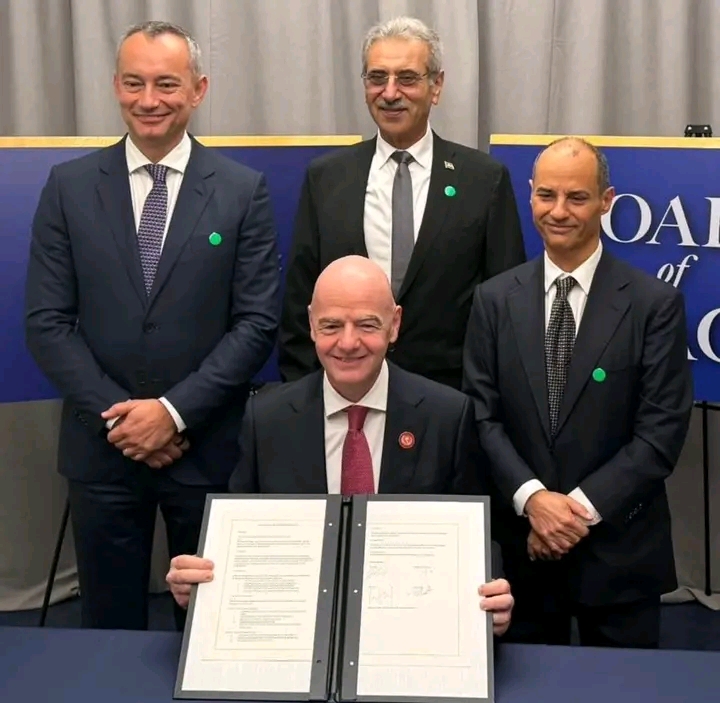
FIFA has announced a partnership with the Board of Peace (BoP), an initiative established by Donald Trump, to support reconstruction efforts in Gaza through football-led infrastructure development.

According to FIFA, the recovery plan will be rolled out in four structured phases, with implementation set to begin as soon as security conditions allow.

Phase I (3–6 months) will focus on the installation of 50 FIFA Arena mini-pitches designed to provide immediate access to safe recreational spaces for children and youth.

Phase II (12 months) will see the construction of five full-size football pitches aimed at restoring organized community and competitive football activities.

Phase III (18–36 months) involves the development of a modern FIFA Academy, intended to nurture young talent, provide structured training, and support long-term youth development.

Phase IV (18–36 months) will culminate in the construction of a 20,000-seat National Stadium, envisioned as a symbol of recovery and a hub for national and international sporting events.

fifa

FIFA stated that the initiative aligns with its broader mandate of using football as a tool for social development, unity, and post-conflict rehabilitation. The organization emphasized that sports infrastructure can serve as both a psychological and economic catalyst in recovery environments, particularly for young populations affected by instability.

The Board of Peace’s involvement positions the project within a wider diplomatic and reconstruction framework. While details regarding funding structures, governance oversight, and coordination with local authorities have not yet been publicly outlined, FIFA indicated that planning frameworks are being prepared pending improvements in security conditions.

If executed as planned, the project would represent one of the most ambitious football-driven reconstruction efforts in a conflict-affected region, combining grassroots access, elite development, and national infrastructure into a single multi-year roadmap.

FIFA partners with Trump-backed Board of Peace to support Gaza reconstruction through football

Observers note that beyond the physical infrastructure, the success of the initiative will depend on sustained political stability, transparent management, and long-term operational support to ensure that the facilities remain functional and accessible to the local population.

FIFA Calls on National Federations to Penalize Racist Abuse – FIFA President

Author

  • Daniel Ablordey

    Daniel Ablordey is a Business Analytics student at the University of Ghana Business School and an emerging strategist at the intersection of data, markets, and narrative. With a keen analytical mind and a passion for African business and economic trends, he is building a career focused on translating complex data-driven insights into accessible, decision-relevant stories that matter.As a writer and editor with Insight Ghana, African Business Insight, and The African Journal, Daniel delivers sharp, high-impact analysis on current affairs, business developments, and emerging trends across the continent. His work is defined by precision, clarity, and a deep commitment to responsible journalism — ensuring that every story he tells is not only accurate but meaningful to the audiences it serves.Beyond his editorial work, Daniel serves as an Ecobank Youth Ambassador, where he actively promotes financial inclusion, digital banking, and financial literacy among young Ghanaians. His leadership experience spans academic, professional, and faith-based institutions, where he has consistently driven initiatives centered on growth, structure, and long-term impact.Grounded in the principles of Pan-Africanism and service, Daniel brings a rare combination of analytical rigour and storytelling depth to his work. Whether unpacking market behavior, profiling emerging business leaders, or covering cultural shifts shaping the continent, he approaches every assignment with strategic intent and editorial integrity.His broader ambition is to contribute to Africa's transformation by shaping how data, business, and storytelling intersect — not just locally, but on a global stage.

Previous articleMajority Caucus front bench donates March salaries to Ghana Sports Fund
Next articleChief Justice concludes No Prima Facie case in petitions against Electoral Commission leadership
Daniel Amenyo Ablordey
Daniel Ablordey is a Business Analytics student at the University of Ghana Business School and an emerging strategist at the intersection of data, markets, and narrative. With a keen analytical mind and a passion for African business and economic trends, he is building a career focused on translating complex data-driven insights into accessible, decision-relevant stories that matter.As a writer and editor with Insight Ghana, African Business Insight, and The African Journal, Daniel delivers sharp, high-impact analysis on current affairs, business developments, and emerging trends across the continent. His work is defined by precision, clarity, and a deep commitment to responsible journalism — ensuring that every story he tells is not only accurate but meaningful to the audiences it serves.Beyond his editorial work, Daniel serves as an Ecobank Youth Ambassador, where he actively promotes financial inclusion, digital banking, and financial literacy among young Ghanaians. His leadership experience spans academic, professional, and faith-based institutions, where he has consistently driven initiatives centered on growth, structure, and long-term impact.Grounded in the principles of Pan-Africanism and service, Daniel brings a rare combination of analytical rigour and storytelling depth to his work. Whether unpacking market behavior, profiling emerging business leaders, or covering cultural shifts shaping the continent, he approaches every assignment with strategic intent and editorial integrity.His broader ambition is to contribute to Africa's transformation by shaping how data, business, and storytelling intersect — not just locally, but on a global stage.