Toyota deploys seven Agility humanoid robots at Canadian factory

0
190

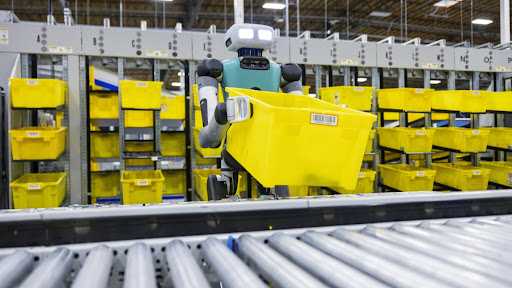
Toyota has hired seven humanoid robots from Agility Robotics for use at one of its manufacturing facilities in Canada, marking another step in the automotive industry’s push toward advanced factory automation.

The robots, known as Digit, will be tasked with unloading totes filled with auto parts from an automated warehouse tugger. The deployment places humanoid machines directly into structured industrial workflows rather than experimental lab environments, signaling growing confidence in their real-world reliability.

Unlike traditional robotic arms fixed to assembly lines, Agility’s humanoid robots are designed to navigate human-centered spaces such as warehouses and factory floors. Their bipedal form allows them to operate in facilities originally built for people, reducing the need for costly infrastructure redesign.

toyota

For Toyota, the move reflects a broader strategy of integrating next-generation automation to improve efficiency, reduce repetitive strain tasks for workers, and address ongoing labor shortages in manufacturing. By assigning robots to tote unloading, a physically repetitive and time-sensitive task, the company can reallocate human workers to higher-value activities.

The partnership also highlights how robotics firms are shifting from pilot demonstrations to commercial contracts. Agility Robotics has positioned Digit as a general-purpose warehouse and logistics assistant, capable of lifting, carrying, and sorting packages in environments already optimized for human movement.

Industry analysts view such deployments as a test case for humanoid robotics in mainstream manufacturing. While industrial automation has long relied on specialized machinery, humanoid robots promise flexibility across multiple roles, potentially reshaping labor dynamics in factories over the next decade.

Toyota deploys seven Agility humanoid robots at Canadian factory

Toyota’s adoption of seven units suggests cautious scaling rather than full automation, a phased approach that allows performance validation before broader rollout. If successful, similar deployments could expand across other production sites.

The move underscores a growing convergence between AI-driven robotics and traditional manufacturing, as automakers seek productivity gains while maintaining operational resilience.

Toyota Ends Support for LGBTQ+ Events and DEI Initiatives Amid Public Backlash

Author

  • Daniel Ablordey

    Daniel Ablordey is a Business Analytics student at the University of Ghana Business School and an emerging strategist at the intersection of data, markets, and narrative. With a keen analytical mind and a passion for African business and economic trends, he is building a career focused on translating complex data-driven insights into accessible, decision-relevant stories that matter.As a writer and editor with Insight Ghana, African Business Insight, and The African Journal, Daniel delivers sharp, high-impact analysis on current affairs, business developments, and emerging trends across the continent. His work is defined by precision, clarity, and a deep commitment to responsible journalism — ensuring that every story he tells is not only accurate but meaningful to the audiences it serves.Beyond his editorial work, Daniel serves as an Ecobank Youth Ambassador, where he actively promotes financial inclusion, digital banking, and financial literacy among young Ghanaians. His leadership experience spans academic, professional, and faith-based institutions, where he has consistently driven initiatives centered on growth, structure, and long-term impact.Grounded in the principles of Pan-Africanism and service, Daniel brings a rare combination of analytical rigour and storytelling depth to his work. Whether unpacking market behavior, profiling emerging business leaders, or covering cultural shifts shaping the continent, he approaches every assignment with strategic intent and editorial integrity.His broader ambition is to contribute to Africa's transformation by shaping how data, business, and storytelling intersect — not just locally, but on a global stage.

Previous articleKwaw Kese asserts Fennec Okyere’s death was a contract killing, not robbery
Next articleReddit tests AI powered shopping search with interactive product results
Daniel Amenyo Ablordey
Daniel Ablordey is a Business Analytics student at the University of Ghana Business School and an emerging strategist at the intersection of data, markets, and narrative. With a keen analytical mind and a passion for African business and economic trends, he is building a career focused on translating complex data-driven insights into accessible, decision-relevant stories that matter.As a writer and editor with Insight Ghana, African Business Insight, and The African Journal, Daniel delivers sharp, high-impact analysis on current affairs, business developments, and emerging trends across the continent. His work is defined by precision, clarity, and a deep commitment to responsible journalism — ensuring that every story he tells is not only accurate but meaningful to the audiences it serves.Beyond his editorial work, Daniel serves as an Ecobank Youth Ambassador, where he actively promotes financial inclusion, digital banking, and financial literacy among young Ghanaians. His leadership experience spans academic, professional, and faith-based institutions, where he has consistently driven initiatives centered on growth, structure, and long-term impact.Grounded in the principles of Pan-Africanism and service, Daniel brings a rare combination of analytical rigour and storytelling depth to his work. Whether unpacking market behavior, profiling emerging business leaders, or covering cultural shifts shaping the continent, he approaches every assignment with strategic intent and editorial integrity.His broader ambition is to contribute to Africa's transformation by shaping how data, business, and storytelling intersect — not just locally, but on a global stage.