

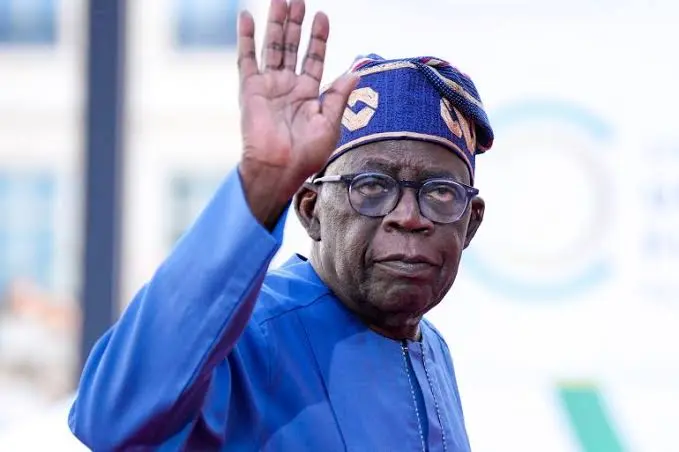
In a landmark fiscal intervention, Nigerian President Bola Ahmed Tinubu has signed a sweeping Executive Order mandating that all oil and gas revenues be remitted directly to the federation account, marking one of the most significant reforms in the country’s petroleum revenue management in years. The directive, issued on 13 February 2026 and gazetted immediately, is designed to overhaul revenue flows under the existing legal framework, strengthen public finances, eliminate revenue leakages and ensure federal, state and local governments receive their full constitutional entitlements.
Nigeria, Africa’s largest crude oil producer, has long relied on oil and gas for a substantial share of government revenue and foreign exchange earnings. However, deductions and complex retention structures allowed under the Petroleum Industry Act (PIA) 2021 meant that only a fraction of oil and gas taxes, royalties and profit shares actually reached the Federation Account Allocation Committee (FAAC) for distribution. Under the old arrangement, the Nigerian National Petroleum Company Limited (NNPC) and regulatory bodies could retain sizeable portions of revenue for operational costs, working capital, management fees and exploration funds. The new Executive Order ends those practices, mandating direct payment of all government entitlements into the Federation Account.


Reforms to revenue remittance structure
Under the Executive Order, all categories of oil and gas revenues including Royalty Oil, Tax Oil, Profit Oil and Profit Gas must be remitted directly into the Federation Account by operators and contractors holding upstream oil and gas assets under Production Sharing Contracts, Profit Sharing Contracts and Risk Service Contracts. This directive is effective from 13 February 2026, and is being enforced across all production entities.
The President’s order also strips NNPC Limited of its entitlement to a 30 per cent management fee and a 30 per cent Frontier Exploration Fund previously retained under the PIA. Those portions of oil and gas profits are now redirected into the federation account for appropriation by government. Additionally, the 20 per cent of NNPC profits previously set aside for working capital and future investments remains with the company, but the large deductions that diverted billions in potential remittances have been abolished.

Another key change involves the gas sector. Penalty proceeds from gas flaring, which were previously paid into the Midstream and Downstream Gas Infrastructure Fund (MDGIF), will now be paid directly into the Federation Account. The Executive Order suspends contributions to the MDGIF, and future expenditures from that fund must comply with existing public procurement laws and regulations.
Constitutional and legal basis
The reform is anchored on Section 5 and Section 44(3) of the 1999 Constitution of the Federal Republic of Nigeria (as amended), which vests ownership and control of all mineral resources, mineral oils and natural gas in the Government of the Federation. The Executive Order aims to restore the constitutional revenue entitlements of federal, state and local governments that were eroded under the PIA’s complex revenue retention provisions.
According to the presidency, deductions enabled by the PIA framework were significantly higher than global norms, with more than two-thirds of potential oil and gas revenues diverted away from the Federation Account. These structural issues were widely criticised for reducing net inflows available for public spending on priority sectors like security, education, healthcare and infrastructure.
Implementation and oversight
To ensure effective implementation, President Tinubu approved the establishment of an inter-ministerial implementation committee. This body includes key government officials such as the Minister of Finance and Coordinating Minister of the Economy, Attorney-General of the Federation and Minister of Justice, Minister of Budget and National Planning, and the Minister of State for Petroleum Resources (Oil). Other members include the Chairman of the Nigeria Revenue Service, representatives from the Ministry of Justice, the Special Adviser to the President on Energy, and the Director-General of the Budget Office of the Federation, who serves as secretary to the committee.
The committee’s mandate is to coordinate the implementation of the Executive Order, harmonise petroleum revenue streams and ensure accountability and transparency in the remittance process. The President also announced plans for a comprehensive review of the Petroleum Industry Act in consultation with stakeholders to address remaining fiscal and structural anomalies in the sector.
Expected impact and challenges
The reform is expected to significantly increase the flow of oil and gas revenues into the Federation Account, providing more resources for federal, state and local governments to fund public services and development projects. By eliminating large deductions and non-transparent retention mechanisms, the policy also aims to curb wasteful spending and strengthen fiscal discipline.
Analysts say the direct remittance of oil revenues could help improve debt sustainability and reduce fiscal pressures arising from volatile oil prices and economic downturns. With greater revenue transparency, the government may also boost investor confidence and enhance Nigeria’s attractiveness in global markets.
However, implementing such a transformative policy may present challenges. NNPC now a commercial entity will face reduced revenue control, potentially affecting its operational financing and exploration activities. Determining how the company will adapt to the loss of management fees and frontier exploration funds will be critical to maintaining efficient petroleum operations.
President Tinubu’s Executive Order directing all oil and gas revenues into Nigeria’s Federation Account represents a major fiscal reform initiative aimed at boosting revenue transparency, enhancing public finance management and restoring constitutional entitlements to all tiers of government. With billions of naira now expected to flow directly into the federation account for distribution, the reform has far-reaching implications for Nigeria’s economy, governance and future development priorities, even as implementation challenges remain.