

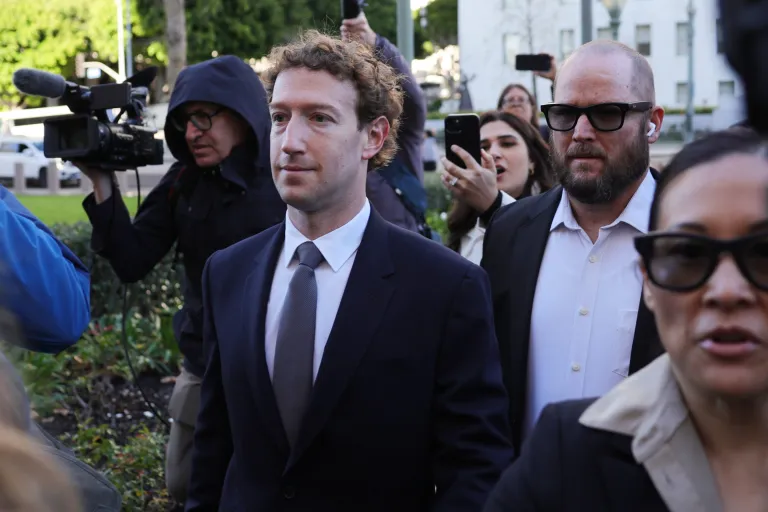
Meta Platforms CEO Mark Zuckerberg was on the witness stand this week in a landmark social media trial in Los Angeles, California, where he faced extensive questioning from lawyers over allegations that Meta’s social media platforms contributed to serious mental health problems among young users. The closely watched civil lawsuit one of the first of its kind to reach a jury trial has drawn international attention for its potential to reshape legal approaches to tech industry accountability.

The trial centres on a lawsuit filed in California by a 20-year-old woman identified in court documents as “KGM”, who contends that her use of social media platforms, including Meta’s Instagram and Google’s YouTube, began in childhood and contributed significantly to her depression, anxiety, suicidal thoughts and harmful behavioural outcomes. KGM’s lawyers argue that the tech companies deliberately designed their products to be addictive for young users, exploiting behavioural psychology and engagement-boosting features to keep teens on their platforms despite known risks to mental health.
In her legal complaint, KGM asserts that she began using YouTube as early as age six and Instagram by age 11, and that prolonged use of these platforms worsened her emotional distress and personal struggles. The case claims that design features such as algorithms, endless scrolling, “like” systems, auto-play video and personalised feeds function much like features in gambling products aimed at maximising user engagement at the expense of well-being.
Zuckerberg’s testimony this week marked the first time the Meta chief has been questioned in a U.S. courtroom specifically about claims that his company’s products have harmed children’s mental health. While he has previously appeared before U.S. Congress on youth safety issues, including a hearing in 2024 during which he apologised to families affected by online harms, this trial carries direct legal stakes and potential financial consequences if jurors find in favour of the plaintiff.
During questioning, plaintiff lawyers pressed Zuckerberg on several key points, notably age verification and underage use policies. He acknowledged that Meta has improved efforts to detect and remove accounts belonging to users under the age of 13, but admitted it was a challenge and suggested the company “wished it could have gotten there sooner.” Lawyers pushed back, questioning the effectiveness of existing systems and whether children had the ability to bypass age limits by misreporting their age an issue Zuckerberg described as complicated in practice.
Zuckerberg was also challenged with internal documents presented by the plaintiffs’ attorneys. One such document from early in Meta’s history suggested the company tracked metrics tied to increasing user time on its platforms. In response, Zuckerberg acknowledged that Meta once had internal goals related to engagement time but asserted that the company’s mission was to help people connect and build community. He also defended past testimony, pushing back against claims that he misled Congress in earlier statements about Instagram’s design and safety priorities.

The defence has focused on countering allegations that Instagram and other platforms are “defective products.” Meta’s attorneys argue that mental health issues experienced by KGM stem primarily from personal and environmental factors independent of social media. They also highlighted features Meta says are designed to protect users, such as privacy controls, safety notices, restricted teen accounts and content filters.
Another high-profile witness in the trial was Adam Mosseri, head of Instagram, who testified before Zuckerberg took the stand. Mosseri rejected the notion that social media users could be clinically addicted, instead framing excessive use as “problematic use” similar to extended television watching. His testimony was part of a broader defence strategy aimed at reframing the interpretation of user engagement.

This case is considered a “bellwether trial”, meaning it is expected to serve as a test case that may influence the outcome of thousands of similar lawsuits filed by families, school districts, states and other plaintiffs across the United States. Many of these lawsuits hinge on whether tech platforms are legally responsible for design choices that allegedly harm young people’s mental health.
The lawsuit initially named other companies including TikTok and Snapchat as defendants, but those companies reached confidential settlements before the trial began. Meta and Google remain the primary defendants in the Los Angeles proceedings.

The implications of the trial extend beyond legal liability. If jurors rule against Meta, it could weaken longstanding legal protections that have shielded social media companies from liability for harm linked to platform design. The verdict may also prompt legislative and regulatory actions aimed at enhancing child safety online, including age related restrictions and tighter content monitoring standards.
Many public health advocates and researchers argue that the case reflects broader societal concerns about the psychological impact of social media on children and teenagers. Although clinical research has not universally defined social media addiction in medical terms, numerous studies link compulsive use to negative outcomes such as anxiety, depression, body image issues and lowered self esteem. Critics of the tech industry have likened social media’s influence to prior public health crises, urging more rigorous oversight and accountability.
As the trial continues with jury deliberations expected to last into late March 2026, all eyes remain on how jurors interpret evidence related to product design, corporate knowledge of risks and the balance between innovation and user safety. The outcome of this case may very well shape the future of tech industry regulation and how platforms are engineered with youth wellbeing in mind.