

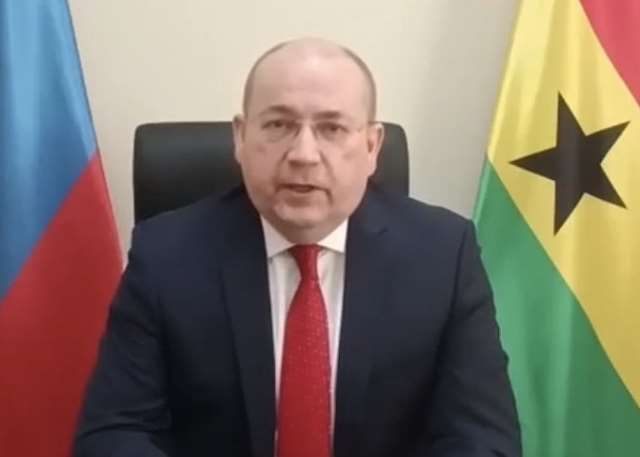
The Ministry of Foreign Affairs has disclosed that the Ambassador of the Russian Federation to Ghana, His Excellency Sergei Berdnikov, has acknowledged he cannot verify whether the individual widely referred to in Ghanaian media as “Yaytseslav” is actually a Russian national , a development that complicates diplomatic and legal efforts to hold the person accountable for alleged digital exploitation offences.
The statement, issued on February 17 by the Ministry, came after the ambassador was formally summoned to the Ministry headquarters in Accra at the instruction of Foreign Affairs Minister Samuel Okudzeto Ablakwa. Ghana’s government described the conduct in question as an “atrocious violation” of Ghanaian law and the dignity and privacy of the victims.
The controversy centres on a man identified online as Yaytseslav, also referred to in some media reports as Vyacheslav Trahov, whose videos allegedly showed him engaging in sexual relationships with Ghanaian women and then sharing intimate footage without their consent on social media and private channels. These clips quickly went viral in mid‑February, prompting public outrage and official responses from multiple Ghanaian ministries.

During the diplomatic engagement, Ambassador Berdnikov said he was unable to confirm that the individual is Russian and pointed out that the name circulating in the press “is not a known Russian name” and may be linguistically inappropriate in the Russian language. He indicated that while Russian authorities were aware of similar activities involving the same individual in other countries, there had been no verification of nationality at the time.
Despite this uncertainty, the Russian Embassy in Ghana has pledged to cooperate with Ghanaian authorities, sharing relevant information to help identify the suspect and support ongoing investigations. The cooperation is expected to take place within the broader context of bilateral diplomatic relations, even though Ghana and Russia do not currently have a formally binding extradition treaty.
Ghana’s Minister of Communications, Digital Technology and Innovation, Samuel Nartey George, has been publicly vocal about pursuing accountability in the case, emphasising that violations of privacy and digital exploitation are criminal offences under Ghanaian law. Authorities have said they will pursue every available international and diplomatic mechanism to bring the culprit to justice, whether that involves extradition, prosecution in absentia, or coordination with international law enforcement agencies such as Interpol.

The case has reinvigorated national debates around digital privacy, consent, and the responsibilities of foreign nationals operating online. Civil society organisations, women’s rights groups and cybersecurity advocates have also condemned the alleged actions, calling for stronger enforcement of Ghana’s Cybersecurity Act and enhanced protections to prevent similar exploitation in the future.
At the heart of the controversy is a stark reminder: in an increasingly interconnected digital world, safeguarding personal data and ensuring consent in content creation and distribution are not just ethical imperatives but legal requirements, and gaps in nationality verification do not diminish the seriousness with which such violations are pursued.