

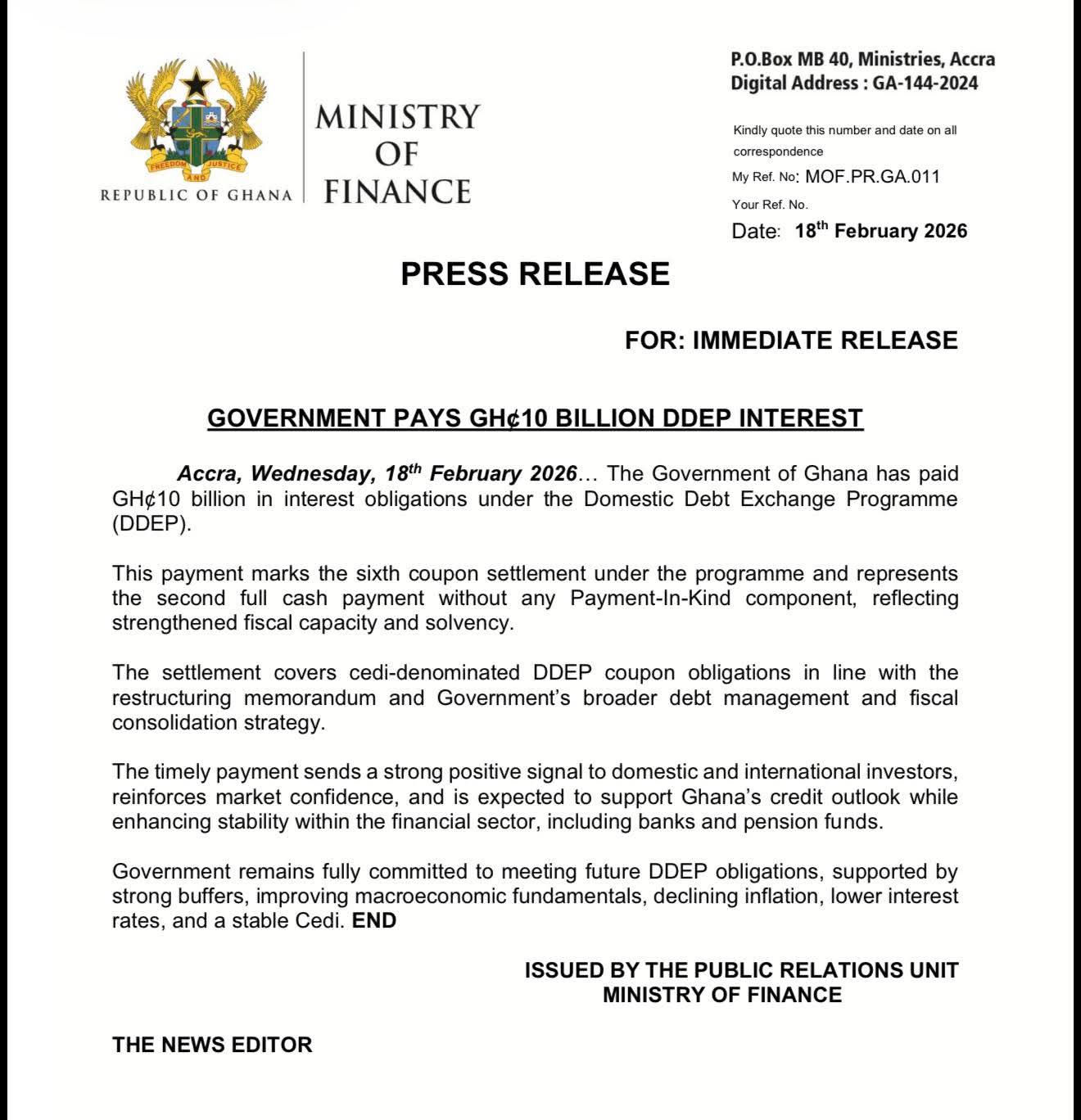
The Government of Ghana has successfully paid GH¢10 billion in interest obligations under its Domestic Debt Exchange Programme (DDEP), marking a significant achievement in the country’s ongoing efforts to restore fiscal stability and reassure investors. This substantial payment, confirmed by the Ministry of Finance, is the sixth coupon settlement under the programme and the second full cash payment without any Payment-In-Kind component, underscoring the government’s improving fiscal capacity and commitment to meeting its financial obligations.
Launched in December 2022 as part of a comprehensive debt restructuring strategy, the DDEP aimed to address unsustainable levels of domestic debt held by banks, pension funds, institutional investors and retail holders by exchanging old instruments for new ones with longer maturities and more manageable terms. The programme has been central to Ghana’s broader fiscal consolidation strategy, helping to stabilise the public debt profile and restore confidence in domestic markets.
The latest GH¢10 billion coupon settlement specifically covers cedi-denominated DDEP interest obligations. According to officials, honouring this payment fully in cash rather than through alternative arrangements sends a strong positive signal to both domestic and international investors. It reinforces trust in Ghana’s ability to manage its debt responsibly and strengthens expectations regarding the country’s credit outlook.
The Ministry of Finance emphasised that consistent settlement of obligations under the debt exchange demonstrates improved fiscal discipline and solvency. Analysts point out that such payments play an important role in enhancing stability within the financial sector, particularly among banks and pension funds that hold significant portfolios of domestic government securities. By meeting the interest payment in full, government aims to reassure holders of restructured bonds that their investments remain secure and that the terms of the debt exchange will be honoured.

Government officials noted that the payment was made possible by a combination of strong fiscal buffers, improving macroeconomic fundamentals, declining inflation, lower interest rates and a more stable Ghanaian currency, the cedi. These factors are widely seen as contributing to a more sustainable economic environment and enhancing the government’s ability to meet upcoming obligations under the programme.
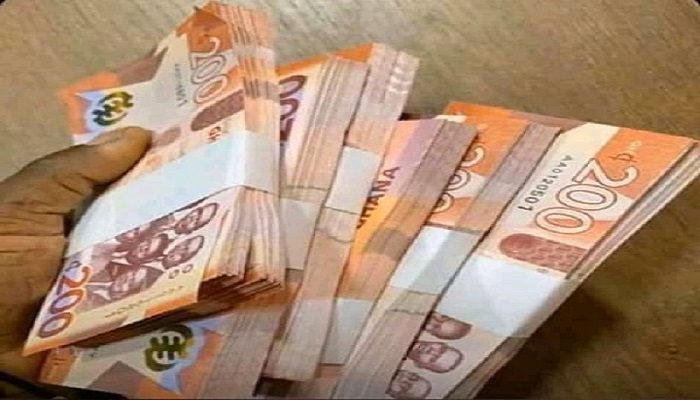
Experts say that the positive impact of meeting coupon payments in cash extends beyond investor sentiment. Regular and timely payments contribute to liquidity and confidence in the domestic debt market, which had faced challenges during the initial stages of the DDEP. In 2025 alone, previous coupon payments under the programme reached significant levels, with nearly GH¢9.7 billion paid in August 2025, bringing the total DDEP coupon settlement for that year to more than GH¢19.4 billion. Policy measures such as the establishment of dedicated sinking fund accounts denominated in both cedis and U.S. dollars are designed to strengthen payment capacity for future obligations.
Macroeconomic context and implications
Ghana’s proactive debt management strategy, which includes the DDEP, has been backed by its broader macroeconomic policy objectives. As part of efforts to improve fiscal sustainability, the government has also shifted external debt strategy toward more concessional multilateral and bilateral financing, reducing reliance on costly commercial loans that had previously strained the budget. This shift, coupled with consistent debt service payments, contributes to stabilising the nation’s financial outlook and reducing risk premiums demanded by investors.
Despite progress, Ghana’s overall public debt position remains closely watched. According to the Bank of Ghana, public debt rose to GH¢684.6 billion in the third quarter of 2025 representing nearly half of GDP though the broader trend shows meaningful debt reduction and improved fiscal discipline over time. The domestic component of debt has seen slower relative growth compared to external obligations, reflecting the impact of restructuring measures.
Critics of the DDEP have highlighted the programme’s social and financial costs, especially for pensioners, fixed income investors and institutions that experienced losses in the early phases of the exchange. The parliamentary minority previously apologised for the hardship many experienced, though defenders of the policy maintain that the programme was a necessary sacrifice to prevent economic collapse and stabilise public finances.
The GH¢10 billion payment reinforces Ghana’s commitment to meeting all future DDEP obligations on time and in full, as part of a broader fiscal consolidation agenda. Government assurances of liquidity buffers, combined with improving macroeconomic indicators, aim to promote confidence among investors and support the ongoing recovery of financial markets. Continued fiscal discipline, sound debt management and strategic investment in growth enhancing sectors will be crucial as Ghana navigates the medium term repayment landscape and seeks to build on the gains achieved through the DDEP.
While challenges remain, including managing upcoming maturities and maintaining economic stability, the successful settlement of this significant interest obligation underscores the government’s resolve to prioritise fiscal sustainability and uphold the terms of its debt restructuring commitments.