

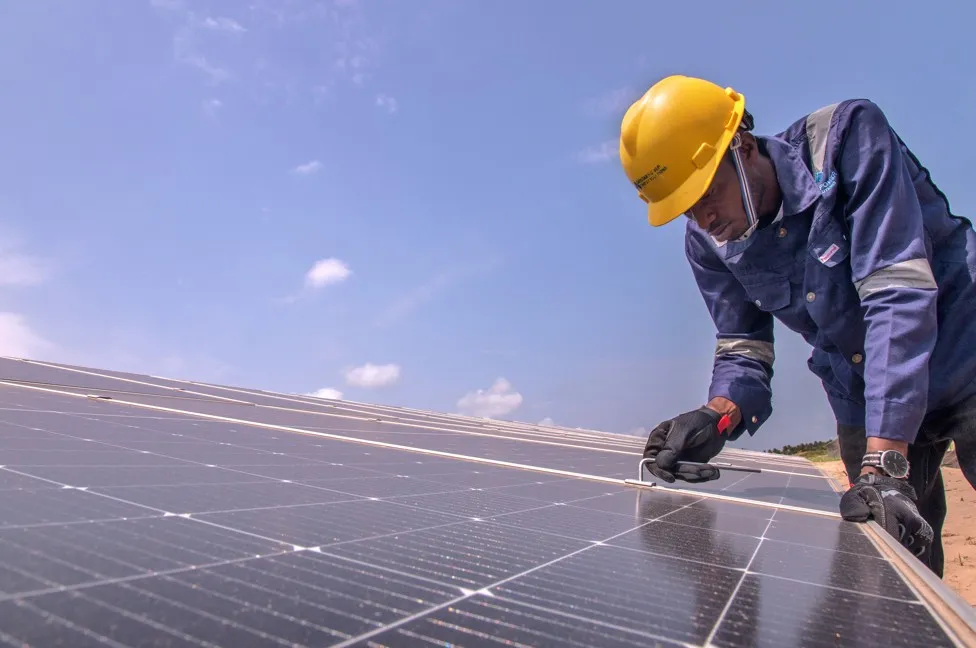
Nigeria has risen to become Africa’s second-largest importer of solar energy equipment, moving ahead of Egypt as demand for renewable power solutions accelerates across the continent. The development underscores a major shift in how Africa’s largest economy is responding to persistent electricity shortages and rising fuel costs.
According to reports, Nigeria’s growing appetite for solar panels and battery storage systems reflects a structural transformation in its energy landscape. Solar technology is increasingly being adopted as a practical and cost-effective alternative to diesel generators and unstable grid electricity.
For decades, Nigerian households and businesses have relied heavily on diesel and petrol generators to compensate for unreliable national grid supply. This dependency has imposed high operational costs on small businesses and strained household budgets, while also contributing to environmental pollution. The rapid increase in solar imports signals that individuals and enterprises are seeking more sustainable and predictable energy options.
Industry analysts attribute Nigeria’s solar surge to several converging factors. Rising fuel prices have significantly increased generator operating expenses, making solar installations comparatively more attractive over the medium term. At the same time, advancements in battery storage technology have improved reliability, allowing users to store energy for use during nighttime or cloudy conditions. The declining global cost of photovoltaic panels has further lowered entry barriers for adoption.

The overtaking of Egypt, long considered one of Africa’s leaders in renewable energy infrastructure, marks a notable milestone. While Egypt continues to invest in large-scale solar farms and national renewable projects, Nigeria’s import growth appears to be driven primarily by decentralized, small-scale installations serving homes, SMEs, schools, and informal sector enterprises.
Nigeria’s population size and entrepreneurial base also play a critical role. With over 200 million people and a vast network of micro and small enterprises, even incremental shifts toward solar solutions translate into substantial import volumes. Energy reliability directly impacts productivity, especially in retail, hospitality, manufacturing, and tech-driven businesses where uninterrupted power is essential.
The federal government has previously signaled support for renewable energy expansion through policy frameworks encouraging off-grid and mini-grid solutions. However, much of the growth in imports appears market-driven, fueled by private sector demand rather than solely state-led projects. Financial technology solutions and flexible payment models have also made solar systems more accessible to middle-income households and small enterprises.
Beyond cost savings, solar adoption carries broader economic implications. Reduced reliance on diesel generators lowers exposure to fuel price volatility and foreign exchange pressures tied to fuel imports. It also supports environmental sustainability goals by cutting carbon emissions and reducing noise pollution in densely populated urban areas.

Experts caution, however, that sustained progress will depend on strengthening regulatory standards, ensuring product quality, and expanding financing mechanisms to reach lower-income communities. Without proper quality control, the influx of substandard equipment could undermine consumer confidence in the long term.
Nigeria’s emergence as Africa’s second-largest solar importer signals a deeper structural trend, one where decentralized renewable energy is no longer optional but essential. As electricity demand continues to outpace grid capacity, solar power is increasingly becoming a cornerstone of the country’s energy resilience strategy.
Ghana Takes Bold Leap as Ministers to Drive Solar-Powered Electric Vehicles