

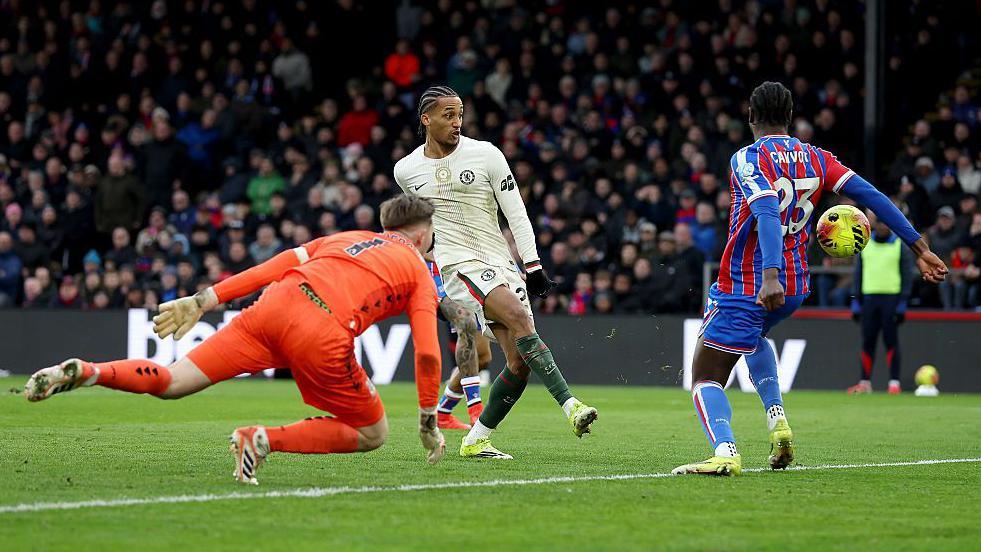
In a development that has reignited debate around the use of Video Assistant Referee (VAR) technology in the Premier League, the league’s independent Key Match Incidents (KMI) Panel has concluded that Chelsea should not have been awarded a penalty in their 3-1 victory over Crystal Palace. The unanimous decision by the five-member panel composed of former players and coaches alongside representatives from the Premier League and the Professional Game Match Officials Limited (PGMOL) highlights ongoing tensions between on-field officiating, VAR interpretation, and the laws governing handball in football.
The controversial decision occurred just before the hour mark during the match at Selhurst Park. Chelsea were already leading 2-0 when striker João Pedro fired a goal-bound shot that struck Crystal Palace defender Jaydee Canvot’s arm inside the penalty area. Referee Darren England initially allowed play to continue, judging that no handball offence had been committed. However, following a VAR review, England was advised to reassess the incident and subsequently overturned his original decision, awarding a penalty. Enzo Fernández converted the spot kick, extending Chelsea’s lead to 3-0 and significantly shaping the outcome of the match.
Panel verdict: VAR should not have intervened
After reviewing the incident, the KMI Panel concluded that the referee’s original on-field decision was correct and that VAR should not have intervened. The panel highlighted two key factors in reaching this conclusion. First, Canvot’s arm was not in an unnatural or deliberate position, nor was it used to make his body artificially bigger. Second, the ball deflected off his hip before making contact with his arm, a mitigating factor under current Premier League handball guidelines.

According to the panel, these elements meant the incident did not meet the threshold of a “clear and obvious error”, which is the standard required for VAR to overturn an on-field decision. As a result, the panel unanimously agreed that awarding a penalty was incorrect.
Handball interpretation under scrutiny
The ruling has once again drawn attention to the complexity of handball interpretations in the Premier League. Unlike some competitions that apply more rigid handball rules, England’s top flight allows referees significant discretion. Officials are expected to consider factors such as arm position, player movement, deflections, and reaction time before making a judgment.
In this case, the panel felt that the combination of a prior deflection and natural arm positioning meant the contact should not have been punished. The decision underscores how fine margins and subjective interpretations continue to influence outcomes, even with the assistance of video technology.
VAR’s role and ongoing concerns
VAR was introduced to reduce major officiating errors, yet incidents like this continue to fuel debate about its effectiveness. Critics argue that VAR is increasingly intervening in situations that fall within the referee’s discretion rather than correcting obvious mistakes. The Chelsea penalty decision is seen by many as an example of technology overriding sound on-field judgment.
The review process itself also attracted criticism, with the stoppage lasting nearly two minutes. Opponents of VAR argue that such interruptions disrupt the flow of the game and can undermine confidence in refereeing decisions when subsequent reviews contradict initial calls.
Comparisons with similar incidents
The KMI Panel has previously referenced comparable handball incidents in other Premier League matches to highlight inconsistencies in interpretation. In some cases, penalties have been upheld due to arms being clearly extended or blocking goal-bound shots without mitigating factors. The Chelsea incident, however, was deemed different due to the deflection and the defender’s natural movement.
Such comparisons have intensified calls for clearer guidance and more consistent application of the handball law across matches, clubs, and officials.
Reaction from the football community
While neither Chelsea nor Crystal Palace issued formal statements in response to the panel’s findings, the verdict sparked widespread discussion among fans, pundits, and former referees. Crystal Palace supporters viewed the ruling as vindication, even though it did not alter the final result. Chelsea fans, meanwhile, acknowledged the controversy but pointed to their overall performance as justification for the win.
Football analysts have used the case to highlight the broader challenges facing referees and VAR officials, noting that technology alone cannot eliminate subjective interpretation from the game.
Broader implications
The KMI Panel’s decision forms part of the Premier League’s broader effort to promote transparency and accountability in officiating. Although panel rulings do not affect match results, they serve as guidance for referees and VAR officials going forward.
The Chelsea-Crystal Palace incident reinforces the need for clearer communication, consistent application of the laws, and a more restrained use of VAR intervention. As the season continues, similar decisions are likely to remain under scrutiny, ensuring that debate over VAR’s role in football shows no sign of fading.