

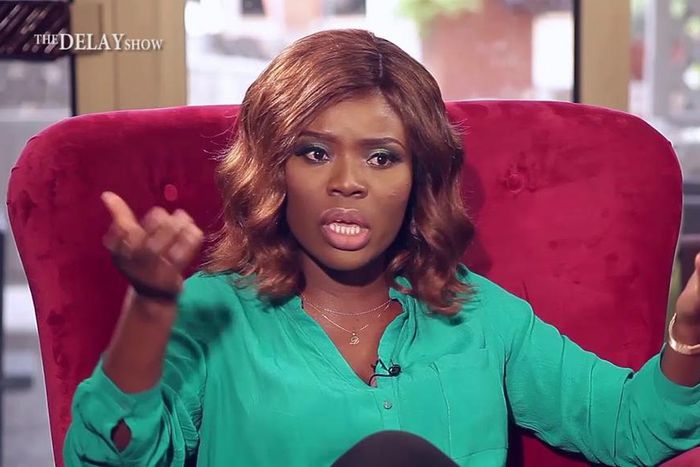
A recent interview conducted by Ghanaian media personality Deloris Frimpong Manso, popularly known as Delay, has stirred significant public debate after the TV host asked Ghanaian TikTok sensation Ama Yeboah highly personal questions during a televised conversation including probing into her sexual history while her mother was present. The segment, which gained widespread attention on social media platforms, raised strong reactions from viewers, with many debating the appropriateness of the questions and the ethical boundaries of celebrity interviews in Ghana.
Ama Yeboah, who has built a significant following online through her creative TikTok content and her engaging personality, appeared on The Delay Show to discuss her rise as a content creator, her personal experiences, and her journey navigating life as a young influencer. Known for her humorous videos and the affectionate portrayal of her relationship with her mother, Ama’s public persona has resonated with many young Ghanaians who admire her openness and the close bond she shares with her family.
The interview was largely congenial and insightful in its early stages, with Delay and Ama Yeboah discussing her background, how she became a social media star, and the challenges she has faced balancing personal life with the pressures of public visibility. Ama spoke warmly about her creative process and the support she receives from her mother, who is often featured in her online content. Many viewers found this aspect of the interview uplifting, as it offered a glimpse into the supportive family dynamic that underpins Ama’s success.

However, the tone shifted midway through the interview when Delay began to ask Ama Yeboah questions that some viewers later described as invasive and inappropriate particularly given the presence of her mother in the studio. Around the later part of the programme, Delay asked a series of deeply personal questions, including probing Ama about her sexual history. One of the most contentious moments was when Delay asked Ama if she was still a virgin, a question that quickly became the focus of online backlash once clips of the interview circulated on social media.
The question sparked immediate debate online, with many social media users criticising the line of questioning as disrespectful and unnecessary, particularly because it ventured into intimate territory that had no clear relevance to Ama Yeboah’s career or public achievements. Critics argued that putting a young woman on the spot about her sexual history, especially in front of her mother, crossed ethical boundaries and raised concerns about respect for personal dignity. Supporters of Ama described the question as uncomfortable and inappropriate for a public interview, asserting that personal matters should remain private unless the guest chooses to share them.
Some viewers pointed out that Delay’s style, known for its bold and sometimes provocative questions, has previously led to polarising reactions. The host has built a reputation for probing deep into her guests’ lives a format that generates conversation and keeps audiences engaged, but which also occasionally draws criticism for being too intrusive. Previous interviews on The Delay Show have ignited strong reactions, particularly when Delay questioned celebrities about their wealth, private relationships, or personal controversies, highlighting the fine line between bold journalism and overreach.
Many supporters of Ama Yeboah came to her defence, praising her composure in the face of difficult questioning and applauding her for maintaining grace despite the awkwardness of the moment. Fans expressed admiration for the way Ama handled herself, highlighting that she remained calm and respectful throughout the exchange, even when confronted with a question that made many uncomfortable. Supporters emphasised that personal choices about intimacy and relationships are private and should not be treated as public entertainment.

At the same time, some critics defended Delay’s approach, arguing that as a seasoned interviewer she often asks bold questions to elicit candid responses and spark conversation. They suggested that viewers should have the option to disengage from interviews they find uncomfortable, rather than criticising the host for challenging societal taboos. This perspective reflects a broader debate within Ghanaian media about the role of personality-driven talk shows and the boundaries of public discussion.
The conversation around the interview has extended beyond social media into broader discussions about media ethics, personal privacy and the responsibilities of public figures. Many commentators noted that while celebrities and influencers are public personas in some respects, they are also entitled to personal boundaries and that media practitioners should exercise sensitivity when navigating delicate topics, particularly when family members are present. Others have called on broadcasters to establish clearer guidelines for interview content to ensure that guests are treated with respect and that conversations remain relevant to their professional narratives.
Despite the controversy, the episode has undeniably increased interest in Ama Yeboah’s work and the continued evolution of online content creation in Ghana. Supporters believe the backlash has sparked important conversations about respect, privacy and the treatment of young women in media, while critics see it as an opportunity for media personalities to reflect on interview practices. What remains clear is that the interview has become another defining moment in Ghana’s entertainment landscape, illustrating how public reaction continues to shape conversations around media engagement and personal dignity.