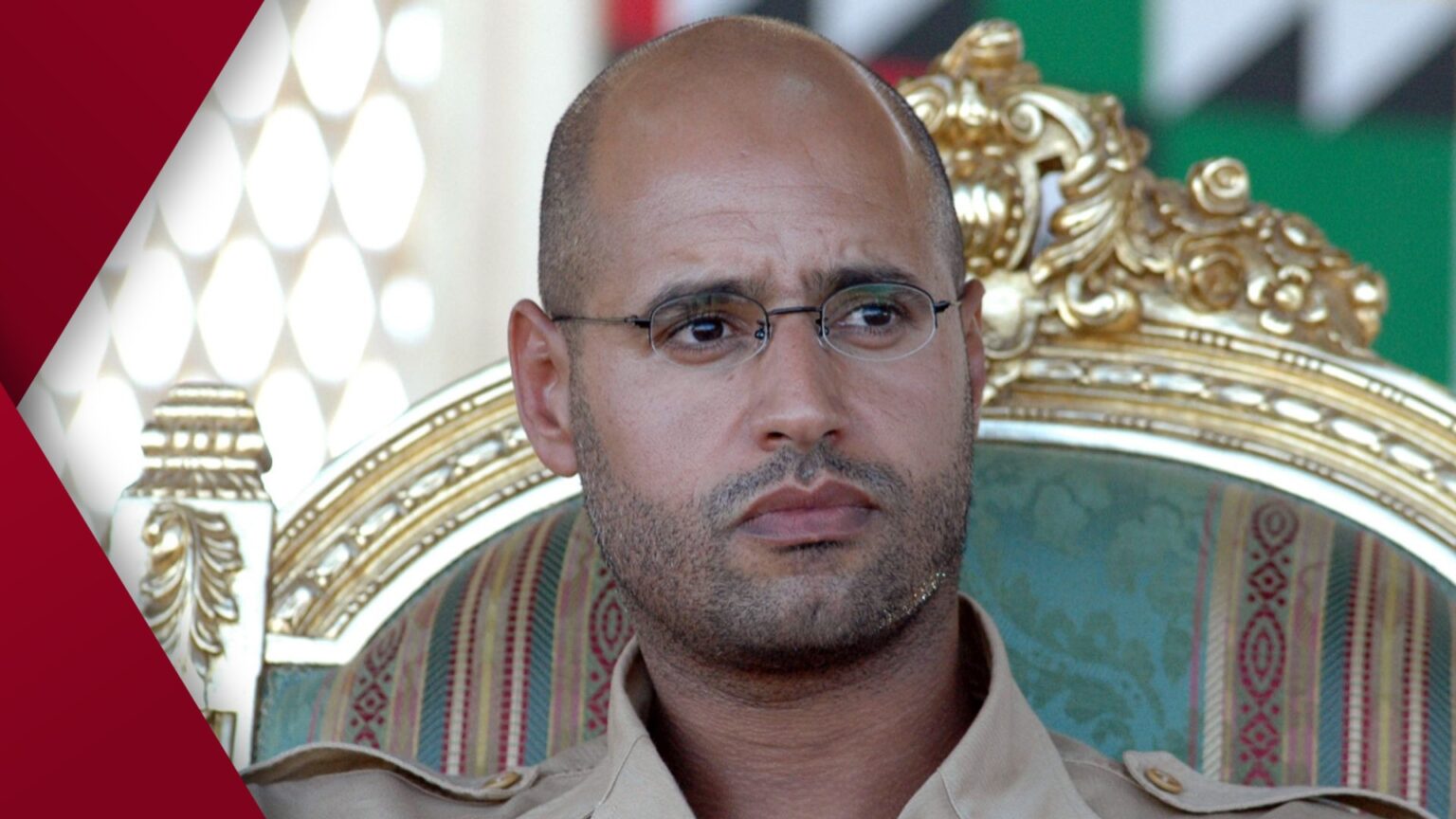
Gaddafi’s son Saif al-Islam reportedly killed in western Libya, sources say

0
180

Saif al-Islam Gaddafi, the most internationally known son of the late Libyan leader Muammar Gaddafi, has reportedly died in Libya, according to sources close to his family, his lawyer Khaled el-Zaydi, and multiple Libyan media outlets on February 3, 2026.

Reports indicate that Saif al-Islam was killed in the western city of Zintan, where he had been based in recent years. Local media and family contacts cited informants on the ground, but as of this writing official confirmation from Libyan authorities or international agencies is still pending.

Saif al-Islam rose to international prominence during the 2011 uprising against his father’s regime, when he was seen as a leading political voice and, at times, a potential successor. Following the collapse of the Gaddafi government, he was captured in 2011 by militia forces in Zintan, and spent years in detention. In 2015, a court in Tripoli issued a death sentence in absentia, a ruling not widely recognised internationally. Over subsequent years, Saif al-Islam’s legal status remained contested and tied up in Libya’s complex post-civil war politics.

Prominent Gaddafi son Saif al-Islam reportedly killed in western Libya, sources say
Saif al-Islam Gaddafi

In recent years he had intermittently resurfaced in public life, at times positioning himself as a candidate in Libyan political dialogues and presidential discussions. His presence in Zintan was also linked to efforts to build local alliances amid competing factions in Libya’s ongoing political transition.

His lawyer, Khaled el-Zaydi, told local media on February 3 that family sources had confirmed Saif al-Islam’s death, but he did not immediately provide details about the circumstances or a cause of death. There has been no official statement yet from Libya’s Government of National Unity or rival administrations in the east of the country.

Given decades of factional conflict in Libya and the fragmented nature of institutions, independent verification by international news agencies or government sources typically takes time. Reports of high-profile deaths or attacks in Libya have occasionally been disputed in the past pending independent corroboration.

Gaddafi

Saif al-Islam’s reported death, if confirmed, would mark the end of a polarising figure whose life bridged Libya’s authoritarian past and its turbulent post-2011 transition.

UDS Student Stabbed to Death on Campus

Author

  • Daniel Ablordey

    Daniel Ablordey is a Business Analytics student at the University of Ghana Business School and an emerging strategist at the intersection of data, markets, and narrative. With a keen analytical mind and a passion for African business and economic trends, he is building a career focused on translating complex data-driven insights into accessible, decision-relevant stories that matter.

    As a writer and editor with Insight Ghana, African Business Insight, and The African Journal, Daniel delivers sharp, high-impact analysis on current affairs, business developments, and emerging trends across the continent. His work is defined by precision, clarity, and a deep commitment to responsible journalism — ensuring that every story he tells is not only accurate but meaningful to the audiences it serves.

    Beyond his editorial work, Daniel serves as an Ecobank Youth Ambassador, where he actively promotes financial inclusion, digital banking, and financial literacy among young Ghanaians. His leadership experience spans academic, professional, and faith-based institutions, where he has consistently driven initiatives centered on growth, structure, and long-term impact.

    Grounded in the principles of Pan-Africanism and service, Daniel brings a rare combination of analytical rigour and storytelling depth to his work. Whether unpacking market behavior, profiling emerging business leaders, or covering cultural shifts shaping the continent, he approaches every assignment with strategic intent and editorial integrity.

    His broader ambition is to contribute to Africa's transformation by shaping how data, business, and storytelling intersect — not just locally, but on a global stage.

Previous articleWontumi declares bid for NPP national chairmanship, pledges unity and grassroots focus
Next articleMexico and Apocalypto star Gerardo Taracena dies at 55, tributes pour in worldwide
Daniel Amenyo Ablordey
Daniel Ablordey is a Business Analytics student at the University of Ghana Business School and an emerging strategist at the intersection of data, markets, and narrative. With a keen analytical mind and a passion for African business and economic trends, he is building a career focused on translating complex data-driven insights into accessible, decision-relevant stories that matter.

As a writer and editor with Insight Ghana, African Business Insight, and The African Journal, Daniel delivers sharp, high-impact analysis on current affairs, business developments, and emerging trends across the continent. His work is defined by precision, clarity, and a deep commitment to responsible journalism — ensuring that every story he tells is not only accurate but meaningful to the audiences it serves.

Beyond his editorial work, Daniel serves as an Ecobank Youth Ambassador, where he actively promotes financial inclusion, digital banking, and financial literacy among young Ghanaians. His leadership experience spans academic, professional, and faith-based institutions, where he has consistently driven initiatives centered on growth, structure, and long-term impact.

Grounded in the principles of Pan-Africanism and service, Daniel brings a rare combination of analytical rigour and storytelling depth to his work. Whether unpacking market behavior, profiling emerging business leaders, or covering cultural shifts shaping the continent, he approaches every assignment with strategic intent and editorial integrity.

His broader ambition is to contribute to Africa's transformation by shaping how data, business, and storytelling intersect — not just locally, but on a global stage.