Burkina Faso dissolves all political parties as junta deepens control

0
105

Burkina Faso’s military-led government has formally dissolved all political parties and political formations in the country, scrapping the legal framework that governed their operation and marking a major shift in the nation’s political landscape. The decree, approved by the country’s Council of Ministers on 29 January 2026, effectively ends the multiparty system that existed before the military takeover.

Interior Minister Emile Zerbo said the decision followed a comprehensive review of Burkina Faso’s partisan system, which the government concluded had fostered division among citizens and weakened social cohesion. Officials claimed the proliferation of more than 100 registered parties prior to the 2022 coup had led to abuses and hindered unity, justifying the dissolution as necessary to “preserve national unity, strengthen the coherence of government action and pave the way for a reform of the political governance model.”

Under the decree, all assets belonging to the dissolved parties will be transferred to the state, and draft laws have been prepared to repeal statutes regulating party financing, operations and the status of the opposition leader. These draft laws are expected to be submitted to the Transitional Legislative Assembly, a body appointed by the military government, for approval.

Burkina Faso dissolves all political parties

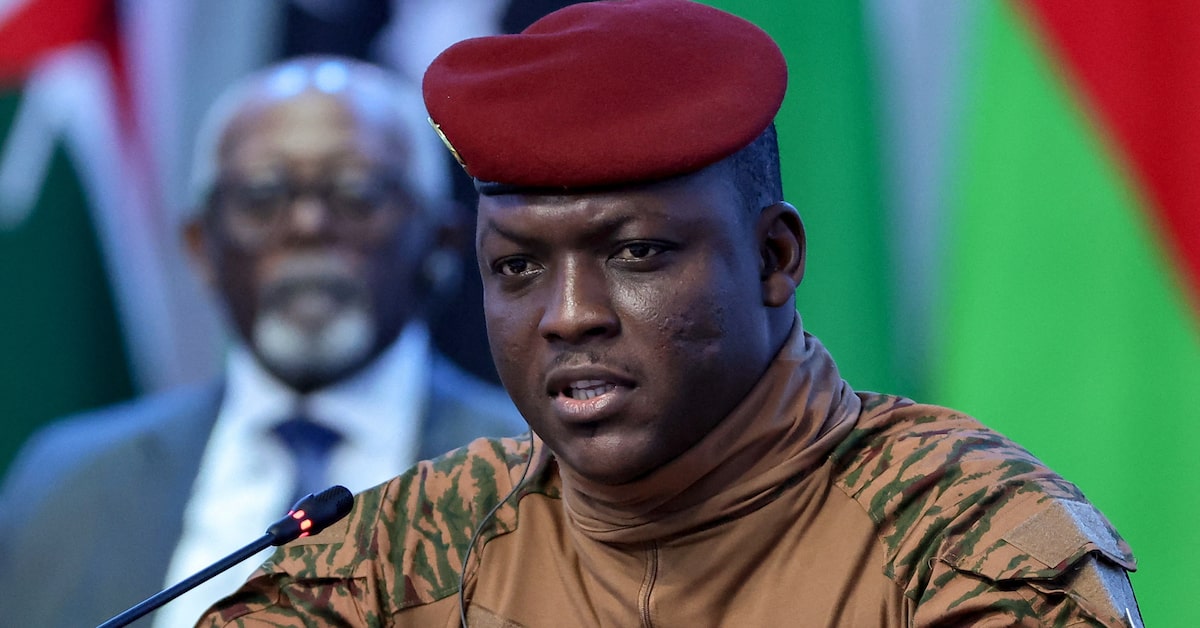
Political party activity in Burkina Faso had already been largely suspended since Captain Ibrahim Traoré’s junta seized power in September 2022, the second coup in the country that year. At that time, parties were barred from holding public gatherings, but were still permitted to operate internally. The recent decree goes further by eliminating legal recognition and dismantling the institutional framework for political pluralism.

Before the coup, Burkina Faso had a vibrant, if fragmented, multiparty system with more than 100 registered parties, including 15 represented in the 2020 National Assembly elections. The abrupt dissolution thus wipes out decades of political organisation and representation, raising concerns among rights groups and international observers about the shrinking civic space and democratic backsliding in the Sahel nation.

The country continues to grapple with a severe security crisis driven by Islamist insurgencies linked to al-Qaeda and Islamic State affiliates, which have destabilised much of the region. The junta has repeatedly postponed plans for a return to civilian rule, initially pledging elections but extending its own tenure amid ongoing instability. Critics argue the latest move further consolidates military authority and weakens prospects for a democratic transition.

Burkina Faso
Captain Ibrahim Traoré

Burkina Faso Criminalizes Homosexuality Under Sweeping Junta Reforms

Author

  • Daniel Ablordey

    Daniel Ablordey is a Business Analytics student at the University of Ghana Business School and an emerging strategist at the intersection of data, markets, and narrative. With a keen analytical mind and a passion for African business and economic trends, he is building a career focused on translating complex data-driven insights into accessible, decision-relevant stories that matter.

    As a writer and editor with Insight Ghana, African Business Insight, and The African Journal, Daniel delivers sharp, high-impact analysis on current affairs, business developments, and emerging trends across the continent. His work is defined by precision, clarity, and a deep commitment to responsible journalism — ensuring that every story he tells is not only accurate but meaningful to the audiences it serves.

    Beyond his editorial work, Daniel serves as an Ecobank Youth Ambassador, where he actively promotes financial inclusion, digital banking, and financial literacy among young Ghanaians. His leadership experience spans academic, professional, and faith-based institutions, where he has consistently driven initiatives centered on growth, structure, and long-term impact.

    Grounded in the principles of Pan-Africanism and service, Daniel brings a rare combination of analytical rigour and storytelling depth to his work. Whether unpacking market behavior, profiling emerging business leaders, or covering cultural shifts shaping the continent, he approaches every assignment with strategic intent and editorial integrity.

    His broader ambition is to contribute to Africa's transformation by shaping how data, business, and storytelling intersect — not just locally, but on a global stage.

Previous articleWode Maya clarifies IShowSpeed Ghana passport move amid backlash
Next articleUniversity of Ghana School of Law ranks among Africa’s top institutions in 2026
Daniel Amenyo Ablordey
Daniel Ablordey is a Business Analytics student at the University of Ghana Business School and an emerging strategist at the intersection of data, markets, and narrative. With a keen analytical mind and a passion for African business and economic trends, he is building a career focused on translating complex data-driven insights into accessible, decision-relevant stories that matter.

As a writer and editor with Insight Ghana, African Business Insight, and The African Journal, Daniel delivers sharp, high-impact analysis on current affairs, business developments, and emerging trends across the continent. His work is defined by precision, clarity, and a deep commitment to responsible journalism — ensuring that every story he tells is not only accurate but meaningful to the audiences it serves.

Beyond his editorial work, Daniel serves as an Ecobank Youth Ambassador, where he actively promotes financial inclusion, digital banking, and financial literacy among young Ghanaians. His leadership experience spans academic, professional, and faith-based institutions, where he has consistently driven initiatives centered on growth, structure, and long-term impact.

Grounded in the principles of Pan-Africanism and service, Daniel brings a rare combination of analytical rigour and storytelling depth to his work. Whether unpacking market behavior, profiling emerging business leaders, or covering cultural shifts shaping the continent, he approaches every assignment with strategic intent and editorial integrity.

His broader ambition is to contribute to Africa's transformation by shaping how data, business, and storytelling intersect — not just locally, but on a global stage.