


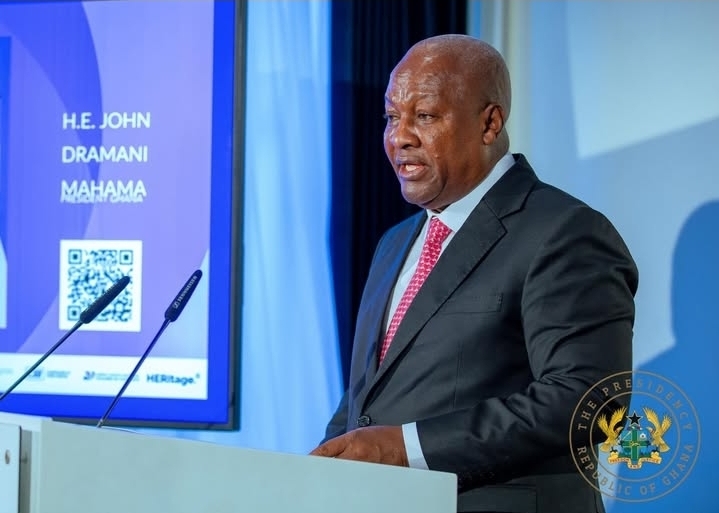
President John Dramani Mahama delivered a detailed address on 22 January 2026 at the World Economic Forum (WEF) Annual Meeting in Davos, Switzerland, where he led the first convening of the Accra Reset initiative, a continental vision for reshaping Africa’s role in the global order and transforming development strategies across the Global South. His remarks set out Ghana’s own economic turnaround as an example, while urging African nations and global partners to adopt a new cooperative framework.
Mahama began by thanking the WEF and partners for providing a platform to discuss the Accra Reset, which he said was introduced at the United Nations General Assembly in 2025 not as a rhetorical statement but as a practical response to the question many young Africans are asking: What should Africa’s strategy be in a rapidly changing global system? He highlighted that Ghana’s policies have generated tangible results, including single‑digit inflation, a stronger currency and rising business confidence, evidence that “democracy works and change is possible when leadership is focused and accountable.”
Despite Ghana’s progress, Mahama stressed that the country cannot succeed in isolation; he called on African nations to “knit together the patchwork of success stories.” He described many African states as trapped in a “triple dependency”: reliance on outsiders for security, health and education systems, and the export of critical minerals with minimal value added. Such dependency, he said, is neither sovereignty nor sustainable development.

Mahama invoked historical precedent by recalling the global HIV/AIDS response two decades earlier, when world leaders collaborated urgently to establish the Global Fund, saving millions of lives. He used that example to argue that Africa must now mobilise similarly to “fight poverty, dependency and systems that keep brilliant young Africans locked out of the future.” On the current global stage, he noted, aid cuts by major donors and shifting geopolitical priorities underscore the need for African countries to be responsible for their own destiny.
Underlying the Accra Reset is what Mahama called the “Resetting Ghana”” agenda, which includes: reducing government size to historically low levels, digitising public services to combat corruption, training the workforce for future jobs, and renegotiating debt to prioritise investment in people. These, he said, reflect a shift from mere discussion to practical implementation of reforms that produce measurable results.
Mahama then outlined the broader vision for Africa and the Global South:
He argued for pooling negotiating power on critical minerals so Africa captures value rather than merely exporting raw resources; building regional manufacturing hubs to create jobs; producing essential goods, from vaccines to solar panels, domestically; and fostering regional prosperity platforms for investment coordination, infrastructure development and job creation.

He urged African nations to negotiate as one on matters like trade, climate finance and mineral deals, warning that bargaining individually weakens their influence. “Unity should not be a slogan; it must be the strategy,” he said, emphasising that collective action would make nations “formidable” in global negotiations.
Mahama framed the Accra Reset as a call to action for a new kind of global partnership, one built on shared vision, mutual respect and co‑design with the Global North. He said the initiative aims not only to attract investment but to shape it so that it aligns with the priorities of African governments and communities. He outlined plans to create Prosperity Spheres, regional cooperation domains for investment, infrastructure and employment, and reiterated that the Accra Reset is not seeking permission but building momentum for collective progress.
Throughout his address, Mahama returned to the theme of opportunity for Africa’s youth, urging investment in skills matched to real jobs, including digital, green energy and manufacturing skills, and stressing that accountability and good governance are prerequisites for long‑term prosperity. “We want to leave systems that work, industries that thrive, and nations that stand tall,” he said, emphasising that Ghana and Africa must forge paths that allow young people to thrive at home rather than risk dangerous migration.
President Mahama urges professionals to embrace farming alongside careers