


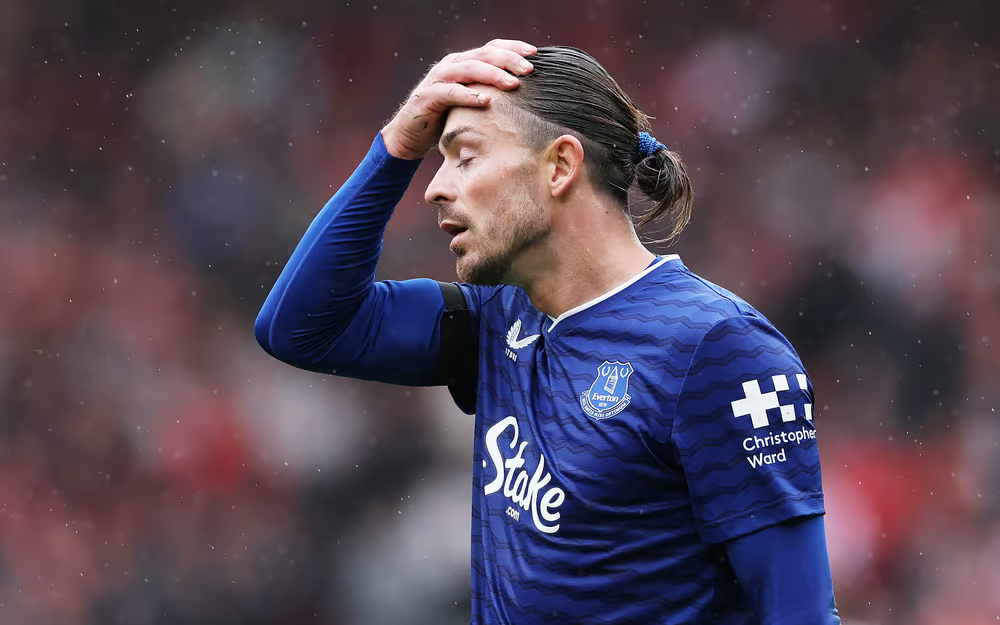
Everton have been dealt a significant setback following confirmation that Jack Grealish will be sidelined for approximately three months after being diagnosed with a stress fracture in his foot. Medical tests conducted today confirmed the extent of the injury, ruling the midfielder out for around 12 weeks in what represents a major blow for both player and club.
The injury is understood to have developed over time, with the stress fracture likely caused by repeated strain rather than a single incident. While such injuries are common in elite football due to congested schedules and high physical demands, they often require extended recovery periods to avoid long-term complications. As a result, Everton’s medical team has opted for a cautious approach, prioritising full rehabilitation over any rushed return.
Nature of the injury and recovery timeline
Stress fractures are small cracks in the bone caused by repetitive force or overuse, and they are particularly problematic for footballers given the constant running, sudden changes in direction, and physical contact involved in matches. In Grealish’s case, the fracture affects his foot, a critical area for balance, acceleration, and ball control.
Recovery typically involves a prolonged period of rest, followed by a carefully managed rehabilitation programme that gradually reintroduces weight-bearing activities. A 12-week absence suggests that surgery is unlikely, but it also indicates that the fracture is significant enough to require complete healing before Grealish can return to competitive action. Everton will be keen to ensure there are no setbacks, as premature returns from stress fractures often lead to recurrence.
Impact on Everton’s season
Grealish’s absence comes at a challenging time for Everton, who now face the task of reshaping their plans without one of their key players. Known for his creativity, ball-carrying ability, and influence in the final third, Grealish has been central to Everton’s attacking build-up and overall tempo. Losing him for three months disrupts not only team selection but also tactical balance.

In the short term, Everton’s manager will need to rely on squad depth and tactical flexibility to compensate for the loss. This may involve adjusting formations, redistributing creative responsibilities, or giving extended opportunities to younger players and squad rotation options. While this can foster development and resilience, it also places added pressure on the rest of the team to maintain consistency.
Beyond the immediate footballing impact, the injury also represents a psychological challenge. Long-term absences can be frustrating for players, particularly those eager to contribute during crucial phases of the season. Everton’s support staff will play a vital role in managing Grealish’s recovery both physically and mentally.
As Everton navigate the coming months, the focus will be on stabilising performances and ensuring that Grealish returns fully fit, rather than quickly. His successful rehabilitation could prove just as important to the club’s ambitions as any result achieved in his absence.