

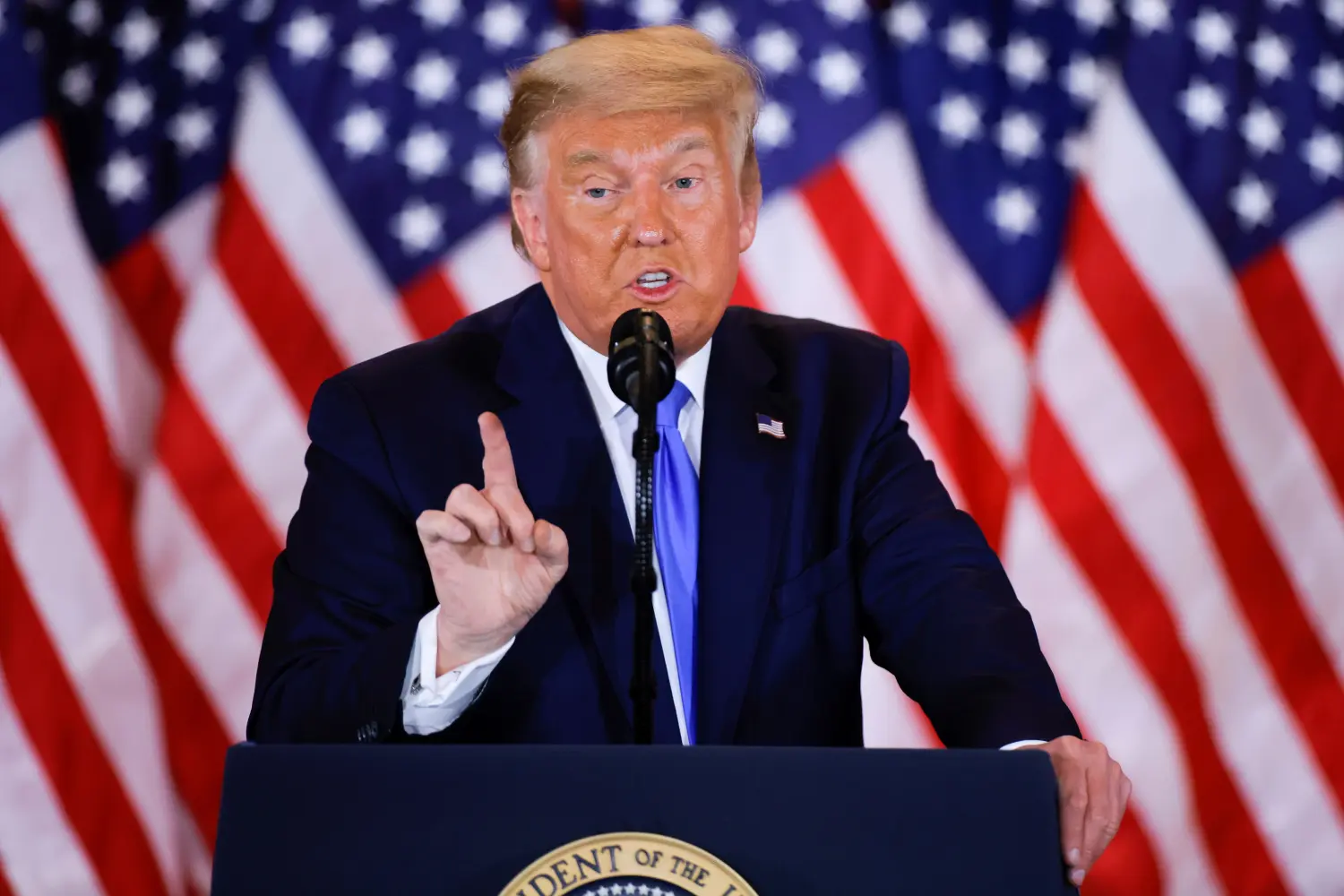
In a major escalation of international military involvement in West Africa, US President Donald Trump announced on Christmas night that the United States conducted “powerful and deadly” airstrikes against Islamic State (ISIS/Daesh)-linked militants in northwest Nigeria, marking a significant turning point in US–Nigeria security relations and regional counterterrorism efforts.
Announcing the operation on his social media platform, President Trump said the strikes were ordered “at my direction as Commander in Chief” and were aimed at militants “who have been targeting and viciously killing, primarily, innocent Christians” in Nigeria’s northwest, a region that has for years faced persistent violent insurgency from extremist factions.

According to official statements from US Africa Command (AFRICOM), the precision airstrikes were conducted in Nigeria’s Sokoto State, where multiple extremist targets, including camps and operational infrastructure linked to ISIS affiliates, were successfully hit. AFRICOM further confirmed that the operation was carried out in coordination with Nigerian authorities, highlighting ongoing security collaboration between both nations.
Military officials described the strikes as carefully planned to minimize civilian casualties while degrading the operational capabilities of the targeted militant groups. Surveillance and intelligence assessments were reportedly conducted prior to the strikes to ensure accuracy and effectiveness, reflecting a broader emphasis on targeted counterterrorism operations rather than prolonged troop deployment.
Strategic Context and Security Cooperation
The strikes come amid growing US concerns about escalating violence in northern Nigeria. While President Trump’s comments framed the operation within a religious context, Nigerian officials have consistently emphasized that the country’s security challenges are complex and multi-dimensional. Authorities in Abuja have reiterated that extremist violence affects communities across religious and ethnic lines.

The Nigerian government acknowledged continued structured security cooperation with international partners, including the United States, stressing that counterterrorism efforts prioritize civilian protection, national sovereignty, and adherence to international law. Officials have also highlighted the role of intelligence sharing and technical support in strengthening Nigeria’s capacity to confront extremist threats.
Earlier in 2025, President Trump had publicly criticized Nigeria’s handling of violent extremism, warning that continued attacks on civilians could prompt stronger US military responses. Thursday’s operation represents one of the most direct American military actions on Nigerian soil in recent years, signaling a shift from advisory and intelligence roles to active combat engagement.
Analysts say the decision reflects Washington’s broader strategy of addressing emerging terror threats before they gain regional or global reach. The United States has increasingly relied on precision strikes as a tool to disrupt extremist networks operating in fragile regions.
Security Dynamics in Northern Nigeria
Northwest Nigeria has remained a hotspot of insecurity driven by armed extremist groups, bandit networks, and militant factions aligned with ISIS. These groups have exploited governance gaps, economic hardship, and local grievances to expand their influence. Attacks have included mass killings, kidnappings, and assaults on rural communities, contributing to widespread displacement and humanitarian concerns.
Local communities have borne the brunt of the violence, with disrupted livelihoods, school closures, and reduced access to basic services becoming common realities. Security forces have faced challenges operating in vast rural areas, where difficult terrain and limited infrastructure complicate counterinsurgency efforts.
Security analysts note that while religious narratives are often used by extremist groups, the violence is also fueled by competition over land, resources, and political marginalization. Both Christian and Muslim populations have suffered significant losses, underscoring the complexity of the conflict.
International and Regional Reactions
The US airstrikes have triggered mixed reactions internationally. Supporters argue that decisive military action against extremist strongholds is necessary to weaken terrorist networks and prevent further civilian casualties. They see the operation as a reaffirmation of Washington’s commitment to global counterterrorism.
Critics, however, caution that sustained military pressure without parallel diplomatic, economic, and governance reforms could worsen instability. They argue that airstrikes alone cannot resolve deep-rooted security challenges and warn against potential civilian harm and regional backlash.
Some regional observers have also raised questions about precedent, noting that increased foreign military involvement could influence how other nations approach security crises in Africa. The importance of transparency and coordination with regional bodies has been emphasized in ongoing discussions.
Looking Ahead
As attention turns to the aftermath of the strikes, analysts suggest the operation could deepen intelligence-sharing and military coordination between the United States and Nigeria. However, long-term stability, they argue, will depend on broader strategies that address poverty, governance, and local conflict resolution.
Regional bodies such as ECOWAS and the African Union are expected to monitor developments closely, as the outcome of the operation could influence counterterrorism strategies across West Africa. Humanitarian organizations are also likely to assess the impact on civilian populations in affected areas.
As events continue to unfold in 2025, the strikes underscore the growing international dimension of Nigeria’s security crisis and raise important questions about the future of foreign military involvement in Africa’s most populous nation.