


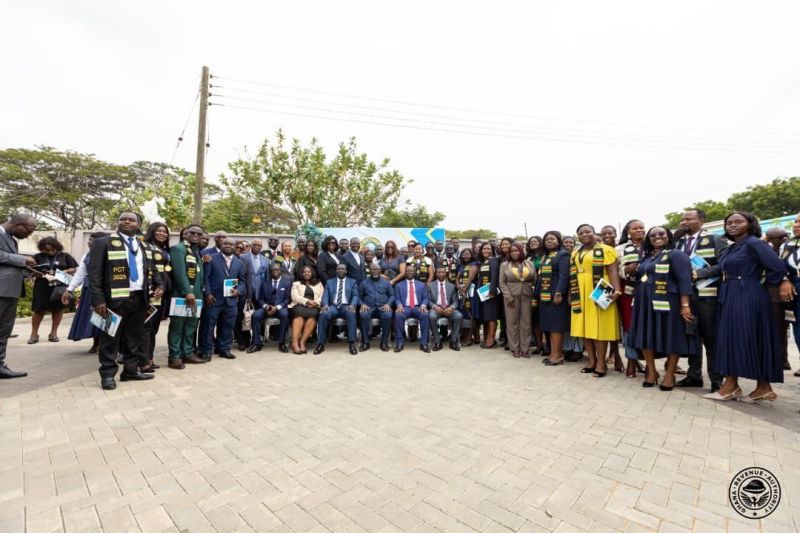
The Ghana Revenue Authority (GRA) has taken bold steps to enhance revenue mobilisation and rebuild public confidence by investing in intensive staff training programmes designed to strengthen technical skills and service delivery across the organisation. This training initiative forms part of a broader strategy to improve operational efficiency, boost domestic revenue collection and deepen trust between the Authority and taxpayers, according to senior GRA officials.
At the heart of the initiative is the Professional Course in Taxation (PCT), a comprehensive training programme aimed at equipping GRA officers with advanced competencies in taxation, compliance enforcement, and taxpayer engagement. Nearly 300 officers have already graduated from this flagship course, marking a significant milestone in the Authority’s efforts to bridge critical technical skill gaps within its workforce.
Closing the Skills Gap for Better Revenue Performance
Senior leadership at the GRA emphasises that enhancing staff capability is a foundational pillar in achieving sustainable revenue growth. The focus on targeted training acknowledges the evolving complexity of tax administration in a globalised economy, where issues such as digitalisation, trade compliance, and informal sector engagement require specialised knowledge and adaptive skills.
Officials note that a well-trained workforce is better positioned to handle complex tax cases, interpret evolving policy frameworks and engage taxpayers with professionalism. Enhanced technical skills reduce errors, speed up compliance processes, and contribute to a more predictable and taxpayer-friendly environment all of which are essential for increasing voluntary compliance and revenue mobilisation.
Training programmes like the PCT are designed to strengthen mastery of key areas including tax law interpretation, audit techniques, risk profiling, customs enforcement, and customer service excellence. By closing skill gaps, the GRA aims to transform its human capital into a strategic asset capable of delivering tangible results for both government revenue targets and the business community.
Building Public Trust Through Professionalism

Another critical objective of the intensive training initiative is to restore and strengthen public trust in the GRA. Trust is often cited as a determining factor in voluntary tax compliance; when taxpayers perceive the revenue authority as fair, transparent and capable, they are more likely to fulfil their tax obligations without enforcement pressure.
GRA leadership has stressed that staff training is as much about technical competence as it is about cultivating an ethical, service-oriented culture within the institution. Officers are trained to engage taxpayers respectfully, resolve disputes professionally, and communicate tax obligations clearly a shift from enforcement-driven interactions toward service-focused engagements that foster mutual respect.
Analysts say that public trust is key to expanding the tax base, particularly as the Authority targets millions of potential new taxpayers in the formal and informal sectors. With initiatives designed to broaden the tax net, including efforts to register creatives, small businesses and informal traders, improved staff capability is critical to translating policy into positive taxpayer experiences.
Linking Training to Broader Revenue Strategies
The training drive aligns with a suite of broader GRA strategies aimed at modernising tax administration and maximising domestic revenue. These include ongoing digital transformation plans, tax system reforms, and targeted taxpayer education programmes. For example, the Authority’s push to integrate advanced technologies and enhanced taxpayer platforms complements capacity building by ensuring staff can leverage digital tools for efficient service delivery.
In addition, the Authority is expected to benefit from collaboration with key stakeholders within government and international partners. Initiatives such as the Modified Tax System seek to integrate informal sector operators into the tax system, while the appointment of a revamped GRA Board underscores the commitment to strong governance and fiscal oversight.
These broader strategies emphasise that staff training is not an isolated effort but an integral component of a holistic approach to strengthening tax administration, improving compliance, and supporting the government’s fiscal agenda.
Strategic Impact on National Development
Effective revenue mobilisation underpins national development priorities, including infrastructure investment, enhanced public services, and social programmes. The GRA’s role in mobilising domestic revenue has been highlighted by recent performance outcomes, with the Authority exceeding its revenue targets in prior fiscal years a testament to improved compliance, policy implementation and institutional reforms.
By investing in human capital development today, the GRA is laying the groundwork for sustained performance in future revenue cycles, increasing its capacity to meet ambitious targets and contribute meaningfully to Ghana’s economic resilience. This emphasis on people and culture recognises that modern revenue administration depends as much on the skills of its workforce as on policy frameworks and technology.
Looking Forward: Training for Tomorrow’s Challenges
As Ghana navigates complex economic conditions and seeks to improve fiscal sustainability, the GRA’s focus on training represents a forward-looking strategy. A skilled and motivated workforce is crucial not only for current operations but also for tackling emerging challenges such as digital economy taxation, cross-border trade complexities, and taxpayer behaviour management.
Ongoing staff training, reinforced by data-driven decision-making and strategic leadership, is expected to enhance revenue performance, encourage ethical conduct, and nurture a positive public perception of the Authority. Collectively, these efforts boost GRA’s credibility, support national revenue goals and strengthen the foundation for a more efficient, transparent and taxpayer-centric tax administration system.