

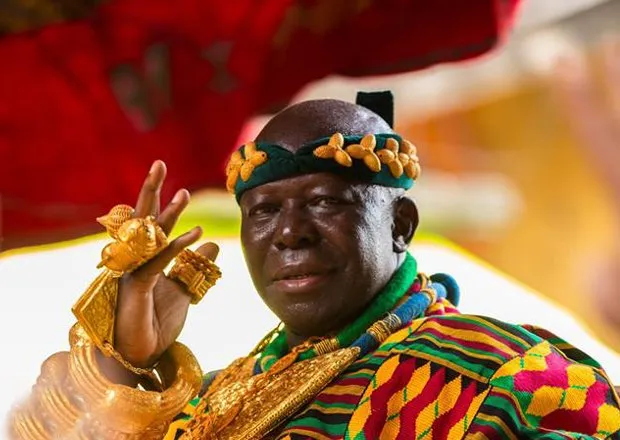
Asantehene Otumfuo Osei Tutu II has issued a firm admonishment to the Bono Regional Minister, accusing him of improperly using his political office to influence the longstanding Sampa chieftaincy dispute a matter traditionally governed by customary law and local authority structures. The rebuke was delivered during the final Asanteman Council meeting for the year 2025, held at the historic Manhyia Palace in Kumasi, where matters of governance, tradition and leadership are deliberated by chiefs and elders.
In his address, Otumfuo drew a clear distinction between political authority and traditional jurisdiction, stressing that such sensitive cultural issues should not be shaped by partisan interests or political leverage. He expressed deep concern that the Bono Regional Minister, who is also a trained lawyer, may have allowed personal involvement to cloud his judgment in intervening in chieftaincy matters that fall outside the scope of his official responsibilities.
A Tense Confrontation Over Custodianship and Authority
The Asantehene’s remarks reflect wider tensions between Ghana’s modern political institutions and its deeply rooted traditional leadership structures. Otumfuo emphasised that while government officials have specific administrative duties, the custody and resolution of chieftaincy disputes especially contentious ones like the Sampa stool controversy are matters that demand respect for custom, tradition and the established protocols of the Houses of Chiefs.
According to the monarch, a situation in which a political actor appears to use his position to influence a chieftaincy process undermines both traditional authority and the peace that community leadership is meant to uphold. He reminded attendees that the credibility of the chieftaincy institution depends on impartiality, fairness and adherence to tradition values that must remain insulated from political contests.
Background to the Sampa Chieftaincy Dispute
The Sampa stool dispute has remained a sensitive issue in the Bono Region for several years, at times generating tensions among factions within the community and raising concerns about security and stability. The dispute has previously required interventions by state authorities to prevent escalation, highlighting how deeply chieftaincy matters can affect social cohesion.
Chieftaincy disputes in Ghana are legally and culturally complex, involving lineage claims, historical legitimacy and the symbolic significance of stools as custodians of identity and heritage. Traditionally, such cases are addressed through customary adjudication systems and the Houses of Chiefs, which rely on long-standing traditions rather than political considerations. Otumfuo’s remarks underscore the dangers of departing from these established mechanisms.
Political Authority Versus Traditional Governance
In his strongly worded caution, Otumfuo reminded political office holders that their responsibilities must not encroach on the authority of traditional leaders. He stressed that public office comes with an obligation to exercise restraint, particularly in matters that test the boundaries between state power and customary governance.
The Asantehene’s position reinforces broader constitutional principles that recognise chieftaincy as a protected institution, distinct from partisan politics. By cautioning against political interference, he sent a clear message that respect for traditional systems is essential to maintaining harmony and legitimacy within Ghana’s governance framework.
Implications for Peace and National Unity
Otumfuo’s intervention comes at a time when traditional institutions are increasingly viewed as vital partners in peacebuilding and conflict resolution. Known for his role in mediating several high-profile chieftaincy disputes across the country, the Asantehene reiterated that traditional leaders must be allowed to operate independently to preserve trust and unity.
He warned that political involvement in chieftaincy disputes risks dividing communities along partisan lines, rather than fostering reconciliation based on custom and consensus. Such divisions, he cautioned, could weaken public confidence in both traditional leadership and state institutions.
A Call for Responsible Leadership
While his comments were firm, Otumfuo’s message was ultimately a call for responsible leadership and mutual respect between political authorities and traditional rulers. He urged public officials to appreciate the cultural weight of chieftaincy matters and to engage cautiously, guided by law, tradition and the national interest.
The Sampa chieftaincy issue, therefore, goes beyond a local dispute. It highlights the delicate balance between modern governance and ancestral authority a balance that requires wisdom, restraint and respect. Otumfuo’s stance reaffirms the enduring relevance of traditional leadership in safeguarding peace, heritage and stability within Ghana’s democratic system.