

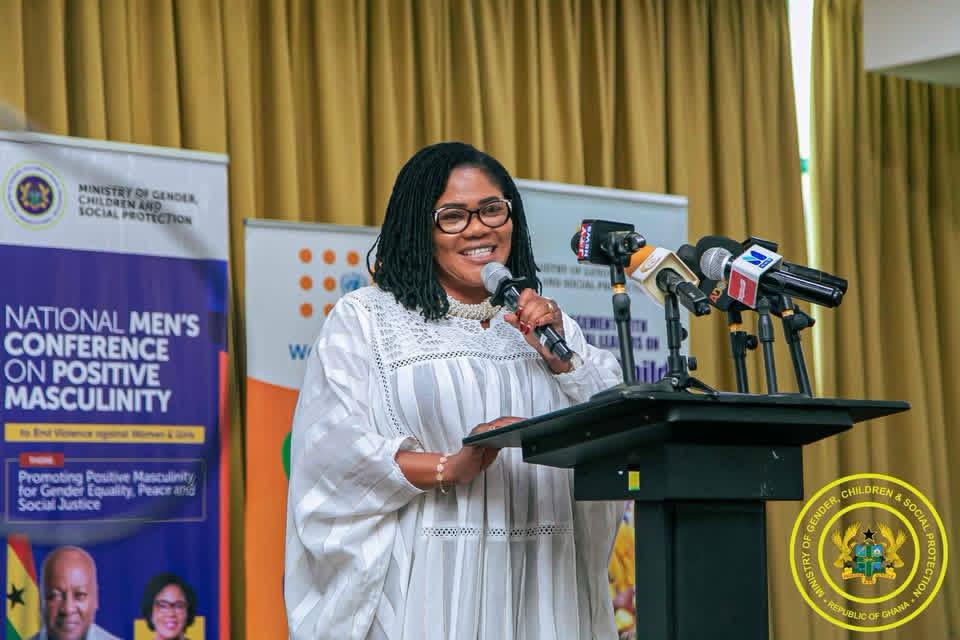
The Ministry of Gender, Children and Social Protection (MoGCSP) has convened a landmark National Men’s Conference on Positive Masculinity in Accra, marking a significant step in Ghana’s efforts to advance gender equality and address Sexual and Gender-Based Violence (SGBV). The conference brought together policymakers, traditional and religious leaders, civil society organisations, development partners, academics, media practitioners, and youth advocates to engage men and boys as critical partners in building a more just and inclusive society.
The conference was designed to challenge harmful gender norms and promote constructive conversations around masculinity, responsibility, and respect. Participants examined how traditional perceptions of manhood can contribute to inequality and violence, while also exploring how positive masculinity can foster healthier relationships, stronger families, and safer communities. The gathering emphasised that achieving gender equality is a shared responsibility that requires the active participation of all genders.
In her keynote address, the Minister for Gender, Children and Social Protection, Dr Agnes Naa Momo Lartey, underscored the importance of repositioning men and boys as allies in the gender equality movement. She noted that men play a crucial role in shaping social attitudes and behaviours, both within households and in wider society. According to her, redefining masculinity to prioritise empathy, accountability, and non-violence is essential to preventing abuse and promoting mutual respect.
Dr Lartey highlighted several government initiatives aimed at reinforcing this vision, including the Affirmative Action (Gender Equity) Act, strengthened social protection systems, and targeted programmes for men and boys. She referenced the establishment of Men and Boys Clubs, mentorship schemes, and community sensitisation programmes designed to promote non-violent behaviour and respectful relationships. She also noted ongoing efforts to improve access to support services for survivors of violence through innovative digital platforms and decentralised response centres.
According to the Minister, the conference was not intended to place blame on men, but rather to inspire reflection and leadership. She explained that positive masculinity empowers men to become role models who support equality and protect the rights of women, children, and vulnerable persons. By embracing these values, she said, men can contribute to building peaceful homes and resilient communities.
Representatives from development partners echoed these sentiments, stressing that meaningful progress in gender equality cannot be achieved without engaging men and boys. A representative from UNFPA commended Ghana for aligning national efforts with global best practices on male engagement. He noted that cultural, religious, and traditional values are powerful forces in shaping behaviour and can be harnessed to promote dignity, fairness, and shared responsibility rather than inequality.
Speaking on behalf of the Presidency, a government representative emphasised that gender-based violence poses a serious threat to social cohesion and national development. He stressed that engaging men in conversations about gender equality is a proactive strategy to prevent violence and foster unity. According to him, when men choose to challenge harmful norms and speak out against abuse, they help create environments where women and children can thrive.
A distinctive feature of the conference was its holistic scope. Discussions extended beyond violence prevention to address issues such as men’s mental health, emotional wellbeing, and the pressures associated with rigid gender expectations. Speakers noted that social norms discouraging emotional expression among men can lead to stress, isolation, and unhealthy coping mechanisms, which may in turn contribute to conflict and violence. Addressing these challenges, participants agreed, is essential to promoting healthier forms of masculinity.
The conference also examined the role of education, faith-based institutions, workplaces, and the media in shaping positive narratives around gender roles. Participants called for sustained public education campaigns and community dialogues that encourage boys and men to question stereotypes and adopt values rooted in respect and equality. They stressed that change must begin early, through mentorship and role modelling that support positive behaviour.
Held as part of national activities to combat gender-based violence, the National Men’s Conference is expected to become a recurring platform for dialogue, learning, and action. Participants expressed optimism that the forum would help strengthen partnerships, inform policy implementation, and inspire grassroots initiatives across the country. By bringing diverse voices together, the conference reinforced the importance of collective action in addressing deeply rooted social challenges.
The emphasis on positive masculinity reflects a growing understanding that gender equality benefits everyone. When men are engaged as advocates for change, families become stronger, communities become safer, and societies become more inclusive. The conference concluded with a renewed commitment from stakeholders to continue promoting attitudes and behaviours that uphold dignity, equality, and shared responsibility.
Through this national engagement, Ghana has reaffirmed its commitment to an inclusive approach to gender equality one that recognises men and boys as essential partners in driving sustainable social change and building a fairer future for all.