

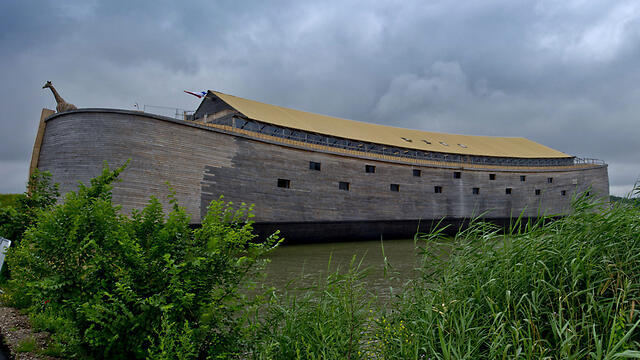
A man in Ghana has captured global attention by building what he calls a modern-day “Noah’s Ark,” claiming that a catastrophic flood will hit on 25 December 2025. The story has triggered widespread debate, blending religious belief, fear, social media dynamics, and growing anxieties over climate change and disaster preparedness.
According to the reports circulating online, the man argues that the biblical covenant forbidding a world-wide flood has been broken, justifying his decision to build the ark. He claims the vessel is a means to protect a group of believers from the impending deluge. Videos shared on social media show the wooden structure under construction, prompting sensational trending and a mixture of support, mockery, fear, and skepticism.
Many viewers have expressed concern and curiosity. Some say they view the act as a provocative spiritual warning, possibly rooted in literal biblical interpretation. Others dismiss the ark as impractical, labelling it a publicity stunt or a misguided act of faith. Critics point out that the claim lacks scientific foundation, and the ark does not meet any known engineering standards for flood-resilience.
The story highlights how modern social media can amplify personal prophecies and unusual claims, spreading them beyond local communities to global audiences within hours. In this case, the “ark” and flood warning have resurfaced public conversation about climate resilience, disaster preparedness, and the role of traditional belief in contemporary Ghana.
While the man behind the ark insists the flood is imminent, scientists, environmentalists, and meteorologists urge calm. They argue that no credible forecast backs a nationwide flood of biblical proportions on the announced date. They advise citizens instead to focus on verified data, early-warning systems, and practical flood-mitigation efforts.
In a climate-vulnerable country like Ghana where flooding, coastal erosion, and seasonal rains already threaten lives and livelihoods, the story underscores the urgent need to strengthen public awareness and disaster-preparedness programmes. Whether the “ark” becomes a curiosity or a warning, the broader lesson may be clear: Ghanaians should take climate challenges seriously, verify information, and trust evidence-based early warning mechanisms rather than viral prophecies.
As the internet buzz grows, many observers urge media professionals and community leaders to approach the story with caution and responsibility, respecting freedom of belief while discouraging panic and misinformation.