

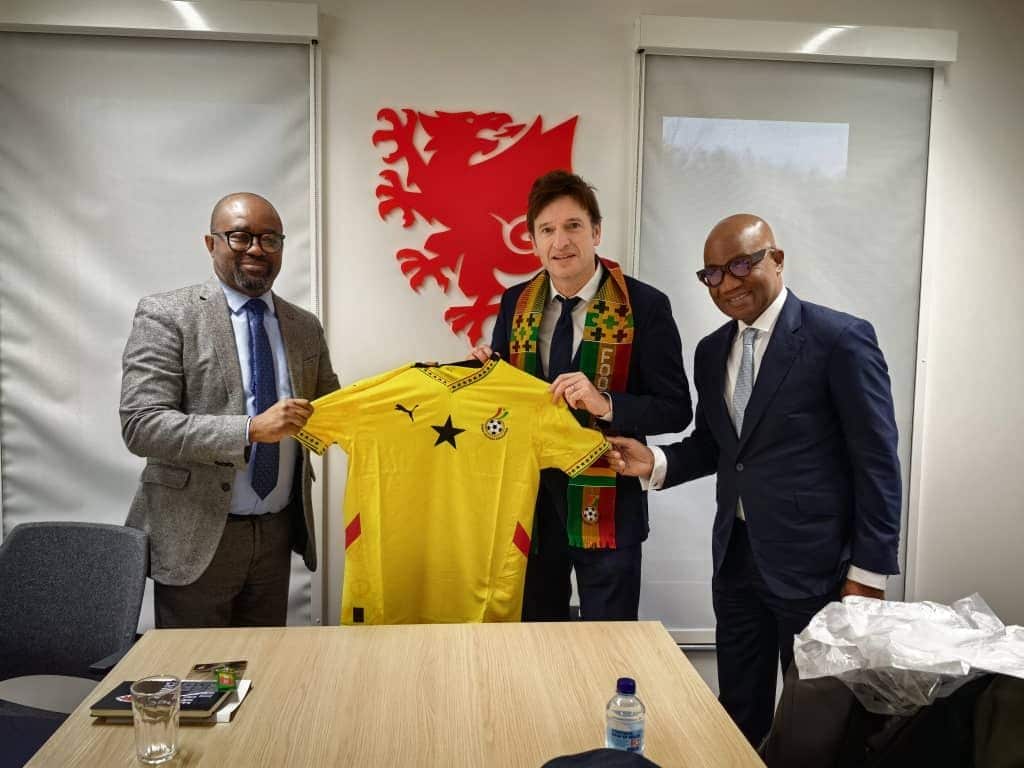
The Ghana Football Association (GFA) has announced a new strategic partnership with the Football Association of Wales (FAW), marking a significant step toward strengthening coaching development and long-term football growth in Ghana. The collaboration, which focuses on technical knowledge exchange and modern training standards, is expected to benefit coaches across various levels, from grassroots football to elite performance pathways.
Officials from both associations confirmed that the partnership will prioritize capacity-building programs, coaching workshops, talent identification systems, and training methodologies aligned with UEFA coaching frameworks. While Ghana has produced world-class talents over the decades, technical development, especially at the grassroots level, remains an area many stakeholders believe requires considerable investment. The new agreement aims to directly address these gaps through structured, internationally benchmarked development programs.
Under the partnership, Ghanaian coaches will have the opportunity to participate in FAW-certified courses, mentorship attachments, and exchange programmes. These initiatives are expected to provide exposure to modern tactical approaches, sports science practices, and football analytics — areas that have become central to high-performance coaching around the world.
In return, the Wales FA will gain access to Ghana’s strong youth football ecosystem, which has long been admired for its raw talent and competitive spirit. The collaboration is also expected to include friendly matches, joint youth tournaments, and shared technical development projects.
The GFA leadership described the partnership as a step toward elevating Ghana’s football competitiveness on the global stage. They emphasized the need for consistent investment in coaching, noting that well-trained coaches create strong teams, nurture disciplined players, and build sustainable football institutions.
Football analysts have welcomed the announcement, highlighting that Ghana’s technical development system has lagged behind modern football demands. Many pointed out that as tactics and sports technology evolve, African coaches must stay aligned with global best practices to remain competitive in continental and international tournaments.
The partnership also aligns with Ghana’s broader vision of modernizing football structures, including talent academies, women’s football, and referee development. With the FAW’s reputation for structured coaching pathways, credited with transforming Welsh football over the past decade, Ghana stands to benefit from a practical blueprint for long-term growth.
Although full details of the agreement, including timelines and specific programme outlines, have not been publicly released, both associations have expressed confidence in the initiative’s long-term impact.
For many, this development signals renewed momentum within Ghana’s football administration. With the right implementation, the partnership could help shape a new generation of technically sound coaches, elevate player development, and reinforce Ghana’s status as one of Africa’s football powerhouses.