

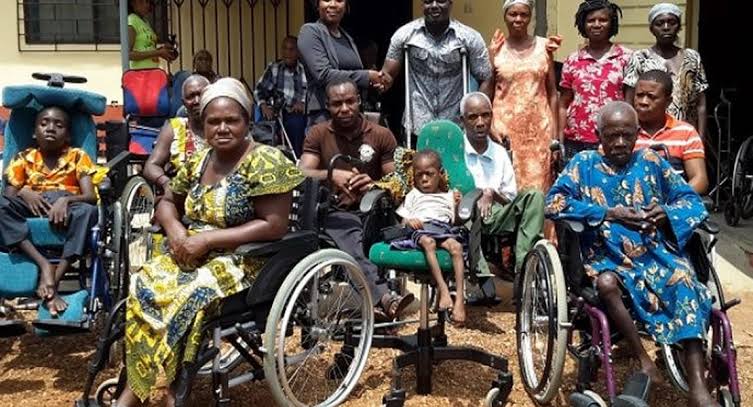
Ghana’s commitment to inclusive development received a boost this week as the authorities of the New Juaben South Municipal Assembly (NJSM) distributed essential items and financial support to dozens of persons with disabilities (PWDs), aiming to improve their livelihood and promote self-reliance. The outreach, carried out under the Assembly’s disability-support programme, provided beneficiaries with tools, appliances, and monetary help to begin small businesses and cover pressing needs.
The beneficiaries received items including deep freezers, refrigerators, and industrial sewing machines — resources tailored to create income-earning opportunities through ventures such as sachet-water trade or garment production. In addition to tools, some recipients received financial grants aimed at covering medical expenses or helping start modest businesses.
According to the Assembly’s officials, these resources are drawn from the Disability Fund, which forms part of the District Assembly’s Common Fund. The Municipal Chief Executive (MCE) reaffirmed that the initiative aligns with national efforts to uplift vulnerable groups and ensure equitable access to economic opportunities. He noted that since the programme began several PWDs who formerly depended on charity or begging are now able to support themselves and even care for families.
Social-welfare authorities monitoring the distribution emphasised that to prevent misuse, beneficiaries will be visited regularly to ensure equipment is used for its intended purpose. This oversight is part of a larger commitment by the Assembly to protect public funds and guarantee the long-term success of the support scheme.
Community leaders representing persons with disabilities expressed gratitude. They observed that the aid not only promotes economic independence but also restores dignity and hope. Several beneficiaries shared personal testimonies: one recipient planning to use the sewing machine to produce school uniforms, another intending to start a small water-bottling business — projects that could generate real income and improve quality of life.
Disability-advocacy groups welcomed the Assembly’s move but urged sustained commitment. They highlighted the need for regular follow-ups, training in business management, access to credit, and market opportunities to ensure the long-term viability of these small enterprises. They also called for similar support across other municipalities, advocating that PWD empowerment be treated as a nationwide priority rather than a one-off exercise.Economists and social-policy experts suggest that such local interventions, if properly scaled, could reduce poverty, curb street homelessness among vulnerable groups, and stimulate micro-enterprise growth — contributing positively to the broader economy. They argue that inclusive growth ought to incorporate tailored support for PWDs, enabling them to contribute meaningfully to their communities.
For New Juaben South, the outreach marks a significant milestone in social welfare. The Assembly has signalled its resolve to continue supporting persons with disabilities, secure stable funding for the programme, and collaborate with civil society and private-sector partners where necessary. The beneficiaries and their advocates in the area are hopeful that this marks the beginning of sustained inclusion and empowerment rather than a single act of charity.