


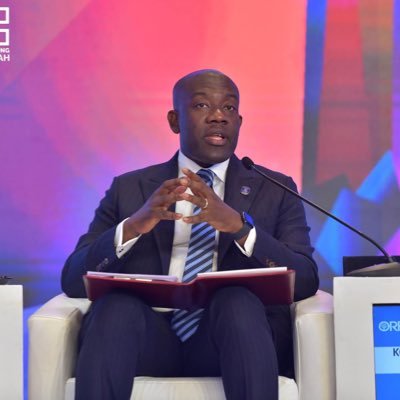
Former Information Minister Kojo Oppong Nkrumah has issued a strong warning about Ghana’s new draft Cybersecurity Bill, describing it as a “dangerous encroachment” on the country’s democratic freedoms and a potential threat to free speech. The minister, known for his consistent advocacy for media freedom and responsible digital governance, expressed grave concern that the proposed legislation could be used to silence dissent and criminalize legitimate online expression.
According to Oppong Nkrumah, the draft bill, currently under parliamentary review, grants excessive investigative powers to the Cyber Security Authority (CSA) and risks blurring the line between regulating harmful digital conduct and restricting civil liberties. He cautioned that the bill’s vague definitions of cyber offences and its broad surveillance provisions could give state authorities the leverage to target journalists, critics, and ordinary citizens for social media posts or online commentary deemed “offensive” or “false.”
“The draft Cybersecurity Bill, in its current form, is dangerous. It risks criminalizing speech, invading privacy, and eroding the trust citizens have in state institutions. We must not pass a law that turns online expression into a potential criminal offence,” he said.

Sources close to the legislative process indicate that the new bill aims to update Ghana’s cybersecurity framework to address growing cybercrime, online fraud, misinformation, and data breaches. However, digital rights advocates and members of civil society argue that the bill’s broad language leaves room for abuse. The Media Foundation for West Africa (MFWA) and Internet Society Ghana have already voiced their objections, saying the law’s clauses could suppress press freedom and contradict Ghana’s 1992 Constitution, which guarantees freedom of speech and expression.
One of the most contentious sections of the bill reportedly allows the Cyber Security Authority to demand access to digital communications, including private messages, under the pretext of investigating cyber offences. Legal experts warn that without strong oversight mechanisms, this could open the door to mass surveillance and political misuse. “When state institutions are granted unchecked digital powers, the first casualty is citizen privacy,” said a legal analyst familiar with the draft.
Oppong Nkrumah’s concerns have resonated widely across the political and media landscape. Several journalists and activists have taken to social media to commend his stance, calling for a thorough review of the bill to ensure it upholds international human rights standards. Others have urged Parliament to open public consultations before the bill’s passage, to guarantee that stakeholders, including journalists, tech experts, and civic groups, can contribute to its final form.
Critics have drawn parallels between Ghana’s proposed bill and similar laws in other African countries that have been used to suppress free expression. For instance, Kenya’s 2018 Computer Misuse and Cybercrimes Act faced backlash for criminalizing “false publications,” a provision that was later declared unconstitutional. Likewise, Uganda’s Computer Misuse (Amendment) Act of 2022 was heavily criticized for giving authorities power to arrest individuals for online criticism of public officials. Ghana, known for its robust democratic record, now faces a critical test of how it balances cybersecurity enforcement with the protection of free speech.
Supporters of the bill, however, argue that the digital space has become increasingly unsafe and that a modernized legal framework is needed to combat scams, hacking, and cyberbullying. They contend that the law’s intention is to protect citizens and businesses from digital harm, not to suppress rights. “Ghana needs a cybersecurity law that can respond to today’s threats,” a member of the drafting committee reportedly said. “But safeguards will be included to prevent misuse.”

Still, Oppong Nkrumah insists that cybersecurity cannot come at the cost of fundamental freedoms. He emphasized that a democratic society must find a careful balance between regulation and rights protection. “We must strengthen our laws to protect digital infrastructure, but we cannot allow fear of cybercrime to justify restrictions on expression. Once we normalize censorship, it becomes very difficult to reverse,” he warned.
The debate comes at a time when Ghana is positioning itself as a regional leader in technology and digital innovation. The government has been expanding digital infrastructure through initiatives like Ghana.gov, Mobile Money Interoperability, and the National Identification System (Ghana Card). Yet, these advances have also made cybersecurity a pressing concern, with recent reports of data breaches and online fraud prompting calls for tougher legislation.
With the draft Cybersecurity Bill expected to reach Parliament soon, the conversation around its provisions is intensifying. Civil society groups are mobilizing to review the text and propose amendments that would guarantee both digital safety and freedom of expression. Oppong Nkrumah’s intervention has, therefore, ignited a broader national discussion on how Ghana can safeguard its digital ecosystem without compromising the constitutional rights of its citizens.
As the legislative debate unfolds, observers warn that the outcome could define the tone of digital freedom in Ghana for years to come. The minister’s remarks have not only sparked public concern but have also placed pressure on policymakers to ensure transparency, accountability, and respect for rights in the cybersecurity law-making process.
Stay Away from Foreign Women – Kojo Addae Mensah Advises Black Stars